|
Decouverte d'un nouveau Diacodexis (Artiocactyla, Mammalia) dans l'Eocène inférieur de Silveirinha, Portugal.
Published online: 15/09/1989
Keywords:
Artiodactyla; Eocene; Migration; Portugal; Silveirinha
https://doi.org/10.18563/pv.19.1.29-44
Abstract
A new artiodactyl, Diacodexis antunesi n.sp., is described from the early Eocene of Silveirinha, Portugal. Comparisons are made with Diacodexis gazini GODINOT, 1978, D. varleti SUDRE et al., 1983, D. cf. varleti from Paris Basin sites, D. sp. from Dormaal and from localities in Spain and England, D. secans from North America and D. pakistanensis from Asia; affinities and evolutive tendencies are discussed. The presence of Diacodexis in the locality of Silveirinha confirms the very early Eocene age of the latter. As Diacodexis antunesi appears ta be more primitive than D. gazini from Rians (early Eocene of France), it lends corroboration to the interpretation (essentially based previously on condylarths) of the Silveirinha assemblage as the oldest Eocene fauna known in Europe and supports the hypothesis that early artiodactyls migrated from Europe to North America.
PV article infos
Published in Vol. 19, Fasc. 1 (1989)
|
PDF
|

|
Rongeurs du Miocène inférieur et moyen en Languedoc. Leur apport pour les correlations Marin-Continental et la Stratigraphie.
Published online: 31/03/1980
Keywords:
Languedoc; Miocene; Rodents; Southern France
https://doi.org/10.18563/pv.9.6.155-203
Abstract
The rodents (Cricetidae, Gliridae, Sciuridae) found in lacustrine, brackish marine and karstic sediments of Miocene age in Languedoc, assign the position of the different localities in the scale of "niveaux repères" used by mammalogists. Some detailed stratigraphical studies bring several correlations between this continental biochronological scale and the marine scale ; the most important results are the Aquitanian age of the "niveaux repères" of Coderet and Paulhiac, the Burdigalian age of Laugnac, Estrepouy, Vieux-Collonges, La Romieu and Sansan and the Langhian or Lower Serravallian age of La Grive M. The correlations between the Tethys and the Central Paratethys for the Lower Neogene profit also of these results, since the locality of Neudorf Spalte 1, 2 (Czechoslovakia) is shown to be younger than Sansan (France). The paleontological study has also several geological inferences for the Miocene of Languedoc ; with the calibration of this Miocene, we know quite precisely that the Lower Miocene is chiefly a time lacustrine sedimentation, and also that the marine Miocene sedimentation ends early in the Miocene Period, in Langhian or lower Serravallian times.
PV article infos
Published in Vol. 09, Fasc. 6 (1980)
|
PDF
|

|
First evidence of an early Miocene marine teleostean fish fauna (otoliths) from la Paillade.(Montpellier,France)
Published online: 15/06/1999
Keywords:
Aquitanian; Biostratigraphy; La Paillade; marine deposits; Miocene; otoliths; Palaeoecology; Palaeogeography; Southern France; Teleostei
https://doi.org/10.18563/pv.28.1.1-46
Abstract
A fossil fish fauna, based on 5533 otoliths, from the La Paillade locality at Montpellier is described and figured. The otolith-bearing marls correlate to mammal zone MN l (Aguilar, 1982), and thus represent the earliest Miocene. The fish fauna consists of 30 taxa belonging to 20 families. Two species are new: Dussumieria sittigi and Liza gaudanti. The predominant faunal element is the Lesueurigobius vicínalis-species complex, composing 73% of all investigated otoliths. The palaeoecological analysis reveals a marine to euryhaline fish fauna living under tropical to subtropical conditions in the transition zone littoral - sublittoral. Water depth probably was more than 10 m. The scarcity of pelagic físhes suggests that the habitat was either a sheltered bay and/or far away from the open sea. Furthermore, some genera represented in the La Paillade fish fauna presently live exclusively in the Indopacific realm. Their presence strongly supports a broad connection between the Indian Ocean, the Mediterranean, and the Paratethys Seas during the Early Miocene (Aquitanian). From a palaeobiogeographical point of view, faunal relationships were found between the La Paillade fish fauna and both the Paratethys fish fauna and the fish fauna from the deposits in the Upper Rhinegraben and the Mayence and Hanau Basins (Germany).
PV article infos
Published in Vol. 28, Fasc. 1 (1999)
|
PDF
|

|
Schmelzmikrostruktur in den inzisiven alt-und neuweltlicher histricognather nagetiere
Published online: 15/12/1992
Keywords:
Africa; Caviomorpha; Ctenodactyloidea; Deseadan; Enamel microstructure; Hunter-Schreger bands; Hystricognathi; Incisors; Ischyromyoidea; multiserial; Paleobiogeography; pauciserial; Phiomorpha; Rodentia; South America
https://doi.org/10.18563/pv.21.ext.1-168
Abstract
Enamel microstructure in the incisors of Old- and New World hystricognath rodents:
The incisor enamel microstructure in more than 100 genera of fossil and Recent hystricognath and sciurognath rodents was studied. A multiserial schmelzmuster is present in the Hystricognathi, the Ctenodactylidae, advanced Chapattimyidae, and in Pedetes. A redefinition of pauciserial and multiserial HSB is given that makes the two enamel types unambiguously distinguishable which apparently represent well defined evolutionary levels. In the pauciserial Schmelzmuster the IPM is thicker than in the multiserial one. In pauciserial HSB the IPM always surrounds each prism, and the crystallites of the IPM run parallel to prism direction; transition zones between HSB are lacking; the inclination of the HSB is normally very low and the prism cross sections are not flattened but somewhat irregular. The number of prisms per HSB is no good distinctive character for pauciserial and multiserial HSB, since there exists a wide overlap. The pauciserial schmelzmuster is primitive, the multiseiial derived because: 1. the pauciseiial schmelzmuster appears earlier in the fossil record in the most primitive rodents (Paramyids s.l. and Ctenodactyloids); 2. the Eocene Ctenodactyloidea show pauciserial HSB but the Oligocene and younger ones are characterized by multiserial HSB; 3. in the outgroup comparison, the Eurymylidae (Mixodontia) show pauciserial HSB; 4. biomechanically, multiserial HSB strenghten the enamel better than pauciserial HSB, since their IPM runs nearly always in an angle of 45° or more to the prisms.
In multiseríal HSB three subtypes can be distinguished which are differentiated by the IPM orientation. Primitive is a (rarely strict) parallel or acute angular, anastomozing IPM, and derived is an interrow sheet-like ("plattenartige") IPM. This evolutionary polarity is indicated by enamel evolution in the Ctenodactylidae which show an acute angular IPM in the Oligocene and a rectangular interrow sheet-like IPM since the Miocene. Among the Caviomorpha a rectangular interrow sheet-like IPM is restricted to the Octodontoidea; therefore they must be considered derived in terms of their enamel structure. The first multiserial HSB in rodent incisors appear in phiomyids or chapatrimyids from the Upper Eocene of Algeria. The IPM is acute angular and anastomozing. The worldwide next younger multiserial HSB are found in Lower Oligocene phiomyids of Fayum, Egypt There already a rectangular interrow sheet like IPM is present (in Metaphiomys) besides the acute angular anastomozing IPM.
The first Caviomorpha from the Deseadan (Oligocene-Miocene) likewise show already acute angular anastomozing IPM (e.g. Scozamys) and rectangular interrow sheet-like IPM (Platypittamys). Therefore the first Caviomorpha cannot be positioned close to a transition from pauciserial to multiserial HSB. In none of the potential caviomorph ancestors from southern North America multiserial HSB or transitional stage between pauciserial and multiserial HSB could be found. The similarities between the enamel types of the Fayum rodents and the rodents from the Deseadan of South America make a derivation of the Caviomorpha from Paleogene North African phiomorph rodents or their direct ancestors most probable. This supports at the same time a descent of the platyrrhine Primates from North African anthropoids.
PV article infos
Published in Vol. 21, Ext (1992)
|
PDF
|
|
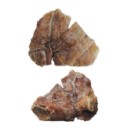
Dortokid turtle remains from the Upper Cretaceous of Cruzy (Hérault, southern France) and phylogenetic implications
Published online: 14/11/2022
Keywords:
Cruzy; Dortoka vasconica; France; Late Cretaceous; Turtle
https://doi.org/10.18563/pv.45.2.e3
Abstract
An isolated right costal 1 from the Late Cretaceous Massecaps locality (Cruzy, Hérault, southern France) is assigned to Dortoka vasconica (Dortokidae). This find adds a new element to the Late Cretaceous turtle fauna of Cruzy and further supports the hypothesis that two distinct lineages of Dortokidae were present in Europe during the Late Cretaceous-Paleogene due to geographical isolation.
PV article infos
Published in 45-2 (2022)
|
PDF
|

|
Données nouvelles sur le genre Stehlinia (Vespertilionoidea, Chiroptera) du Paléocène d'Europe
Published online: 01/12/1974
Keywords:
Chiroptera; Palaeocene; Vespertilionoidea
https://doi.org/10.18563/pv.6.3-4.253-272
Abstract
Cet article présente une étude détaillée du genre Stehlinia, un chiroptère du Paléogène d'Europe, basé sur un matériel abondant issu notamment du gisement d'Escamps (Quercy). L'analyse révèle que Stehlinia possède un mélange de caractères primitifs (comme une denture tribosphénique complète et des prémaxillaires soudés) et évolués (notamment dans le squelette post-crânien), le rapprochant des vespertilionoïdes actuels, en particulier des Kerivoula.
PV article infos
Published in Vol. 06, Fasc. 3-4 (1975)
|
PDF
|

|
Etude de la Variabilité chez Lophiodon lautricense Noulet
Published online: 28/02/1971
Keywords:
Cheek teeth; Eocene; Lophiodon; variability
https://doi.org/10.18563/pv.4.3.67-95
Abstract
The biometric and morphologie variability of the cheek teeth in the end-of-the-phylum species Lophiodon lautricense Noulet studied in this note, reposes on the observation of about 800 teeth. These were revealed to be little variable in absolute dimensions. The considerable morphologie variability in the upper premolars permitted the problem of the molarization process to be taken up. An hypothesis concerning the order of eruption of the cheek teeth is formulated based on an examination of a large number of milk dentitions. In conclusion, it is suggested that reservations be held on the value of dental characters classically used in systematics for the group under consideration.
PV article infos
Published in Vol. 04, Fasc. 3 (1971)
|
PDF
|

|
A new hypothesis for the origin of African Anomaluridae and Graphiuridae (Rodentia)
Published online: 16/12/1996
Keywords:
Africa; Anomaluridae; Gliridae; Graphiuridae; Paleontology; PHYLOGENY; Rodentia
https://doi.org/10.18563/pv.25.2-4.349-358
Abstract
A new hypothesis for the phylogenetic relationships of recent anomalurids and graphiurids is proposed, based on information from evolutionary lineages of Paleogene European rodents, particularly Gliridae, and Eocene Algerian Zegdoumyidae. Differences in first occurrences, in paleogeography, and in infraorbital structure in glirids (protrogomorphy and pseudomyomorphy) and graphiurids (hystricomorphy) separate Graphiuridae from Gliridae (Graphiurinae is here raised to family rank). Similar considerations, and dental morphology, suggest that Anomaluridae (appearing in the late Eocene) and Graphiuridae (appearing in the Pliocene) are related to early Eocene Zegdoumyidae.
PV article infos
Published in Vol. 25, Fasc. 2-4 (1996)
|
PDF
|

|
La poche à phosphate de Ste-Néboule (Lot) et sa faune de vertebres du Ludien supérieur. 9- Primates et Artiodactyles
Published online: 25/09/1978
Keywords:
Eocene; Quercy Phosphorites
https://doi.org/10.18563/pv.8.2-4.269-290
Abstract
La faune d'artiodactyles de Ste-Néboule, qui comprend neuf espèces, présente de nombreux
points communs avec les faunes habituellement rattachées au Ludien supérieur, telles celles de La Débruge ou de Montmartre. A l'inverse de ces localités, on ne connaît pourtant, à Ste-Néboule, ni Oxacronae, ni Anoplotheriinae. Parmi les espèces du gisement se trouve une nouvelle espèce du genre Mouillacitherium (M. schlosseri n. sp.), cette forme devant être interprétée comme le dernier représentant du rameau. Nous faisons connaître par ailleurs la presque totalité de la denture du Dacrytherium saturninii, espèce qui était à ce jour très imparfaitement documentée. Ste-Néboule est, d'autre part, la seule localité où l'on peut signaler l'association probable de deux lignées du genre Amphimeryx. Les primates sont peu diversifiés à Ste-Néboule, puisque le groupe est limité au seul genre Adapis. Les genres Microchoerus et Pseudoloris, que l'on sait pourtant être représentés dans des gisements dâge voisin (Microchoerus ornatus à San Cugat de Gavadons et Mormont-Entreroches, Pseudoloris reguanti à San Cugat de Gavadons, Pseudoloris cf. reguanti à Neustadt ; cf. Louis et Sudre 1975) sont absents dans les faunes du Quercy de cette période.
PV article infos
Published in Vol. 08, Fasc. 2-4 (1978)
|
PDF
|
|
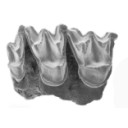
New Late Miocene plecotine bats (Chiroptera, Vespertilionidae: Plecotini) from Gritsev, Ukraine
Published online: 07/03/2019
Keywords:
Barbastella; bats; late Neogene; Mammalia; Plecotus
https://doi.org/10.18563/pv.42.1.e2
Abstract
The Late Miocene site of Gritsev (MN 9, Ukraine) has yielded a very rich bat fauna, the remains of which are well preserved. Compared to other Neogene bat assemblages of Europe, the Gritsev bat community is unique in preserving plecotine bats, which are rare from Neogene sites. Some peculiar and new bat species, including a large plecotin Otonycteris, already were described from the Gritsev mammal site. Here we report new records of small plecotin bats from Gritsev, including a new taxon, Barbastella maxima nov. sp. This is the earliest reliable fossil record of this genus and it differs from more recent species of Barbastella in being considerably larger. The evolutionary patterns in the odontology within the tribe Plecotini, supported by biostratigraphical distribution of fossil records of Plecotus are discussed. The morphological peculiarities of the new fossils of plecotine bats from Gritsev are discussed in connection with its possible taxonomical affinity.
PV article infos
Published in Vol 42-1 (2019)
|
PDF
|

|
Cryptomerix Schlosser, 1886, Tragulidé de l'oligocène d'Europe ; relations du genre et considérations sur l'origine des ruminants.
Published online: 01/06/1984
Keywords:
Archaic Ruminants; Paleobiogeography; Quercy Phosphorites; Systematics; Tragulids
https://doi.org/10.18563/pv.14.1.1-31
Abstract
The genus Cryptomeryx SCHLOSSER, 1886, inusited during a long period, has been discovered in Lower and Middle Oligocene localities of the Quercy region (South-West France). This new material, as well as specimens from the old collections referred to Cryptomeryx, are described; their study, allows us precising the definition of the genus, and confirming its allocation to the Tragulidae family. The type species of the genus, Crypmmeryx gaudryi (= Lophiomeryx gaudryi FILHOL, 1877), occurs in several localities at the base of the Middle Oligocene (Itardies, La Plante 2, Roqueprune 2, Soulce, Herrlingen 1). The new species C. matsoui n. sp. has been defined in the older locality of Mas de Got (top of Lower Oligocene). It is possible that the species Pseudamphimeryx decedens STEHLIN, 1910 pertains to the same genus. Also to the Tragulids must be referred the monospecific genus Iberomeryx (I. parvus GABOUNIA, 1964) from Upper Oligocene of Benara (Georgie, URSS), with which Cryptomeryx is related. These genera are not direct ancestors of Miocene tragulids; their occurrence in the Western European Oligocene results from a first immigration wawe of the family. These Tragulids are one of the most archaic groups of Ruminants. They are probably derived from a primitive stock which had acquired in Asia the selenodont condition of the dentition.
PV article infos
Published in Vol. 14, Fasc. 1 (1984)
|
PDF
|

|
Compléments sur les Chiroptères de l'Eocène moyen d'Europe. Les genres Palaeochiropteryx et Cecilionycteris.
Published online: 01/10/1980
Keywords:
Chiroptera; Geiseltal; Messel; Middle Eocene
https://doi.org/10.18563/pv.9.ext.91-126
Abstract
New dental and skeletal material referable to Palaeochiropteryx tupaiodon from the Middle Eocene locality of
Messel (G.F.R.) is studied, which provides additions to the previously gained knowledge of this european genus. Dental specimens from Geiseltal (G.D.R.), also of Middle Eocene age, allow us to analyze Cecilionycteria prisca. Some of these are separated to establish a new genus, Matthesia, and two new species, M. germanica and M. ? insolita.
PV article infos
Published in Vol. 9, Ext (1980)
|
PDF
|

|
Types dentaires adaptatifs chez les sélaciens actuels et post-paléozoïques.
Published online: 01/09/1986
Keywords:
Dental types; evolution; Fossil selachians; Recent selachians; Trophic adaptations
https://doi.org/10.18563/pv.16.2.57-76
Abstract
The dentition of selachians is characterized by an often very pronounced heterodonty involving a great morphological diversity. Despite this fact, the dentitions of selachians can be grouped in a rather reduced number of dental types corresponding to trophic adaptations: grasping, tearing, cutting, crushing, grinding and grasping-grinding type. The numerous exemples of convergence and parallelism that can be observed in fossil selachians and between Recent and fossil ones is the result of this reduced number of dental types. These dental specialisations allow to try a reconstruction of the way of life of fossil forms.
PV article infos
Published in Vol. 16, Fasc. 2 (1986)
|
PDF
|

|
Hexanchiforme nouveau (Neoselachii) du Crétacé inférieur du Sud de la France
Published online: 18/12/1990
Keywords:
Hexanchiformes; New genera; Southern France; Systematics; Valanginian
https://doi.org/10.18563/pv.20.1.33-54
Abstract
The dentition of Welcommia bodeuri nov. gen. nov. sp. from the Valanginian of Southem France is described and reconstructed. Species and genera of Upper Jurassic and Lower Cretaceous Hexanchiformes are reviewed and discussed.
The genus Notidanoides MAISEY, 1986 must be restricted to the single Nusplingen Upper Jurassic specimen, whose attribution to the species muensteri AGASSIZ, 1843 remains doubtful.
The genus Paranotidanus WARD &THIES, 1987 that does not rest on any type-species nor on any precise dental characterization must be rejected.
The genus Eonotidanus PFEIL, 1983, based on a very poorly preserved and heterogeneous type-material must also be rejected.
Teeth from the Lower Cretaceous, with a peculiar morphology, previously assigned to Eonotidanus or to Notidanoides, are to be ranked in the new genus Pachyhexanchus.
PV article infos
Published in Vol. 20, Fasc. 1 (1990)
|
PDF
|

|
Les Gruiformes (Aves) des phosphorites du Quercy (France). 1. sous-ordre cariamae (Cariamidae et Phorusrhacidae), systématique et biostratigraphie.
Published online: 30/11/1983
Keywords:
Aves; Biostratigraphy; Birds; Cariamae; gruiformes; Quercy Phosphorites; Systematics
https://doi.org/10.18563/pv.13.4.83-143
Abstract
The revision of the old collections of fossil birds from the “Phosphorites du Quercy” and the study of new material give the following results (Gruiformes, Cariamae) : The humeri and most of the carpometacarpi described under the name Filholornis belong in Elaphrocnemus. The ulnae ascribed to Fïlholornis belong in Idiornis. Most of the post-cranial elements of the genera Elaphrocnemus and Idiornis are described and show great similarities with recent Cariamidae and Opisthocomidae, and fossil Bathornithinae. A new genus and a new species, Oblitavis insolitus, are created in the sub-family Idiornithinae; two new species are described in the genera Elaphrocnemus (E. brodkorbz) and Idiornis (I. itardiensis), and the species Elaphrocnemus gracilis is transferred to the genus Idiornis. The genus Propelargus Lydekker is transferred from the family Ciconiidae to Cariamidae. A new generic name, Occitaniavis, is created for the species Geranopsis elatus, which belong in Cariamidae, while the type-species of the genus, Geranopsis hastingsiae, is a member of the Gruidae. The affinities between the Quercy avifauna and the Neotropical one is emphasized by the occurrence of Phorusrhacidae, previously known only from the Cenozoic of South America and the Late Pliocene or Early Pleistocene of North America. Thanks to the material collected during the new excavations, the stratigraphical position of most of the species is stated precisely, and evolutionary lineages are outlined. This study shows that the suborder Cariamae, presently restricted to two South American genera, was already extremely diversified during the Eocene, and widespread in Europe and North America.
PV article infos
Published in Vol. 13, Fasc. 4 (1983)
|
PDF
|
|
New datation of the Tafna Basin (Algeria): A combination between biochronological and magnetostratigraphical data
Published online: 11/03/2015
Keywords:
correlations; Late Miocene; North Africa; Rodentia
https://doi.org/10.18563/pv.39.1.e1
Abstract
The Tafna Basin corresponds to the lowlands, which are located in front of Tessala and Traras ranges, below the Tlemcen mountains, Algeria. This basin displays a complete sedimentary cycle dominated by lagoonal-fluvial and marine deposits. The continental formations located at the base of these deposits are mainly composed of alternating sandstones and clays. An early late Miocene age has been previously attributed to them, based on direct correlations with marine deposits. Search for micromammal fossils led to the discovery of three different rodent species from a single level of the Djebel Guetaf section, located at the bottom of these deposits. The rodent assemblage indicates a late Miocene age. Combined magnetostratigraphical and biostratigraphical investigations were carried out to provide a more accurate age control of these continental deposits. Sixty-four oriented rock samples were collected for a magnetostratigraphic study along a 92 meters thick section including the fossiliferous layer. Rock magnetic investigations indicate the presence of both high and low coercivity minerals. Specimens subjected to progressive thermal demagnetization procedures show that the samples exhibit a high temperature magnetization component and display a normal polarity. Based on biostratigraphic constraints, the Guetaf section is correlated with Chron C4An, indicating an age ranging from
9.1 to 8.7 Myr.
PV article infos
Published in Vol.39-1 (2015)
|
PDF
|

|
Strange Eocene rodents from Spain
Published online: 16/12/1996
Keywords:
Biogeography; Eocene; PHYLOGENY; Rodents; Spain; Zamoramys extraneus n. gen. n. sp.
https://doi.org/10.18563/pv.25.2-4.323-338
Abstract
A new European rodent from the middle Eocene of Spain, Zamoramys extraneus n. gen., n. sp., appears to be closely related to the middle Eocene chapattimyid rodents of Indo-Pakistan. This contradicts the generally accepted paleobiogeographic hypothesis of a Tethyian barrier between Europe and Asia isolating Europe during the middle Eocene. Because of this barrier, some authors have proposed that European and Asian rodents were not closely related, their similarity being the result of morphological convergence. Here monophyly has been tested, using the parsimony criterion, based on an analysis of dental characters (including discussing of homology and the validity of some characteristics). Our results indicate a phylogenetic relationship among the Asiatic Ctenodactyloidea, Zamoramys from Spain, and the European endemic Theridomyoidea. We also conclude from our analysis that theridomyoids and European ischyromyoids are probably not closely related phylogenetically.
PV article infos
Published in Vol. 25, Fasc. 2-4 (1996)
|
PDF
|
|
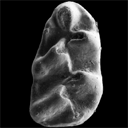
A new Desmodillus (Gerbillinae, Rodentia) species from the early Pliocene site of Langebaanweg (South-western Cape, South Africa)
Published online: 20/01/2017
Keywords:
Lower Pliocene; Muridae; Rodentia; RSA
https://doi.org/10.18563/pv.41.1.e1
Abstract
Situated in the Cape region of the Republic of South Africa (RSA), the paleontological site of Langebaanweg is dated to 5.1 Myr and is famous for having yielded an abundant vertebrate assemblage, including numerous rodent species from the Mio-Pliocene transition. Based on molar morphology and skull anatomy, the single Gerbillinae taxon identified at Langebaanweg and described in this paper is allocated to Desmodillus, which is a modern monotypic South African endemic genus. It is significant in being the oldest representative of the genus in Africa. We describe here a new species of this genus which is larger than the modern D. auricularis, but nevertheless retains some of its main characteristics, namely the shape of the maxilla and mandible, the presence of poorly fused alternating cusps, and no longitudinal crest. This taxon differs from modern South African Gerbilliscus representatives in some mandibular and maxillary characters, in the m1 prelobe cusp, and in having less fused cusps. Two fossil Gerbillinae discovered in the Upper Miocene of Africa and Asia, Abudhabia and Protatera, have been compared with the new species. We discuss their relationships with modern and Plio-pleistocene Gerbillinae and conclude that Abudhabia could be the sister taxon of Desmodillus and that around 6-5 Myr a vicariance event allowed Gerbillinae to diversify into modern Desmodillus in South Africa, and Gerbilliscus in East Africa. The murine/gerbilline ratio, which is a good indicator of rainfall, supports other proxies which suggest that at 5.1 Myr the climate in the Langebaanweg region was more humid than today.
PV article infos
Published in Vol 41-1 (2018)
|
PDF
S.I. Data
|

|
Pantolestidae nouveaux (Mammalia, Insectivora) de l'Eocène moyen de Bouxwiller (Alsace).
Published online: 31/03/1970
Keywords:
Bouxwiller; Insectivora; Mammalia; Middle Eocene; Pantolestidae
https://doi.org/10.18563/pv.3.3.63-82
Abstract
The Pantolestidae from the middle eocene of Bouxwiller are the subject of a detailed study. Buxolestes hammeli (n. g., n. sp.) is not closely related to any other European or North American form described until now; it presents, however, some characters in common with Pantolestes, a form of the same age from North America. A parallel evolution from a common ancestral form could explain this ressemblance.
Another form (gen. and sp. indet.) accompanies Buxolertes hammeli in the Bouxwiller fauna.
PV article infos
Published in Vol. 03, Fasc. 3 (1970)
|
PDF
|

|
Mammals and stratigraphy : the Paleocene of Europe
Published online: 01/12/1982
Keywords:
Europe; Mammalia; Mammalian biochronology; Paléogène; Stratigraphy
https://doi.org/10.18563/pv.12.ext
Abstract
The mammalian faunas of the Paleogene of Europe and their localities are reviewed with comments on problems of European stratigraphy (epoch, stage and substage limits) and on the possibilities of faunal migrations. Radiometric dating is discussed. A stratigraphic scale for the Paleogene is presented, as well as a refined system of sequential faunal levels.
PV article infos
Published in Vol. 12, Ext (1982)
|
PDF
|