|
Pterosaurs (Pterosauria) from the Cerro del Pueblo Formation (Late Campanian) of Coahuila, Mexico
Published online: 21/11/2025
Keywords:
Azhdarchoidea; Coahuila; Mexico; Pterodactyloidea; Pterosauria
https://doi.org/10.18563/pv.48.2.e1
Abstract
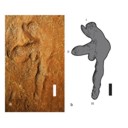
The Late Campanian Cerro del Pueblo Formation, located in southeastern Coahuila, Mexico, has produced a diverse array of vertebrate fossils. However, pterosaur remains from this unit are notably scarce. In this study, we describe new pterosaur material from the formation. The specimens include a fragmentary vertebra identified as belonging to an indeterminate, but derived pterodactyloid, along with the distal condyle of a left metacarpal, referable to an azhdarchoid pterosaur, and a left manus print. While these specimens provide additional evidence of pterosaur presence in the region during the Late Cretaceous, their fragmentary nature limits precise taxonomic and ichnotaxonomic identification. Nevertheless, they highlight the potential for future discoveries that could refine our understanding of the diversity and distribution of pterosaurs in Mexico.
PV article infos
Published in 48-2 (2025)
|
PDF
|
|
Miocene Bovidae (Mammalia) of the Siwaliks, Part 1: Hypsodontinae and Bovinae.
Published online: 30/07/2026
Keywords:
Bovidae; horncores; Miocene; Siwaliks
https://doi.org/10.18563/pv.49.1.e1
Abstract
The fluvial sediments of the Siwaliks in northern Pakistan preserve an exceptional geologic and paleontological record encompassing parts of the Oligocene and all of the Miocene and Pliocene. The sediments, which can be thousands of meters thick, have abundant vertebrate and invertebrate fossils from hundreds of different levels. Fossils were first discovered in the Siwaliks in 1832 and there are important collections of them in the Museum of the Geological Survey of India as well as in various European, British, and American museums. Renewed collecting has now added over 10,000 bovid fossils to a new collection held by the Geological Survey of Pakistan. The fossils include rare skulls and many isolated horn cores, as well as teeth and postcranials. Here we discuss material belonging to the hypsodontinae, boselaphini, and bovini. We recognize four hypsodontine and twenty-two bovine species, plus one species of uncertain subfamilial placement. Nineteen of the twenty-seven have previously been named, while another five have cranial material suitable for defining a new species. Two species, referred to as ?Hypsodontinae sp. and Bovidae sp. 1, are distinctive but left unnamed. We are also uncertain about how distinctive what we refer to as Selenoportax aff. vexillarius is from Selenoportax vexillarius. Boselaphinines predominate in the fossil collections, both in terms of number of species and number of specimens. Most of the boselaphine genera are endemic to the Siwaliks, as are the hypsodontine Palaeohypsodontus and the possible bovini Pachyportax. The predominance of boselaphines together with the number of endemic taxa gives the Siwalik bovid fauna a distinctive aspect and collectively comprise the best-known Miocene record of the subfamily.
PV article infos
Article state: in_press
|
PDF
S.I. Data
|
|
FIRST OCCURRENCE OF PAMPATHERIUM (XENARTHA: PAMPATHERIIDAE) FROM THE EL CEDAZO CREEK, AGUASCALIENTES, MEXICO
Published online: 01/01/1970
Keywords:
Aguascalientes; El Cedazo; Mexico; Pampatherium; Pleistocene
https://doi.org/10.18563/pv.49.2.e3
Abstract
The glyptodontid Pampatherium is currently known from Pleistocene and Pliocene deposits in the State of Mexico, Puebla, Jalisco and Guanajuato. Recently, from the Late Pleistocene locality of El Cedazo creek (Aguascalientes), has revealed fragmentary remains assigned by its anatomical characteristics to the genus Pampatherium. The recovered specimen consists of an articulated anterior left fragment of the carapace comprising 78 osteoderms, which display the diagnostic ornamentation of the genus including a depressed central area, attenuated ornamentation, reduced or absent marginal band, as well as a general rectangular shape. These morphological characteristics clearly support assignment to the genus Pampatherium and distinguish the material from Holmesina, which has been previously reported from the El Cedazo Local Fauna. However, the absence of cranial or dental material and the potential influence of ontogenetic variation preclude a confident species-level identification. Accordingly, the specimen is referred to Pampatherium sp. This finding represents the first confirmed record of the genus in the state of Aguascalientes and provides new evidence of the presence of pampatheriids in the El Cedazo Local Fauna.
PV article infos
Article state: in_press
|
PDF
|
|
Abstract book of the 18th Conference of the European Association of Vertebrate Palaeontologists (EAVP), 5-9 July 2021, Benevento, Italy
Published online: 12/07/2021
Keywords:
2021; Abstracts; Benevento; EAVP
https://doi.org/10.18563/pv.eavp2021
Abstract
Welcome to the 18th conference of the EAVP, the first online meeting of our association. The pandemic emergency made it impossible to organize the in-person meeting in Benevento as we all had hoped. However, we couldn’t miss another EAVP meeting. Therefore, this year we are meeting online, trying to make the experience the closest to the in-person meeting possible, in order to offer the delegates the opportunity to share knowledge, build new networks and reinforce the old ones. We have received 137 communications, with more than 150 delegates from 24 countries. All the abstracts have passed a peer review process and are part of this special volume of Palaeovertebrata, the official journal of the EAVP. This year we are also offering a variety of workshops, roundtables and symposia on different topics. These include the annual “Pride EAVP: An LGBTQ+ Roundtable” and “Women in Palaeontology Roundtable Discussion”, together with the workshops on “Gendered Perspective in Palaeontological Research: from Definition to Action”, “International Palaeontology Education: Virtual Teaching and Real-World Learning”, “Stepping out of Academia: Why, When and How?”, “Introduction to Hypothesis Testing in Statistics”, “The Early-Middle Pleistocene Transition: Marked Mammal Turnover and Ecosystem Dynamic” (included in the early event for the XXI INQUA Congress in Rome 2023, “A Mediterranean Perspective on Quaternary Sciences”). To conclude, we are hosting two symposia on “Palaeoart: Diversity on and behind the Canvas” and “3D fossils, Robotic and Experimental Palaeontology”. We wish you all a happy and productive meeting. And see you in Benevento next year!
PV article infos
Published in Special Volume 1-2021 (2021)
|
PDF
|
|
L’assemblage mammalien de l’Eocène continental du Complexe de Gour Lazib (Algérie) : structure écologique et implications paléoenvironnementales
Published online: 01/01/1970
Keywords:
Afrique du Nord; Cénogramme; Paléogène; Vertébrés
https://doi.org/10.18563/pv.49.2.e2
Abstract
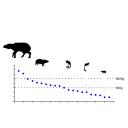
Des prospections géologiques et paléontologiques sur les affleurements continentaux paléogènes du Complexe de Gour Lazib (Hammada du Dra, Algérie) nous ont permis de mettre en évidence plusieurs sites à vertébrés, sur une superficie de plus de cinq cents kilomètres carrés. La faune est constituée de nombreux vertébrés fossiles associant mammifères placentaires, poissons actinoptérygiens et protoptères, squamates, amphibiens, chéloniens, crocodiles et oiseaux. La flore de charophytes est également diversifiée. Les données bio-magnétostratigraphiques indiquent un âge compris entre l’Yprésien terminal et le Lutétien basal pour cet assemblage unique en Afrique. Les nombreux restes de mammifères récoltés ont une préservation exceptionnelle pour le Paléogène ancien arabo-africain et permettent une reconstitution paléoenvironnementale réalisée via une méthode couplant cénogramme et distribution pondérale des taxons arboricoles. Le profil du cénogramme, caractérisé par l’abondance des espèces de petite taille (insectivores, primates et rongeurs), la présence d’espèces de taille intermédiaire (hyracoïdes) et la rareté des grandes espèces (uniquement représentées par les hyracoïdes ; absence notable des proboscidiens et embrithopodes), met en évidence un milieu forestier assez fermé sous climat tropical. Par ailleurs, les données lithologiques et sédimentologiques indiquent un milieu fluviatile méandriforme où ont proliféré les charophytes. Plus hypothétique reste l’existence d’une saisonnalité dans les Gour Lazib, avec de possibles périodes temporaires modérément arides.
PV article infos
Article state: in_press
|
PDF
S.I. Data
|

|
Preliminary evolution of paleosols and implications for interpreting vertebrate fossil assemblages, Kuldana formation, Northern Pakistan
Published online: 16/12/1996
Keywords:
Eocene; Kuldana Formation; Pakistan; Paleosols; Pedogenic Carbonate; taphonomy; Time Averaging; Vertebrate Fossils
https://doi.org/10.18563/pv.25.2-4.261-277
Abstract
Paleosols and the taphonomy of vertebrate fossils in the Eocene Kuldana Formation of northern Pakistan provide important information on the preservation and time-averaging of fossil assemblages. Morphologic, mineralogic, and chemical data as well as comparisons with Quaternary soils suggest that Kuldana paleosols formed under generally dry and oxidizing conditions over time intervals of less than 100 000 years and perhaps as short as 1000 years. The distribution of carbonate in Kuldana paleosols further indicates that the upper half of the profiles were acidic whereas the lower halves were alkaline. Vertebrate fossils are rare in Kuldana paleosols and occur primarily in well-cemented sandstones and conglomerates with abundant micritic and iron-stained nodules that were reworked from floodplain soils. The scarcity of vertebrate remains in Kuldana paleosols probably reflects a combination of acidic, dry, and oxidizing conditions in the upper half of the profiles and rapid floodplain sedimentation. Comparisons between the taphonomic characteristics of Kuldana channel fossil assemblages and bone accumulations in modem rivers provide a basis for estimating the length of time represented by Kuldana fossils from several important localities. Vertebrate fossil assemblages from Barbora Banda are characterized by a low-diversity paleofauna, partially articulated skeletons, and bones that are sorted by size and shape. Comparison with bone accumulations in modern rivers suggests that the fossils from Barbora Banda accumulated in 1 to 10 years. Vertebrate fossils from the Lower Kuldana in the Kala Chitta Hills region, typified by locality H-GSP 62, are characterized by a high-diversity paleofauna and generally random and unsorted fossil bone distributions, which suggest that the fossils from these localities represent longer time intervals than the Barbora Banda fossils. Based on the time estimates for Kuldana paleosol development, fossil assemblages in Kuldana channel deposits in the Kala Chitta Hills region probably represent time intervals of about 1000 years.
PV article infos
Published in Vol. 25, Fasc. 2-4 (1996)
|
PDF
|

|
Reflections on some Russian eotheriodonts (Reptilia, Synapsida, Therapsida)
Published online: 28/02/1972
Keywords:
Reptilia; Russia; Synapsida; Therapsida
https://doi.org/10.18563/pv.5.3.79-109
Abstract
As a result of the enrichment of eotheriodont material by one of us (P.K.T.), these specimens (essentially Biarmosuchur and Eotitanosuchur) are reexamined and refigured. A reevaluation of their particularities supports the distinction of two families, for which new diagnoses are proposed. This leads us to discuss the affinities of these families, with respect to the sphenacodonts on one hand, and to the South African primitive theriodonts on the other (gorgonopsids and ictidorhinids). This study contains inherent paleogeographic consequences which are considered in conclusion.
PV article infos
Published in Vol. 05, Fasc. 3 (1972)
|
PDF
|

|
La plus ancienne faune de mammifères du Quercy : Le Bretou
Published online: 01/12/1974
Keywords:
Le Bretou; Quercy Phosphorites
https://doi.org/10.18563/pv.6.3-4.177-196
Abstract
Redécouvertes en 1968 dans le bois du Bretou, les deux poches à phosphorites qui ont livré cette faune sont parmi les plus méridionales du plateau quercynois. De faible profondeur, huit mètres, les cavités sont de petite taille et font partie d'un complexe de sept fissures réparties dans les bois du Bretou. Les autres trous n'ont livré aucun fossile, soit parce qu'ils avaient été intégralement vidés de leur sédiment, soit que des venues d'eau en interdisent l'accès.
Dans les deux poches fossilifères, proches de quelques mètres, le sédiment que l'on rencontre en placage sur les parois présente un aspect particulier. Il s'agit en effet d'une brèche très indurée, où la calcite domine, et contenant assez peu de sédiments sidérolithiques. Les ossements contenus dans cette brèche sont assez nombreux, très souvent brisés. Les dents isolées y sont relativement rares. Exploitées séparément, les deux poches ont livré des faunes identiques, aucune différence chronologique ne pouvant être décelée entre elles. Les formes rencontrées dans une seule des cavités sont rares mais la poche la plus riche est celle dénommée Le Bretou 2.
L'intérêt de la faune récoltée réside dans son ancienneté. On sait en effet que H.G. Stehlin avait signalé dans les collections du Quercy des restes attribuables à Lophiodon lautricense, mais la provenance exacte de ces fossiles reste inconnue. Au Bretou si nous n'avons pas rencontré à ce jour le Lophiodon, il n'en demeure pas moins que l'âge de la faune récoltée doit être proche de celui de la faune de Robiac.
PV article infos
Published in Vol. 06, Fasc. 3-4 (1975)
|
PDF
|

|
The late Miocene percrocutas (Carnivora,Mammalia) of Madedonia, Greece.
Published online: 14/06/1995
Keywords:
Biochronology; Carnivora; Comparisons; Dinocrocuta; Greece; Late Miocene; Mammalia
https://doi.org/10.18563/pv.24.1-2.67-84
Abstract
Some new material of percrocutas from the late Miocene of Axios valley (Macedonia, Greece) is studied. They have been found in the locality of "Pentalophos 1" (PNT). The material has been described and compared with the known late Miocene percrocutas of Eurasia. This comparison indicates that it can be identified as Dinocrocuta gigantea (SCHLOSSER, 1903). A maxilla of a percrocuta, named ”Hyaena" salonicae, was found in the same area (Andrews, 1918). "Hyaena" salonicae is smaller than the PNT material. It is also compared with other material from Eurasia while its taxonomic and age problems are discussed. It belongs to Dinocrocuta and shows close relationships with D. robusta and D. senyureki; its age can be considered as late Vallesian-early Turolian. The age of the locality PNT is also discussed and a possible Vallesian age is proposed for it.
PV article infos
Published in Vol. 24, Fasc. 1-2 (1995)
|
PDF
|
|
First report of Cylindracanthus (Osteichthyes) from the Eocene of India
Published online: 25/03/2024
Keywords:
Cylindracanthus; Eocene; histology; rostrum; Umarsar mine.
https://doi.org/10.18563/pv.47.1.e2
Abstract
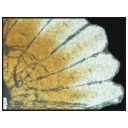
Fossils of the endangered sturgeons and peddlefishes are widely distributed. We here report for the first time the presence of one of the extinct osteichthyes genus Cylindracanthus (Liedy 1856a) from the Early Eocene lignite-bearing successions of the Kutch Basin, India. The present well preserved rostrum is characterised by numerous wedge-shaped components encircling the central canal that runs along its length, paired at the base and each wedge contributing to the formation of a ridge. The rostrum lacks teeth. The present find extends the palaeobiogeographical distribution of Cylindracanthus considerably and supports its Eocene age as dental remnants preserved in Cylindracanthus sp. shows a decrease in remanent dentition and tooth bases from the Cretaceous to the Eocene. Cylindracanthus is an useful palaeoenvironmental indicator as it has been found associated typically with deposits of nearshore marine environments.
PV article infos
Published in 47-1 (2024)
|
PDF
|

|
Observations sur l'anatomie crânienne du genre Palaeotherium (Perissodactyla, Mammalia): mise en évidence d'un nouveau sous-genre, Franzenitherium
Published online: 01/12/1992
Keywords:
Palaeotherium; Paléogène; Perissodactyla; skull anatomy; Systematics
https://doi.org/10.18563/pv.21.3-4.203-224
Abstract
The skull remains referred to the genus Palaeotherium are recorded and described. Biometrical tests are made to elucidate intrageneric allometric relationships and to allow comparisons with various other perissodactyls. Apart from the well known shortness of post canine diastems and deepness of the narial opening, the genus is characterized by a great lengthening of the splanchnocranium, owing to a spreading of the post-orbital facial region, by a reduced area of the eye-socket and by the prevalence of the temporal muscle with regard to the masseter; this original shape of the masticatory apparatus needs to be related to the morphology of the jugal teeth and particularly to their asymmetrical semi-hypsodonty.
These animals, whose running ability was evidently poor, appear to have been adapted to rather closed environments, feeding on relatively soft vegetable matter; olfactory sense was likely to play a leading part in interindividual and environmental relationships. Such evolutionary trends might explain the disappearance of most of them, as clirnatic conditions deteriorated at the end of the Eocene, before the "Grande Coupure" which affected mammalian faunas at that time.
Although the present paper is not directly concemed with phylogenetics, it invalidates the supposed ancestor-descendant relationship between P. castrense and P. magnum, and it suggests a possible emergence of the P. medium lineage from a P. siderolithicum stock. Moreover, the structure of the post-orbital facial area allows the erection of a new sub-genus, Franzenitherium, for the species lautricense and duvali.
PV article infos
Published in Vol. 21, Fasc. 3-4 (1992)
|
PDF
|

|
Les sélaciens du Miocène de la région de Montpellier
Published online: 15/12/1970
Keywords:
Ichtyofauna; Miocene; Montpellier
https://doi.org/10.18563/pv.3.ext.1-139
Abstract
The utilization of screen-washing and attack by dilute acetic acid has permitted the collecting, in the Miocene of the department of Hérault (France), of a very rich ichthyofauna. This fauna is presently comprised of about 60 studied species, of which 11 are new, and represents, in the present state of knowledge, the most varied Miocene selachian fauna described in the world.
The abondance of material has allowed an overall revision to be made; it has thus been possible to complete the description and the figuration of species that were poorly known until now, and to synonymize species that were established on simple morphotypes. Paleo-ecologic study of the ichthyofauna has permitted conclusions to be drawn relative to climate and bathymetry; it was thus possible to show that the Miocene fauna of Hérault was a fauna of a subtropical sea, essentially neritic with rare pelagic contributions.
Knowing the stratigraphic position of the localities, it has been possible to distinguish three faunal assemblages based on associations of species. Some hypotheses on the evolution of certain lineages have been expressed.
The comparison of this fauna with that of other regions permitted the relationships of two diflerent faunal provinces to be specified: the first belongs to the northern domain, characterized by a fauna still subtropical but with numerous temperate water elements; the leoond belongs to the Mesogean domain characterized by warm water forms. It has also lhovm that contemporary faunas could be very different according to the bathymetric zone in which they lived, which furnishes valuable information for the paleogeographic reconstruction of sedimentary basins.
PV article infos
Published in Vol. 3, Ext (1970)
|
PDF
|

|
Les traces de pas de Dinosaures et autres Archosaures du Lias inférieur des grands Causses, Sud de la France
Published online: 15/12/2002
Keywords:
Dinosauroid footprints; France; Grands-Causses; Hettangian; ichnostratigraphy; paleoenvironments; Sinemurian; statistical results
https://doi.org/10.18563/pv.31.1-4.1-143
Abstract
The Causses" is a near 3400 km2 large plateau located in the south of France. Here the first dinosaur footprints where found in 1935. After this, this area has yielded an ever-increasing number of ichnites now in excess of 500 specimens. These latter, 15 to 50 cm long, tridactyl or tetradactyl footprints of generally biped animals, were discovered at the surface of Hettangian to lower Sinemurian dolomite layers within 4 distinct stratigraphic units. The 35 sites bearing ichnites are located on the plateau margin. For the first time, morphologic characters studied through descriptive statistic methods with the usual parameters and classical Student and Snédecor tests, allowed us, to divide the whole set of biped traces into 6 ichnospecies. Their definitions are further constrained by multivariate statistical results using Principal Component Analysis (PCA), Factor Analysis of correspondances (FAC) and Discriminant Analysis (DA). All have confirmed the morphologic observations. So that now, the following taxa are identified : Grallator variabilis, G. lescurei, G. sauclierensis, G. minusculus, Eubrontes giganteus, Dilophosauripus williamsi, cf. Moraesichnium, Orníthopus fabrei nov ichnosp. The more immediately visible differences relate to the interdigital II-IV divarication and the digit length ratio. To this panel, we must add Batrachopus deweyi and shapes suggesting Trisauropodichnus and/or Anomoepus. Among all ichnite associations described in the lower Liasic, the New England assemblage presents the most affinities with ours. It shows the ichnotaxa Grallator, Dilophosauripus, Eubrontes, Batrachopus without forgetting Ornithopus fabrei nov. ichnosp. which is close to Ornithopus gallinaceus from the Massachusetts and Connecticut basins. On comparing the present early Jurassic ichnofauna of the Causses with the ones of the Middle and Upper Triassic formations of the eastem border of the Massif Central (France), it appears that tridactyl footprints become more and more numerous and large from Triassic to Early Jurassic. In the Causses, these latest are prevalent but in Quercy (France), Poland, Italy, USA, they are also associated with Omithopoda, Thyreophora and Sauropoda ichnites. Footprint areas considered here were generaly under an arid climate. Animals that passed by were heavy and bulky possible Megalosaur trackmakers, and lighter and slender Coelophysids or Ceratosaurs. For all, these areas were pathways as the orientations of the trackways seem point out. The directions followed by these reptiles were without any important variation during the Hettango-Sinemurian stages. These areas were also used from time to time by Crocodilomorpha and may be tetradactyl (I-IV) bipedal avian Theropods. However, the number of such trackways in sites, sometimes substantial, should not lead us to overestimate the trackmakers populations. These last were probably relatively moderately abondant in this inter-supratidal swamp environment. In the Causses, ichnites are connected with former algo-laminated deposits (Algal mats) which were rapidly hardened by means of calcitisation of cyanobacteria. The result has been a moderate depth of footprints; autopodia disturbing only a few cm of the carbonate substrate. Other fossils have been discovered : invertebrates with thin bivalve and gastropod shells, crustaceans tests and plants. These latter suggest the existence of paleomangroves like environments but also continental vegetation periodically overruning the swamp environment during regression/transgression cycles. At these times, wooded parts of it, could become protecting, feeding, resting and nesting places.
PV article infos
Published in Vol. 31, Fasc. 1-4 (2002)
|
PDF
|
|
Les Périssodactyles (Mammalia) du gisement Bartonien supérieur de Robiac (Éocène moyen du Gard, Sud de la France)
Published online: 04/05/2015
Keywords:
Chasmotherium; new species; Palaeotheriidae; paleoenvironments
https://doi.org/10.18563/pv.39.1.e3
Abstract
We present here a new updated counting of the perissodactyls of Robiac, the type locality of the MP 16 level of the biochronological scale of paleogene mammals and that of the Robiacian stage of Eocene Land Mammals Ages in Western Europe.
The outcrop of Robiac consists actually of two 500m apart loci, Robiac-Nord and Robiac-Sud, considered of the same age according to the current discriminating power, and is dated from -38,7 MA after the last faunal, magnetostratigraphic and climatic calibrations.
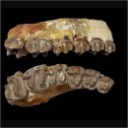
It has yielded a very abundant and rich of 21 taxa perissodactyl fauna, topped by the giant Lophiodon lautricense, last representative of the family Lophiodontidae, of which it is the last proved deposit. The Palaeotheriidae are much diversified with 5 genera and 9 species of "Pachynolophinae", 3 genera and 10 species of Palaeotheriinae. Nine taxa have been defined from Robiac: Chasmotherium depereti n. sp., Palaeotherium castrense robiacense Franzen, 1968, the genus Leptolophus Remy, 1965 with the species L. stehlini Remy, 1965 and L. magnus Remy, 1998, Anchilophus (Paranchilophus) jeanteti Remy, 2012, Metanchilophus chaubeti Remy, 2012, Lophiotherium robiacense Depéret, 1917 and Pachynolophus gaytei n. sp.
The faunal Robiac cenogram with the associated flora testify to a hot, wet and forestal environment, likely corresponding to a short warming climatic phase; the broken up fossil bones should have been carried away and then gathered in swamp areas along the banks of a meandering river.
The swarm of mammals of Robiac, the richest of contemporaneous deposits, has been followed by a drastic drop in perissodactyl diversity at the MP 17A level; a crisis which could have originated in a renewal of the global Eocene cooling. Fons 4, the type-locality of this level, is largely scarcer in perissodactyls and its cenogram testifies to a less diversified fauna, with on the whole smaller species, that likely means a cooler and drier climatic environment; a new perissodactyl diversification occurred but later.
PV article infos
Published in Vol.39-1 (2015)
|
PDF
|

|
Book of Abstracts of the XXII Annual Meeting of the European Association of Vertebrate Palaeontologists, 30 June–5 July 2025, Kraków, Poland
Published online: 20/06/2025
Keywords:
Abstracts; EAVP
https://doi.org/10.18563/pv.eavp2025
Abstract
Book of Abstracts of the XXII Annual Meeting of the European Association of Vertebrate Palaeontologists, 30 June–5 July 2025, Kraków, Poland.
PV article infos
Published in 48-1 (2025)
|
PDF
|

|
Les traces de pas d'amphibiens, de dinosaures et autres reptiles du Mesozoïque Français : inventaire et interprétations.
Published online: 15/12/2007
Keywords:
Footprints; France; Inventory; Mesozoic; palaeontology; palaeovenvironments; Stratigraphy
https://doi.org/10.18563/pv.35.1-4.1-149
Abstract
Since the 19th century, thousands of footprints were observed in the geological series of the French Mesozoic. All are located in the Triassic and Jurassic. After a promising beginning, in France, it is only a few papers which will be published in the first half 20th century, unlike the USA and of others countries of Western Europe. One ought to wait about 1950 for a revival and now they are nearly 200 papers which were devoted to the ichnofossils. The literature abundance and the renewed interest of the naturalists for the palichnologic studies decided to us to write a synthesis work. This one begins with a stratigraphic inventory in which, localisation, age and paleontological contents of about 180 fossiliferous sites are specified. After having pointed out the followed methods, the footprints paleontological interpretation is then approached in detail and the results obtained are replaced in stratigraphy to deduce the fauna evolution during the Mesozoic. So, it appears that Ichnologic data, more varied and rich in the Triassic and Liassic than those relating to the bones, very rare for the considered periods, are very informative. The middle Triassic (Anisian-Ladinian), thus reveals Cotylosauria, Lepidosauria, Crurotarsi with Rauisuchia, Ornithosuchidae, Crocodylia and Dinosauromorpha more the "Prodinosauria": Dinosamiforme whose skeletons are known in Argentina but only in Ladinian. The rather fast domination of Dinosaurs during Norian is also as well shown. The almost exclusive presence of their footprints, up to fifty cm long, in the Lower Hettangian indicates their supremacy in the environments. Footprints characterise not very deep life places located between inter-supratidal limits and often out of water. Sedimentologic and Palaeontologic studies showed that they were great coastal spaces during Middle Triassic, flood-plain with sebkhas while Upper Triassic, and a large !!coastal marsh!! in Grands-Causses during Liassic in which, mainly, fine stromatolithic layers were deposited. During the same periad, bay beaches spread in Vendée. During the Middle Jurassic, they are also brackish to lacustrine environments and recifallagoons in- the Upper Jurassic. Numerous measurements of the footprints and trackways directions showed that the animaIs moved there in weil defined directions, for long periods. They seem due to the palaeotopography of the life environments relatively stable. Also, the discovery of vegetal radicular networks and small footprints far away from the continental borderlands has suggested that the animals continuously lived in these palaeoenvironnements, belonging to large ecosystems, where the sedimentation rate was weak. This explains that thebadies could not fossilize there but only their footprints through the cyanobacterian action in main cases. From the vertical distribution of different ichnospecies, defined with adapted statistical methods, explained in this work, a palichnostratigraphy was established for the Middle Triassic. Although the footprints are also abundant in Hettango-Sinemurian of "Grands-Causses" and the Vendée, it was not possible, up to now, to establish any zonation in this series; Probably because the palichnofauna is too little diversified there, currently reduced to a majority of Theropods II-IV tridactyl traces.
PV article infos
Published in Vol. 35, Fasc. 1-4 (2007)
|
PDF
|

|
La poche à phosphate de Ste-Néboule (Lot) et sa faune de vertebres du Ludien supérieur. 12- Fissipèdes (Carnivores)
Published online: 25/09/1978
Keywords:
Carnivora; Eocene; Quercy Phosphorites
https://doi.org/10.18563/pv.8.2-4.301-311
Abstract
Les Carnivores Fissipèdes de Sainte-Néboule appartiennent tous au genre Cynodictis et semblent constituer une population homogène. Celle-ci se distingue suffisamment des espèces déjà décrites pour constituer un taxon particulier : Cynodictis lacustris neboulensis n. s. sp. . L'étude des variations à l'intérieur de cette population nous a conduit à reconsidérer les critères utilisés pour définir les espèces existantes et à regrouper certaines d'entre elles. Il semble qu'il demeure cependant trois lignées distinctes dans le genre Cynodictis mais le matériel nous paraît encore insuffisant pour traduire cette remarque en termes de systématique.
PV article infos
Published in Vol. 08, Fasc. 2-4 (1978)
|
PDF
|

|
Les poissons crétacés et tertiaires du bassin des Iullemmeden (République du Niger)
Published online: 15/09/1972
Keywords:
Actinopterygians; Cenozoic; Cretaceous; Dipnoans; Selachians
https://doi.org/10.18563/pv.5.5.179-251
Abstract
The present work is devoted to the study of the Cretaceous and Tertiary fishes (teeth of Selachians, Actinopterygians and Dipnoans) collected during a recent expedition in Niger. The Maestrichtian localities have yielded a new genus and a new subspecies of Selachian: Igdabatis sigmodon nov. gen., nov. sp. and Lamna biauriculata nigeriana nov. subsp. The locality of Sessao, which has been attributed to the Thanetian by means of the study of the fish, has furnished by screen-washing an interesting fauna wherein six new species are described: Raja Iouisi, Dasyatis sessaoensis, D. sudrei, D. russelli, Hypolophites thaleri and Ceratodus casieri. Comparison of these faunas with contemporary faunas of Africa has brought out a certain endemism in the Iullemmeden Basin during the late Cretaceous and the early Tertiary.
PV article infos
Published in Vol. 05, Fasc. 5 (1972)
|
PDF
|
|
Les Paramyidae (Rodentia) de l'Eocène inférieur du bassin de Paris.
Published online: 15/07/1968
Keywords:
Ailuraviinae; Eocene; Paramyinae; Rodents
https://doi.org/10.18563/pv.1.4.135-193
Abstract
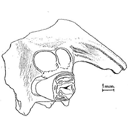
The exploitation of new early Eocene localities in the Paris Basin has resulted in the collecting of numerous mammalian remains, among which are about 300 isolated teeth representing the rodents. They belong, for the most part, to the paramyid group. Only the latest level of the early Eocene has yielded rodents belonging to the pseudosciurid group. The paramyids, the object of this study, are represented by at least 5 genera and 10 species; they are distributed among 4 clearly dilferentiated subfamilies : Paramyinae Simpson 1945, Pseudoparamyinae Michaux 1964, Ailuraviínae n. subf., Microparamyinae Wood1962.
It results from this study that the principal types of rodents in the middle and late Eocene of Europe are clearly related to the forms described here: Plesiarctomys Bravard 1850 is related to Pseudoparamys Michaux 1964, Ailuravus Rütimeyer1891 to Meldimys n. gen., Gliravus hammeli Thaler 1966 to Microparamys nanus (Theilard1927), and some Masillamys Tobien 1954 to Microparamys russelli Michaux 1964 and to M. sp. 1. Gliravus and Masillamys are the oldest representatives of the Gliridae and the Pseudosciurídae, respectively, families which will progressively replace the Paramyidae in the course of the middle and late Eocene.
Two stages can be recognized in the history of te European Paramyidae fauna during the course of the early Eocene: the older is characterized by the Mutigny fauna, the younger by the Cuis fauna.
The Mutigny fauna appears already rather diversified and does not completely correspond, point by point, to the homologous fauna of North America. A geographic differentiation seems to have been manifested rapidly, unless the fauna established in Europe was already a little different from that which established itself in North America.
PV article infos
Published in Vol. 01, Fasc. 4 (1968)
|
PDF
|
|
Old world hemiones and new world slender species (Mammalia, Equidae)
Published online: 16/12/2008
Keywords:
Amerhippus; biometry; Equus; Holocene; New World; Old World; Osteology; Pleistocene; Pliocene
https://doi.org/10.18563/pv.36.1-4.159-233
Abstract
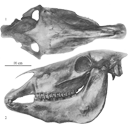
Morphological and biometrical description of skulls, teeth, and limb bones of extant and fossil Old World herniones (including E. hydruntinus) and of New World 'stilt-Iegged' and other slender species from Blancan to Holocene. An Appendix presents ways in which the approximate size of some missing bones or dimensions may be deduced from available ones.
The discussed and/or illustrated fossils were found in Bolivia (Tarija), Canada (Yukon), China (Choukoutien, Gulongshan, Jiling, Loufangzi), Ecuador (Oil Fields), Ethiopia (Melka Kunturé), France (Lunel-Viel), Germany (Süssenborn), Greece (Agios Georgios, Petralona), Hungary (Dorog), Italy (Romanelli), Mexico (Cedazo, San Josecito), Mongolia (Sjara-osso-gol), Spain (Venta Micena), ex-Soviet Union (Akhalkalaki, Binagady, Chokurcha, Chukochya, Kabazi, Kolyma, Krestovka, Kurtak, Staroselie, Tologoj), USA (Alaska, Arkalon, Cedar Meadow, Channing, Conkling, Dry Mountains, Hay Springs, Leisey Shell Pit A, Lissie Formation, Natural Trap, Pool Branch, Powers Ranch, Rock Creek, San Diego, Santo Domingo, Seymour Formation, Shelter, Slaton, Trinity River). Numerous raw or statistically elaborated data are given in Tables.
There is no evidence for the existence of Old World hemiones in the New World nor of 'stilt-Iegged' equids in the Old World. The first 'stilt-Iegged' equid was found at Santo Domingo, New Mexico, and is believed to be Late Blancan. It was probably at the origin of E. calobatus (Arkalon, Rock Creek) and of the smaller E. semiplicatus (Channing, Rock Creek). Slender, but not 'stilt-Iegged', equids found at Natural Trap, Wyoming, ca. 12 ky ago belong to Amerhippus. AlI these species share with Oid World Sussemiones (and some hemiones) peculiar patterns on the lower cheek teeth.
The slender Equus sp. B of Leisey Pit A, Florida, ca. 1.2 Ma, as weIl as Amerhippus francisci and E. tau (probably a senior synonym of E. quinni) share conventional lower cheek teeth patterns. The skulls of A. francisci and E. tau, however, are quite different.
Paleontological data suggest a common origin of Amerhippus, Sussemiones, and 'stilt-Iegged' equids during the late Blancan. Old World hemiones seem to have differentiated later.
PV article infos
Published in Vol. 36, Fasc. 1-4 (2008)
|
PDF
|