|
Leptacodon nascimentoi n,sp., un nouveau Nyctitheriidae (Mammalia,Lipotyphla) de l'Eocène inférieur de Silveirinha (Baixo Mondego, Portugal)
Published online: 16/12/1996
Keywords:
Eocene; Leptacodon; Lipotyphla; Mammals; Nyctitheriidae; Portugal; Silveirinha
https://doi.org/10.18563/pv.25.2-4.275-286
Abstract
In this article is described a new species of Nyctitheriidae with primitive characters: Leptacodon nascimentoi n. sp. from the early Eocene of Silveirinha (Portugal).
PV article infos
Published in Vol. 25, Fasc. 2-4 (1996)
|
PDF
|
|
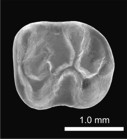
A new and primitive species of Protophiomys (Rodentia, Hystricognathi) from the late middle Eocene of Djebel el Kébar, Central Tunisia
Published online: 02/06/2014
Keywords:
Adaptive radiation; Bartonian; Dental morphology; North Africa; Paleobiogeography
https://doi.org/10.18563/pv.38.1.e2
Abstract
Based on fossil discoveries and phylogenetic studies, an Eocene Asian origin for hystricognathous rodents and anthropoid primates has gained strong support in recent years. The two groups then invaded both Africa and South America, which promoted their evolutionary success. However, the fossil record has so far failed to constrain the nature and precise timing of these pivotal dispersal events. In Africa, given the apparent absence of hystricognaths and anthropoids in early to early middle Eocene localities, it is suggested that these mammal groups dispersed from Asia to Africa sometime during the middle Eocene. In this paper, we report the discovery of several isolated teeth of a rodent from a new vertebrate locality situated in central Tunisia (Djebel el Kébar, KEB-1), dating from the late middle Eocene (Bartonian, ~39.5 Myr). These fossils document a diminutive new species of Protophiomys (P. tunisiensis nov. sp.), a basal genus of hystricognathous rodents which is well known from several North African mammalian-bearing localities of the end of the Eocene. The teeth of P. tunisiensis display a suite of anatomical details comparable with those observed in the other species of the genus, but with a lesser degree of development. Such an apparent primitive evolutionary stage is corroborated by the greater antiquity of this Tunisian species. P. tunisiensis nov. sp. is so far the most ancient representative of hystricognaths in Africa. However, it can be expected that hystricognaths were already present on that landmass given the new data on early caviomorphs recently reported from South America (at ~41 Myr). The arrival of hystricognaths in Africa from South Asia certainly predates the depositional period of the Kébar sediments, but perhaps not by much time.
PV article infos
Published in Vol.38-1 (2014)
|
PDF
|
|
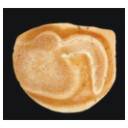
Eocene Teleostean Otoliths, Including a New Taxon, from the Clinchfield Formation (Bartonian) in Georgia, USA, with Biostratigraphic, Biogeographic,
and Paleoecologic Implications
Published online: 03/01/2022
Keywords:
climate; Congridae; Ophidiidae; Sciaenidae; tectonics
https://doi.org/10.18563/pv.45.1.e1
Abstract
Investigations of the Clinchfield Formation (middle Eocene, upper Bartonian) exposed at the Hardie Mine (Wilkinson County, Georgia, USA), produced 4,768 actinopterygian otoliths representing 14 taxa and increased the number of bony fishes threefold from the site. The somewhat limited richness was characterized by bonefishes, mud eels, conger eels, sea catfishes, cusk-eels, snooks, grunts, drums and croakers, and porgies. The assemblage had a relatively even distribution with Ophidiidae, Congridae, and Sciaenidae most common. Included in the otolith taxa was a new sciaenid genus and species, Eosciaena ebersolei, with unknown relationships to other Sciaenidae. The Clinchfield otoliths were compared to other middle and late Eocene in age otolith assemblages in Alabama, Mississippi, and Louisiana utilizing percentage similarity measurements. Analysis indicated that the Clinchfield otoliths were not greatly similar or greatly unlike the Moodys Branch and Yazoo Clay otolith assemblages. However, the Clinchfield showed little relationship to the slightly older Lisbon Formation in adjacent Alabama and is postulated to be related to global climatic and plate tectonic events. Biostratigraphically, the Clinchfield otolith taxa are essentially the same as the other formations except for the Lisbon, which has at least ten unique species. Abundances of Clinchfield otolith taxa indicate a possible sub-bioprovince in the eastern Gulf Coastal Plain. The Clinchfield otoliths indicate a tropical to perhaps subtropical, soft substrate, mainly normal marine to slightly reduced salinities, inner shelf (0–20 m) paleoenvironment with indications of proximal continental coastlines. This investigation represents an initial step in addressing the immensely understudied Paleogene otolith assemblages in Georgia.
PV article infos
Published in 45-1 (2022)
|
PDF
|
|
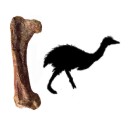
A femur of the Late Cretaceous giant bird Gargantuavis from Cruzy (southern France) and its systematic implications
Published online: 27/06/2019
Keywords:
Aves; femur; France; Gargantuavis; Late Cretaceous
https://doi.org/10.18563/pv.42.1.e3
Abstract
A large avian femur recently discovered at the Late Cretaceous Montplo-Nord locality at Cruzy (Hérault, southern France) is referred to the giant bird Gargantuavis philoinos. The estimated mass of the bird is 57 kg, within the range of living cassowaries. The specimen provides new evidence about the anatomy of G. philoinos, notably showing that the distal end of the femur was similar to that of modern birds in having a condylus lateralis subdivided into two semicondyles. A new diagnosis of Gargantuavis philoinos is provided and the taxon is placed in a new family of basal ornithurines.
PV article infos
Published in Vol 42-1 (2019)
|
PDF
|

|
Les Issiodoromyinae (Rodentia, Theridomyidae) de l'Eocène supérieur à l'Oligocène supérieur en Europe occidentale
Published online: 15/05/1976
Keywords:
climate; Faunal turnover; Paléogène
https://doi.org/10.18563/pv.7.1-2.1-115
Abstract
Based on material from 30 localities, morphologic dental, cranial and biometric analyses have permitted the characterization of two parallel Issiodoromyine lineages, and also the definition of diverse species representing several evolutive stages. Thus it is that new lineages complete the contribution made by the Theridomyinae and Cricetidae and permit, for the Quercy in particular, additional precision in the biochronologic succession of the localities. One of the lineages is limited to the genus Pseudoltinomys LAVOCAT; the other evolves from the genus Elfomys HARTENBERGER to the genus Issiodoromys BRAVARD in GERVAIS. The latter is affected by profound anatomical changes due to a functional modification of the mastication apparatus. These changes seem to be able to be put in relation with the aridification and cooling of the climate at the end of the Eocene. At the end of the middle Oligocene, a new chewing structure is achieved. It is found in diverse living rodents that inhabit a rather arid steppe environment (Cavia, Pedetes, Ctenodactylus). To these supposed nearby ecologic conditions, these rodents have responded in a convergent fashion. It is possible to attribute to the extreme specialization of Issiodoromys its incapacity to adapt to the new climatic crisis of the end of the Oligocene. The arrival of immigrants may be considered as another cause of its disappearance at this time, complementary or not with the first.
PV article infos
Published in Vol. 07, Fasc. 1-2 (1976)
|
PDF
|

|
The fossil rabbit from Valdemino cave (Borgio Verezzi,Savona) in the context of western Europe Oryctolagini of Quaternary.
Published online: 15/12/1997
Keywords:
Lagomorpha; Mammals; North-western Italy; Oryctolagus; Plio-Pleistocene; Savona
https://doi.org/10.18563/pv.26.1-4.167-187
Abstract
The present research deals with the remains of a lagomorph found at Valdemino cave and comes to the conclusion that it is a rabbit with peculiar characteristics in comparison with the other known species Oryctolagus laynensis, O. lacosti and 0. cuniculus. We studied other fossil remains of rabbit populations from Villafranchían and middle Pleistocene deposits and compared them with data from the literature and with recent material. The analysis leads us to maintain two phylogenetic hypotheses about the history of Oryctolagini. The ñrst one, already formulated by Lopez Martinez, suggests that 0. cuniculus derives from O. laynensis,while the origin of O. lacostí is unknown; according to the second hypothesis 0. laynensis would be the common ancestor of two phyletic lineages, 0. lacosti and 0. cuniculus. In both cases the lagomorph from Valdemino would be the form derived from 0. lacosti, from which however it differs in peculiar characteristics. Since the rabbit from Valdemino survives until the beginning of Postgalerian, its disappearance may coincide with the retreat of 0. cuniculus from western Europe in Spain and, perhaps, in south-western France, before the last glaciation. O. cuniculus survived in Spain, from where it spread once again over western Europe as a result of man.
PV article infos
Published in Vol. 26, Fasc. 1-4 (1997)
|
PDF
|

|
Un Haplobunodontidae nouveau Hallebune krumbegeli nov.gen. nov.sp. (Artiodactyla, Mammalia) dans l'Eocène moyen du Geiseltal près Halle (Sachsen-Anhalt, Allemagne)
Published online: 14/06/1995
Keywords:
Artiodactyla; Geiseltal; Germany; Mammal; Middle Eocene; new gen.; new sp.
https://doi.org/10.18563/pv.24.1-2.85-99
Abstract
A new genus and species of haplobunodontid artiodactyl, Hallebune krumbiegeli nov. gen. nov. sp., is described from the middle Eocene Geiseltal Fauna (Saxon-Anhalt, Germany). Its stratigraphic range is restricted to the MP 13 ("obere Mittelkohle") of the Geiseltalian. The material consists of seven fragments, representing both upper and lower jaws. It is indicated, that H. krumbiegeli was a small bunodont herbivore. The size and primitive character of the teeth suggest that the genus possibly is directly derived from Diacodexeidae.The new material forms the basis for reinterpreting the haplobunodontid phylogeny.
PV article infos
Published in Vol. 24, Fasc. 1-2 (1995)
|
PDF
|

|
Données nouvelles sur le genre Stehlinia (Vespertilionoidea, Chiroptera) du Paléocène d'Europe
Published online: 01/12/1974
Keywords:
Chiroptera; Palaeocene; Vespertilionoidea
https://doi.org/10.18563/pv.6.3-4.253-272
Abstract
Cet article présente une étude détaillée du genre Stehlinia, un chiroptère du Paléogène d'Europe, basé sur un matériel abondant issu notamment du gisement d'Escamps (Quercy). L'analyse révèle que Stehlinia possède un mélange de caractères primitifs (comme une denture tribosphénique complète et des prémaxillaires soudés) et évolués (notamment dans le squelette post-crânien), le rapprochant des vespertilionoïdes actuels, en particulier des Kerivoula.
PV article infos
Published in Vol. 06, Fasc. 3-4 (1975)
|
PDF
|

|
Les pantolestidés (Mammalia, Pantolesta) de l'Eocène inférieur de Prémontré (Aisne, France).
Published online: 30/07/2001
Keywords:
France; Mammals; Pantolestids; Ypresian
https://doi.org/10.18563/pv.30.1-2.11-35
Abstract
Study of pantolestid mammals from the late Ypresian locality of Prémontré (reference level MP 10) allows the recognition of three genera: Palaeosinopa. Pantolestes and Premontrelestes n. gen. Pantolestes, up to now only recorded from North America, is represented by P. sabatieri n. sp. Premontrelestes n. gen., represented by the type species P. duchaussoisi n. sp., is compared with Pantolestes and Buxolestes. The latter, known from middle Eocene sites in Europe, has not been recognized at Prémontré. Two other taxa, the first of which is close to Pantolestes and the second of Premontrelestes n. gen. are left in open nomenclature.
PV article infos
Published in Vol. 30, Fasc. 1-2 (2001)
|
PDF
|

|
Rythme et modalités de l'évolution chez les rongeurs à la fin de l'Oligocène-leurs relations avec les changements de l'environnement.
Published online: 15/12/2000
Keywords:
Environment; evolution; Oligocene; Rodents; Systematics
https://doi.org/10.18563/pv.29.2-4.83-360
Abstract
The analysis of oxygene isotope variations as well as paleobotanical data suggest that the Oligocene/Miocene boundary corresponds to a transitional period marked by floristical and climatic variations. During this period, the pyreneo-alpine tectonics has contribued to modify the geography and western Europe landscapes. Faunal changes (appearances, extinctions, migrations) are observed in different mammalian groups, notably in the rodents. A study of the evolutionary trends and patterns in paleogene rodents is involved for the period ranging from level MP 28 of the Late Oligocene to the Early Miocene, including the Oligo-Miocene boundary.
The Rodents fauna from the sites of Venelles (Bouches-du-Rhône District, France) and Thezels (Lot, France), previously mentionned in litterature, have been studied. The first description of the Eomyidae of La Milloque (MP 29) has been completed. These faunas are compared to those from various localities dating from the considered period. In La Milloque, a new representative of the Eomys species is described next to a form close to Rhodanomys hugueneyae ENGESSER, 1987. It is the Eomys milloquensis nov. sp., the likely descendant of Eomys quercyi COMTE & VIANEY-LIAUD, 1987. Two new species are also described in Thezels: Eucricetodon thezelensis nov. sp., resulting from a likely and local evolution of Eucricetodon praecursor (SCHAUB, 1925) from La Milloque, which, in the same geographic area, could be at the origin of Eucricetodon hesperius ENGESSER, 1985 from Paulhiac. Plesiosminthus admyarion nov. sp., quite distinct from Plesiosminthus schaubi VIRET, 1926, which announces Plesiosminthus myarion SCHAUB 1930. Venelles 'Plesiosminthus schaubi population is considered as a sub-species, named Plesiosminthus schaubi meridionalis nov. subsp. New phylogenetic patterns are proposed. Among the Eomyidae, a quantification of various features of the M1-2/ crown (hypsodonty, degree of abrasion, occlusal angle, state of development of the I and V anticlines), and a comparison with the occlusal diagram of the other teeth among various other populations allows a more efficient separation of Eomys and Rhodanomys genera. In Western Europe, and within this period, it finally does not seem possible to gradually connect the genus Eomys to the genus Rhodanomys. The evolution of the Eomys quercyi - milloquensis lineage seems to underline a similar evolution to that which may have led from the Eomys to the Rhodanomys form. The latter which appears totally accomplished at level MP 29 of the Oligocene is considered as an immigrant. If we compare the most representative species of the Venelles, Thezels, and Coderet sites, (i.e. Rhodanomys, Eucricetodon, Adelomyarion, Peridyromys, Plesíosminthus), it becomes impossible to confirm their biochronological separation. The noticeable differences between the populations may be interpreted as geographical variations. An explanation to these variations, and to fauna's evolution during the Late Oligocene and Early Miocene can be found in the environmental modifications, supported by isotopic, paleobotanical and sedimentologic analysis. A tentative reconstruction of the environments is attempted by the cenogram method. The analysis of the fluctuations of fauna's diversity shows variations which may be correlated to a drop in temperature at MP 29, during the Late Oligocene, followed by an increase in temperature along with an aridity phenomenom, during the basal Miocene (MN O).The confrontation of various methods give the opportunity of reconstituting and comparing the evolution of the environment of three sequences of sites chosen from different regions. Ecological affinities of various rodents' species are being examined. It is possible to consider that the integration of all the conclusions resulting from this study should lead to an explanation to the evolution of rodents for the period around the Oligocene-Miocene boundary. The site of Coderet- level 3- would be posterior to the latter, at the beginnig of the Miocene, and would mark the level MN 0 of the Aquitanian.
PV article infos
Published in Vol. 29, Fasc. 2-4 (2000)
|
PDF
|

|
La palichnofaune de vertébrés tétrapodes du permien supérieur du Bassin de Lodève (Languedoc-France).
Published online: 15/09/2000
Keywords:
Footprints; France; Languedoc; Lodève basin; new ichnotypus; Saxonian; Upper Permian
https://doi.org/10.18563/pv.29.1.1-82
Abstract
Near "la Lieude", in the Lodève basin, more than a thousand of footprints are distributed in a twenty of trackways which amounts to 220 m length. They have been found on calcareous siltstone level in the B site named also "Réserve Naturelle Volontaire". This last is located in the Saxonian summit dated Upper Permian. "La Lieude" tracks are described by using statistical methods then they are compared with others from the world Permian. What allows to distinguish 4 following ichnotaxa: Lunaepes ollierorum nov.ichnosp., Merifontichnus thalerius nov. ichnogen. and nov. ichnosp., Planipes brachydactylus nov.ichnosp. and Brontopus circagiganteus nov. ichnosp. All these traces are attributed with possibility or probability to Therapsida or to Therosauria, except Brontopus circagiganteus nov. ichnosp. that could be due to Caseamorpha. All these animals whose sizes have been estimated between l and 5 m lived probably in a playa environment.The biological and sedimentological data from "la Lieude" footprints levels compared with informations provided by the tracks orientations, suggest the following scenario. Animals coming from the North have crossed a sandy channel bank with plants zones by directing to the South for the majority. Maybe, they were going to the lacustrine part of the playa, close to "la Lieude" footprints that they have just trampled on.
PV article infos
Published in Vol. 29, Fasc. 1 (2000)
|
PDF
|
|
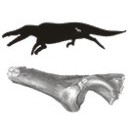
First record of the family Protocetidae in the Lutetian of Senegal (West Africa)
Published online: 05/12/2014
Keywords:
innominate; Lutetian; Protocetid; Senegal
https://doi.org/10.18563/pv.38.2.e2
Abstract
The earliest cetaceans are found in the early Eocene of Indo-Pakistan. By the late middle to late Eocene, the group colonized most oceans of the planet. This late Eocene worldwide distribution clearly indicates that their dispersal took place during the middle Eocene (Lutetian). We report here the first discovery of a protocetid fossil from middle Eocene deposits of Senegal (West Africa). The Lutetian cetacean specimen from Senegal is a partial left innominate. Its overall form and proportions, particularly the well-formed lunate surface with a deep and narrow acetabular notch, and the complete absence of pachyostosis and osteosclerosis, mark it as a probable middle Eocene protocetid cetacean. Its size corresponds to the newly described Togocetus traversei from the Lutetian deposits of Togo. However, no innominate is known for the Togolese protocetid, which precludes any direct comparison between the two West African sites. The Senegalese innominate documents a new early occurrence of this marine group in West Africa and supports an early dispersal of these aquatic mammals by the middle Eocene.
PV article infos
Published in Vol.38-2 (2014)
|
PDF
|
|
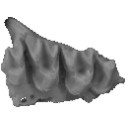
A new species of bat (Chiroptera: Vespertilionidae) from the early Oligocene global cooling period, Brule Formation, North Dakota, USA
Published online: 09/12/2019
Keywords:
Eocene-Oligocene global cooling; Mammalia; Oligocene; Plecotini; Quinetia
https://doi.org/10.18563/pv.42.2.e2
Abstract
We report the first confirmed fossil bats from North Dakota, including a new species referable to the Vespertilionidae represented by a maxilla with P4-M3 from the Brule Formation, Fitterer Ranch local fauna, early Oligocene, Whitneyan North American Land Mammal Age. Unassociated postcranial fragments of the humerus and femur also represent a vespertilionoid, but appear to reflect a different, unidentified species. The new taxon, Quinetia frigidaria sp. nov., is referred to the genus Quinetia, previously known only from approximately contemporaneous deposits in Europe. The new species is larger than Quinetia misonnei from the early Oligocene of Belgium. It is similar in some morphological characters to Chadronycteris rabenae (Chiroptera incertae sedis) of the late Eocene (Chadronian) of northwestern Nebraska and to Stehlinia species (?Palaeochiropterygidae) from the Eocene and Oligocene of Europe, but differs from each in morphological details of the dentition and maxilla. An unassociated talonid of a lower molar from Fitterer Ranch shows myotodont morphology, unlike the nyctalodont lower molars in Q. misonnei, and thus represents a second chiropteran taxon in the fauna. Quinetia frigidaria is a member of a Paleogene radiation of bats near the low point of the Eocene-early Oligocene decline in global temperatures, increased seasonal aridity, and loss of tropical floras from mid-latitude North America.
PV article infos
Published in Vol 42-2 (2019)
|
PDF
|
|
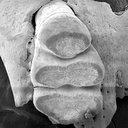
A new Desmodillus (Gerbillinae, Rodentia) species from the early Pliocene site of Langebaanweg (South-western Cape, South Africa)
Published online: 20/01/2017
Keywords:
Lower Pliocene; Muridae; Rodentia; RSA
https://doi.org/10.18563/pv.41.1.e1
Abstract
Situated in the Cape region of the Republic of South Africa (RSA), the paleontological site of Langebaanweg is dated to 5.1 Myr and is famous for having yielded an abundant vertebrate assemblage, including numerous rodent species from the Mio-Pliocene transition. Based on molar morphology and skull anatomy, the single Gerbillinae taxon identified at Langebaanweg and described in this paper is allocated to Desmodillus, which is a modern monotypic South African endemic genus. It is significant in being the oldest representative of the genus in Africa. We describe here a new species of this genus which is larger than the modern D. auricularis, but nevertheless retains some of its main characteristics, namely the shape of the maxilla and mandible, the presence of poorly fused alternating cusps, and no longitudinal crest. This taxon differs from modern South African Gerbilliscus representatives in some mandibular and maxillary characters, in the m1 prelobe cusp, and in having less fused cusps. Two fossil Gerbillinae discovered in the Upper Miocene of Africa and Asia, Abudhabia and Protatera, have been compared with the new species. We discuss their relationships with modern and Plio-pleistocene Gerbillinae and conclude that Abudhabia could be the sister taxon of Desmodillus and that around 6-5 Myr a vicariance event allowed Gerbillinae to diversify into modern Desmodillus in South Africa, and Gerbilliscus in East Africa. The murine/gerbilline ratio, which is a good indicator of rainfall, supports other proxies which suggest that at 5.1 Myr the climate in the Langebaanweg region was more humid than today.
PV article infos
Published in Vol 41-1 (2018)
|
PDF
S.I. Data
|

|
Palaecarcharodon orientalis (Sinzow) (Neoselachii : Cretoxyrhinidae), from the Paleocene of maryland, USA.
Published online: 15/09/1989
Keywords:
Maryland; Palaeocarcharodon; Paleocene; Selachian; Systematics; U.S.A.
https://doi.org/10.18563/pv.19.1.1-6
Abstract
Recent collecting of fossil vertebrate remains from the lowermost member of the Aquia Formation (Paleocene), has enabled me to report here for the very fIrst time, the earliest occurrence for the teeth of Palaeocarcharodon in the fossil record of the New World.
This report represents only one species of neoselachian from this locality, the remaining fauna of which will subsequently be described.
PV article infos
Published in Vol. 19, Fasc. 1 (1989)
|
PDF
|

|
Fossil snakes from the Palaeocene of Sao José de Itaborai, Brazil.Part 1 Madtsoiidae, Aniliidae.
Published online: 15/12/1998
Keywords:
Aniliidae s.l.; Brazil; Coniophis; Hoffstetterella; Madtsoia; Madtsoiidae; middle Palaeocene; New taxa; Snakes
https://doi.org/10.18563/pv.27.3-4.109-144
Abstract
The middle Palaeocene of São José de Itaboraí (State of Rio de Janeiro, Brazil) has yielded a very rich and diverse snake fauna which includes Madtsoiidae, Aniliidae s.l., Boidae, Tropidophiidae s.l., Booidea incertae sedis, and Russellophiidae. The present article (part I) deals with Madtsoiidae and Aniliidae s.l. Madtsoiidae are represented by many vertebrae and a few skull bones. They comprise one new species assigned to the genus Madtsoia (M. camposi sp. nov.). However, the definition of the genus Madtsoia is unsatisfactory and the generic allocation might be provisional. A few elements, vertebrae only, belong to the Aniliidae s. l. Two taxa are referred to this latter group: Coniophis cf. C. precedens and Hoffstetterella brasiliensis gen. et sp. nov. The forthcoming part II will deal with Boidae.
PV article infos
Published in Vol. 27, Fasc. 3-4 (1998)
|
PDF
|

|
Otolithes de poissons du Pliocène inférieur de Papiol, près de Barcelone.
Published online: 15/09/1998
Keywords:
Catalonia; otoliths; Pliocene; Spain; teleosts
https://doi.org/10.18563/pv.27.1-2.1-17
Abstract
The Zanclian marls from Papiol provided otoliths belonging to 53 teleost taxa; nine of those are new for the Mediterranean Pliocene. The association reflects a bathymetry between 150 and 350 m, but it is likely that such depths only existed at the initial stage of flooding of the Llobregat bay. A compilation of the available data for the whole Mediterranean realm at Zanclian time provided a list of 163 taxa, of which 105 could be identified at species level. This last group provides the most useful data for evaluating the composition and affinities of the Mediterranean Zanclian fauna, which appears to be significantly different from the Recent Mediterranean fauna. The Zanclian fauna counts 68 % of Recent species: 12,5 % were already represented in the Mediterranean Miocene, 37 % appeared there at the Zanclian, and 18 % are extra-Mediterranean today. This last group is essentially composed by oceanic fishes, living in the warm parts of the Atlantic and Indo-Pacific Oceans. It is evident that a non neglectable number of Recent species only penetrated very recently in the Mediterranean, which stresses the differences between the more oceanic Zanclian Mediterranean fauna and the present one.
PV article infos
Published in Vol. 27, Fasc. 1-2 (1998)
|
PDF
|

|
Experimental taphonomy inavian eggs and eggshells: effects on early diagenesis.
Published online: 15/12/2003
Keywords:
archosaurian eggshells; avian egg; Experimental taphonomy; geochemical analysis; pyritisation; Upper Cretaceous
https://doi.org/10.18563/pv.32.2-4.77-95
Abstract
We experimentally explore the early taphonomic stages involving the decay and biodegradation of buried eggs and eggshells. Unfertilised commercial chicken eggs and eggshell fragments were buried in plastic containers and were kept under controlled conditions for eight months. Half of the containers were filled with marl, and the remainder with sand. All were saturated with fresh tap water, acidified water, sulphate water, or seawater. They were kept in the dark at 23.4-26 °C, except one, which was kept in a heating chamber at 37.4°C. We expected that different burial conditions would produce distinct taphonomic outcomes. Instead, the taphonomic alterations of buried eggs parallel that of the alteration of egg proteins (i.e., denaturation and/or putrefaction) with an additional role played by the eggshell. Mummification, encrustation, distortion and fragmentation, and necrokynesis (vertical displacement) depend on organic matter decay. The experiment identifies environmental conditions that may favour or actively promote these taphonomic processes. Of these, early pyritization is one of the most relevant. For comparative purposes, samples of fossil and extinct eggshell representing three distinct environmental burial conditions were examined. These included Megaloolithus, Caiman crocodilus, and Struthio camelus ootypes. The geochemical analysis of these eggshells showed no significant differences among the chemical variables of these fossil and extant ootypes. Eggshells exhibited a stable composition over a range of experimental conditions.
PV article infos
Published in Vol. 32, Fasc. 2-4 (2003)
|
PDF
|

|
Contribution à l'étude des Cricétidés oligocènes d'Europe occidentale
Published online: 20/01/1972
Keywords:
Cricetidae; Europe; Oligocene
https://doi.org/10.18563/pv.5.1.1-44
Abstract
Of the ten cricetid species from the Oligocene of Western Europe, attributed until now to the genus Eucricetodon, only four prove to be utilizable - E. atavus, E. huberi, E. praecursor, E. collatum - to which it is possible to add two forms newly described: E. huerzeleri and E. quercyi. The evolullon of the genus Pseudocricetodon is also the subject of new observations. The study of the dental morphology allows us to distinguish in these two genera three lineages beginning in the middle Oligocene:
- Lineage P. montalbenensis-P. thaleri (from Montalban to Goderet), of small size, without
increase in size.
- LineageE. atavus-E. infralactorensis (from Hoogbulsel to Estrepouy), of middle size, with a regular increase in size.
- Lineage E. huerzeleri-E. haslachense (level of Montalban to that of Estrepouy), of large size, with an increase in size.
Two other forms are equally represented in these loealitles: Heterocricetodon aff. helbengi and Melissiodon quercyi. It has been possible to attribute a precise age (zone of "Cournon") to the last species, which has been defined by Schaub (l925) from material in the Old Quercy collections. The genera Pseudocricetodon, Eucricetodon, ? "Cricetodon", Leydimys, Eumys, differentiated at the beginning of the middle Oligocene in Europe, Asia and North America, seem to derive from a common ancestral group. The place of origin of this group could be situated in Asia.
PV article infos
Published in Vol. 05, Fasc. 1 (1972)
|
PDF
|

|
L'anatomie de Lyrocephaliscus euri (wiman), Trématosaure du Trias inférieur du Spitsberg : arrière-crâne, squelette axial et ceinture scapulaire.
Published online: 30/06/1983
Keywords:
skull anatomy; Spitsbergen; Trematosaurs; Trias
https://doi.org/10.18563/pv.13.1-2.13-31
Abstract
The formic acid preparation of a nodule collected from the Lower Triassic of Spitsbergen, and containing a skull with some associated postcranial elements of Lyrocephaliscus euri (WIMAN), precises and enriches previous descriptions of the reputedly well-known trematosaur. lt permits more detailed descriptions of the occipital region, of the course of the carotid arteries and collateral vessels, and refutes the previous description of a stapedial foramen in trematosaurs. The discovery of pleurocentres associated with the other vertebral components confirms the primitive rhachitomy of trematosaurs.
PV article infos
Published in Vol. 13, Fasc. 1-2 (1983)
|
PDF
|