|
Observations sur des remaniements structuraux post-mortem dans des dents de mammifères fossiles provenant des phosphorites du Quercy
Published online: 01/12/1974
Keywords:
Quercy Phosphorites; rearrangements; Teeth
https://doi.org/10.18563/pv.6.3-4.163-176
Abstract
Deux types de remaniements post mortem me paraissent caractéristiques de l'état de conservation des dents de mammifères fossiles dans les Phosphorites du Quercy :
1) Des destructions localisées d'origine biologique, sous forme de galeries de morphologie très variable creusées dans la dentine et le cément, et impliquant sans doute la participation de différents types de micro-organismes. Ces altérations se sont développées peu de temps après la mort, avant la fossilísation proprement dite et se sont rapidement arrêtées après l'enfouissement dans le sédiment phosphaté.
2) Des perturbations dans les structures de la dentine liées aux variations locales de minéralisation, provoquées par une imprégnation diffuse des zones les moins calcifiées par divers minéraux et probablement surtout de l`apatite.
PV article infos
Published in Vol. 06, Fasc. 3-4 (1975)
|
PDF
|

|
Mammals and stratigraphy : Geochronology of the continental mammal-bearing Tertiary of south America.
Published online: 15/12/1983
Keywords:
Cenozoic; Geochronology; Mammalia; South America; Stratigraphy; Tertiary
https://doi.org/10.18563/pv.13.ext
Abstract
The principles and practices employed in establishment and recognition of South American land mammal ages are reviewed along with previous and present concepts of distinguishing time, rock, and faunal units. Previous chronological arrangements of South American Tertiary land mammal faunas are appraised on the basis of recent geological and paleontological data. Twelve South American Tertiary land mammal ages are here recognized [from oldest to youngest, Riochican (middle to late Paleocene); Casamayoran (early Eocene); Mustersan (middle Eocene); Divisaderan (late Eocene); Deseadan (early [to middle?] Oligocene); Colhuehuapian (late Oligocene); Santacrucian (early Miocene); Friasan (middle Miocene); Chasicoan (late Miocene); Huayquerian (latest Miocene); Montehermosan (early to middle Pliocene); and Chapadmalalan (late Pliocene)]. As all except the Friasian were originally defined on the basis of Argentine faunas, these are discussed first and at length, and each is reviewed with discussion of type locality, stratigraphy, type fauna, and faunal correlations. Non-Argentine faunas are then discussed country by country in alphabetical order.
A review is given of radioisotope dates obtained on volcanic rocks (i.e., basalts, tuffs) associated with mammalbearing beds in Argentina. Based on these age determinations and on correlation of the late Tertiary land mammals involved in the interchange between North and South America, a chronology of South American land mammal ages correlated with North American land mammal ages and European marine stages is proposed.
It is concluded that South America was an island continent through most of the Tertiary Period (ca 65 to about 3 Ma). As a result, the land mammal fauna of South America developed in isolation and was dominated by autochthonous endemic groups. Toward the end of the Tertiary (i.e., middle Miocene) a unique faunal balance had been achieved by the descendants of the ancient inhabitants (notoungulates, litopterns, condylarths, astrapotheres, edentates, marsupials) and of later (late Eocene) waif immigrants (caviomorph rodents, platyrrhine primates). A prominent feature of this mammal fauna was the combination of carnivorous and omnivorous marsupials with native placental herbivorous ungulates, subungulates, and edentates.
Sometime during the late Miocene, a limited but important interchange of mammalian taxa between North and South America took place. Procyonids (raccoons and their allies), a group of North American origin, first appear in South America in strata of Huayquerian Age, while members of the extinct South American ground sloth families Megalonychidae and Mylodontidae first appear in North America in early Hemphillian time. These groups dispersed along island arcs before the appearance of the Panamanian land bridge in the Pliocene (ca 3.0 Ma). Cricetine rodents, a group of North American origin, are first known in South America in strata of Montehermosan Age. The known taxa are too advanced and diversified to be considered the first of this group to invade South America. lt is believed by some workers that these rodents arrived before the Montehermosan, possibly in the late Miocene or earlier, by waif dispersal from North America.
The isolation of South America ended with the appearance of the Panamanian land bridge, which provided a direct, dry land connection between the two Americas. Across this portal an extensive interchange of terrestrial faunas occurred, and the fossil record documents an intermingling of these long-separated land mammals faunas.
The beginning of this interchange by land route in South America is marked by the appearance of mammals which evolved from North American emigrants in the Chapadmalal Formation of Argentina. These include a mustelid (Conepatus), a tayassuid (Argyrohyus), and four genera (Akodon, Dankomys, Graomys, Reithrodon) of cricetine rodents. The appearance of this contingent of northern animals favors the existence of the Panamanian land bridge by this time. Likewise, a large number of terrestrial vertebrates of South American origin appear in North America in beds of late Blancan Age date around 2.7 Ma. Among the mammals are Neochoerus, Erethizon, Glyptotherium, Glossotherium, Kraglievichia, and Dasypus.
PV article infos
Published in Vol. 13, Ext (1983)
|
PDF
|

|
Stratigraphy and Oligocene-Miocene mammalian biochronology of the Aktau Moutains, Dzhungarian Alatau Range, Kazakhstan
Published online: 16/12/1996
Keywords:
Dzhungarian Alatau; Kazakhstan; Lithologic correlation; Mammalian biochronology; Miocene; Oligocene; Stratigraphy
https://doi.org/10.18563/pv.25.2-4.141-174
Abstract
Stratigraphic studies in the Aktau Mountains bordering the Dzhungarian Alatau Range in southeastern Kazakhstan have included mapping of Tertiary lithostratigraphic units, documentation of fossiliferous deposits, correlation of sections, etc. These investigations have led in turn to revised interpretation of the Tertiary geology of the area. The Tertiary sequence in the Aktau Mountains is represented by three lithostratigraphic units (in ascending order): (1) the middle Eocene Akbulak Formation; (2) the Oligocene Aktau Formation with a lower member including white quartz sands that contain fossil mammals, and an upper member including red-colored clays and sandstones, brick red clays, an anhydrite and gypsum clayey horizon, and bright brown-red clays; and (3) the upper Oligocene-Miocene Chul'adyr Formation with a lower member of greenish and yellowish conglomerates and gritstones, a middle member including grayish and yellowish sands and gritstones, and an upper member including brown and red clays and carbonate- and anhydrite-rich clays. The Aktau and Chul”adyr Formations represent separate cycles of sedimentation. Mammalian biostratigraphy and biochronology of the three vertebrate faunas in Aktau Mountains are reviewed. The mammalian fauna from white sands of the lower Aktau Formation is small but includes Ardynia and is thought to be early Oligocene in age. The mammalian fauna from conglomerates and gritstones of the lower member of the Chul”adyr Formation is also small but includes Paraceratherium and is thought to be late Oligocene in age. The mammalian fauna from sands of the middle member of the Chul'adyr Formation is extensive, with micro- and macrofauna attributed to Neogene mammal zones MN4 to MN 6, indicating a latest early Miocene to earliest middle Miocene age (Orleanian-Astaracian). Most genera of middle Chul”adyr mammals are known from the middle Miocene Shanwang faunas of China and from the Castelnau-d”Arbieu faunal assemblage (MN4-MN6) of southwestern France.
PV article infos
Published in Vol. 25, Fasc. 2-4 (1996)
|
PDF
|
|
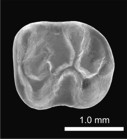
A new and primitive species of Protophiomys (Rodentia, Hystricognathi) from the late middle Eocene of Djebel el Kébar, Central Tunisia
Published online: 02/06/2014
Keywords:
Adaptive radiation; Bartonian; Dental morphology; North Africa; Paleobiogeography
https://doi.org/10.18563/pv.38.1.e2
Abstract
Based on fossil discoveries and phylogenetic studies, an Eocene Asian origin for hystricognathous rodents and anthropoid primates has gained strong support in recent years. The two groups then invaded both Africa and South America, which promoted their evolutionary success. However, the fossil record has so far failed to constrain the nature and precise timing of these pivotal dispersal events. In Africa, given the apparent absence of hystricognaths and anthropoids in early to early middle Eocene localities, it is suggested that these mammal groups dispersed from Asia to Africa sometime during the middle Eocene. In this paper, we report the discovery of several isolated teeth of a rodent from a new vertebrate locality situated in central Tunisia (Djebel el Kébar, KEB-1), dating from the late middle Eocene (Bartonian, ~39.5 Myr). These fossils document a diminutive new species of Protophiomys (P. tunisiensis nov. sp.), a basal genus of hystricognathous rodents which is well known from several North African mammalian-bearing localities of the end of the Eocene. The teeth of P. tunisiensis display a suite of anatomical details comparable with those observed in the other species of the genus, but with a lesser degree of development. Such an apparent primitive evolutionary stage is corroborated by the greater antiquity of this Tunisian species. P. tunisiensis nov. sp. is so far the most ancient representative of hystricognaths in Africa. However, it can be expected that hystricognaths were already present on that landmass given the new data on early caviomorphs recently reported from South America (at ~41 Myr). The arrival of hystricognaths in Africa from South Asia certainly predates the depositional period of the Kébar sediments, but perhaps not by much time.
PV article infos
Published in Vol.38-1 (2014)
|
PDF
|

|
Les gisements de Robiac (Eocène supérieur) et leurs faunes de Mammifères.
Published online: 05/04/1969
Keywords:
Fauna; Late Eocene; Mammalia; Robiac
https://doi.org/10.18563/pv.2.3.95-156
Abstract
Designated the type-locality of a late Eocene paleomammal zone, Robiac has recently been the object of important excavations. The first results of the new collecting, as well as a revision of the material in old collections, are given in this work.
Two stratigraphic section, cutting through the two sites presently distinguished (Robiac-Nord and Robiac-Sud) reveal the lithologic variation at the base of the Fons Limestone and the localization of three fossiliferous beds at Robiac-Sud.
The molluscan fauna and the flora (charophytes), which have already been described, as well as that of the lower vertebrates, have been listed.
A list of 46 mammalian species (only 16 species were known previous to 1964) has been established. The micro-mammals, nearly all new in this fauna (marsupials, insectivores, bats, rodents, primates, and some smallsized artiodactyls), Were obtained only after screen-washing of the matrix; about 4 tons of sediment were thus treated.
The artiodactyls have been the most extensively analyzed; 6 genera, of which one is new, have been recognized. The latter is described as Robiacina minum n.g., n.sp., and represents a very small artiodactyl of the family Anoplotheriidae. The taxonomie status of certain species formerly described has been clarified by the designation of lectotypes (Cebochoerus robiucensis, Catodonerium robiacense, Xiphodon castrense).
The paleontologic corrélations at present possible between the late Eocene faunas have allowed the relative positions of te different French localities of this age to be established; the Guépelle locality, it seems, could define in the future a new paleomammal zone.
PV article infos
Published in Vol. 02, Fasc. 3 (1969)
|
PDF
|
|
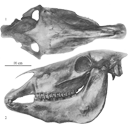
Old world hemiones and new world slender species (Mammalia, Equidae)
Published online: 16/12/2008
Keywords:
Amerhippus; biometry; Equus; Holocene; New World; Old World; Osteology; Pleistocene; Pliocene
https://doi.org/10.18563/pv.36.1-4.159-233
Abstract
Morphological and biometrical description of skulls, teeth, and limb bones of extant and fossil Old World herniones (including E. hydruntinus) and of New World 'stilt-Iegged' and other slender species from Blancan to Holocene. An Appendix presents ways in which the approximate size of some missing bones or dimensions may be deduced from available ones.
The discussed and/or illustrated fossils were found in Bolivia (Tarija), Canada (Yukon), China (Choukoutien, Gulongshan, Jiling, Loufangzi), Ecuador (Oil Fields), Ethiopia (Melka Kunturé), France (Lunel-Viel), Germany (Süssenborn), Greece (Agios Georgios, Petralona), Hungary (Dorog), Italy (Romanelli), Mexico (Cedazo, San Josecito), Mongolia (Sjara-osso-gol), Spain (Venta Micena), ex-Soviet Union (Akhalkalaki, Binagady, Chokurcha, Chukochya, Kabazi, Kolyma, Krestovka, Kurtak, Staroselie, Tologoj), USA (Alaska, Arkalon, Cedar Meadow, Channing, Conkling, Dry Mountains, Hay Springs, Leisey Shell Pit A, Lissie Formation, Natural Trap, Pool Branch, Powers Ranch, Rock Creek, San Diego, Santo Domingo, Seymour Formation, Shelter, Slaton, Trinity River). Numerous raw or statistically elaborated data are given in Tables.
There is no evidence for the existence of Old World hemiones in the New World nor of 'stilt-Iegged' equids in the Old World. The first 'stilt-Iegged' equid was found at Santo Domingo, New Mexico, and is believed to be Late Blancan. It was probably at the origin of E. calobatus (Arkalon, Rock Creek) and of the smaller E. semiplicatus (Channing, Rock Creek). Slender, but not 'stilt-Iegged', equids found at Natural Trap, Wyoming, ca. 12 ky ago belong to Amerhippus. AlI these species share with Oid World Sussemiones (and some hemiones) peculiar patterns on the lower cheek teeth.
The slender Equus sp. B of Leisey Pit A, Florida, ca. 1.2 Ma, as weIl as Amerhippus francisci and E. tau (probably a senior synonym of E. quinni) share conventional lower cheek teeth patterns. The skulls of A. francisci and E. tau, however, are quite different.
Paleontological data suggest a common origin of Amerhippus, Sussemiones, and 'stilt-Iegged' equids during the late Blancan. Old World hemiones seem to have differentiated later.
PV article infos
Published in Vol. 36, Fasc. 1-4 (2008)
|
PDF
|
|
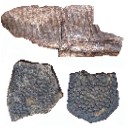
Terrestrial vertebrate paleocommunities from the Cerro del Pueblo Formation (Late Cretaceous; Late Campanian) at Las Aguilas, Coahuila, Mexico
Published online: 16/07/2019
Keywords:
Campanian; Coahuila; dinosaurs; Mexico.; Vertebrates
https://doi.org/10.18563/pv.42.2.e1
Abstract
The Las Águilas site near Porvenir de Jalpa, Coahuila, Mexico, is extremely rich in tetrapod remains comprising both bones and trackways of several dinosaur taxa of late Campanian age. Within a 50 m thick section we identified at least nine layers with dinosaur bone assemblages. In one of these the dinosaur bones are associated with remnants of eusuchian crocodilians, turtles, plesiosaurs, pterosaurs, tyrannosaurids, dromaeosaurids, parksosaurid, hadrosaurids, ceratopsids, and ankylosaurs. This layer is also rich in coprolites of turtles, crocodilians and likely theropods, thus providing evidence for the wealth of Late Cretaceous vertebrate life in the area.
PV article infos
Published in Vol 42-2 (2019)
|
PDF
|

|
Study of the Turolian hipparions of the lower Axios valley (Macedonia, Greece). 4. Localities of Dytiko.
Published online: 15/12/1988
Keywords:
Equidae; Greece; Hipparion; Lower Axios Valley; Macedonia; Mammalia; Turolian
https://doi.org/10.18563/pv.18.4.187-239
Abstract
The hipparions from the Dytiko localities of the lower Axios valley (Macedonia, Greece) are studied. The material comes from three localities Dytiko-l, 2, 3 (DTK, DIT, DKO), which are situated near the village of Dytiko, about 60 km northwest to Thessaloniki. Three species have been determined, the medium-sized H. mediterraneum, the small-sized H. matthewi and the very small-sized H. periafricanum. The determined Hipparion species, their morphological characters and their comparison with the other Axios valley material indicate a Late Turolian age for the Dytiko localities.
PV article infos
Published in Vol. 18, Fasc. 4 (1988)
|
PDF
|

|
Die Ohr-Region der Paulchoffatiidae (Multituberculata, Ober-Jura).
Published online: 15/11/1988
Keywords:
Multituberculata; Ober-Jura; Paulchoffatiidae; Petrosum; Portugal
https://doi.org/10.18563/pv.18.3.155-185
Abstract
The petrosal of the Paulchoffatiidae HAHN, 1969 is described and compared with that of younger multituberculates and of other Mesozoic mammals. The "Morrison petrosal", described by Prothero (1983), is also discussed; it probably belongs to the multituberculates. The reconstruction of the ventral side of the Paulchoffatiinae-skull, given by Hahn in 1987, is completed by addition of the otic and the occipital region.
PV article infos
Published in Vol. 18, Fasc. 3 (1988)
|
PDF
|

|
La poche à phosphate de Ste-Néboule (Lot) et sa faune de vertebres du Ludien supérieur. 9- Primates et Artiodactyles
Published online: 25/09/1978
Keywords:
Eocene; Quercy Phosphorites
https://doi.org/10.18563/pv.8.2-4.269-290
Abstract
La faune d'artiodactyles de Ste-Néboule, qui comprend neuf espèces, présente de nombreux
points communs avec les faunes habituellement rattachées au Ludien supérieur, telles celles de La Débruge ou de Montmartre. A l'inverse de ces localités, on ne connaît pourtant, à Ste-Néboule, ni Oxacronae, ni Anoplotheriinae. Parmi les espèces du gisement se trouve une nouvelle espèce du genre Mouillacitherium (M. schlosseri n. sp.), cette forme devant être interprétée comme le dernier représentant du rameau. Nous faisons connaître par ailleurs la presque totalité de la denture du Dacrytherium saturninii, espèce qui était à ce jour très imparfaitement documentée. Ste-Néboule est, d'autre part, la seule localité où l'on peut signaler l'association probable de deux lignées du genre Amphimeryx. Les primates sont peu diversifiés à Ste-Néboule, puisque le groupe est limité au seul genre Adapis. Les genres Microchoerus et Pseudoloris, que l'on sait pourtant être représentés dans des gisements dâge voisin (Microchoerus ornatus à San Cugat de Gavadons et Mormont-Entreroches, Pseudoloris reguanti à San Cugat de Gavadons, Pseudoloris cf. reguanti à Neustadt ; cf. Louis et Sudre 1975) sont absents dans les faunes du Quercy de cette période.
PV article infos
Published in Vol. 08, Fasc. 2-4 (1978)
|
PDF
|

|
Nouveau Dichobunidae (Artiodactyla, Mammalia) du gisement d'Aumelas (Hérault) d'âge Lutétien terminal
Published online: 01/10/1980
Keywords:
Aumelas; Dichobunidae; Hérault; Middle Eocene; Upper Lutetian
https://doi.org/10.18563/pv.9.ext.197-211
Abstract
The faunal list of the mammals collected at the locality of Aumelas (Hérault, France) is revised. For the first
time this Middle Eocene locality is precisely settled in the european chronological scale of "niveaux repères", between the levels of Bouxwiller and Egerkingen, in Uppermost Lutetian.
A new Dichobunid from the site is described : Aumelasia gabineaudi n. g., n. sp. This new genus has primitive characters. and it may be in the descent of the Lower Eocene Protodichobune.
PV article infos
Published in Vol. 9, Ext (1980)
|
PDF
|

|
Contributions à l'étude du gisement Miocène supérieur de Montredon (Hérault). Les grands mammifères. 7 - Les proboscidiens Deinotheriidae
Published online: 15/11/1988
Keywords:
allometry; Astaracian; Deinotherium; Montredon; Systematics; taphonomy; Vallesian
https://doi.org/10.18563/pv.18.ext.135-175
Abstract
Some complete tooth rows and about one hundred isolated teeth enabled the identification of the deinothere of the Vallesian site Montredon (Hérault) as Deinotherium giganteum KAUP 1829, mainly by comparisons with the likewise Vallesian sample of the type locality Eppelsheim (Rheinhessen, F.R.G.).
Scatterdiagrams of the teeth show the importance of allometry during the phyletic size increase of the European deinotheres.
Some taphonomic problems of the Montredon deinothere are briefly mentioned.
PV article infos
Published in Vol. 18, Ext (1988)
|
PDF
|

|
Revision of the family Cephalomyidae (Rodentia, Caviomorpha) and new cephalomyids from the early Miocene of Patagonia.
Published online: 30/07/2001
Keywords:
Cephalomyidae; Lower Miocene; Patagonia; Rodentia; Soriamys; Systematics
https://doi.org/10.18563/pv.30.1-2.51-88
Abstract
A new genus of hystricognath rodent with two new species, Soriamys gaimanensis and Soriamys ganganensis, from the Colhuehuapian Age (Early Miocene), Sarmiento Formation, of Patagonia is described. The first species comes from the south barranca of the valley of Rio Chubut, near Gaiman locality (Chubut Province). It is known through a great number of dental remains in different stages of wear. The teeth are protohypsodont, with cement in the principal valleys. P4 are simpler, more oval inoutline and without a differentiated hypocone-hypoflexus. Upper molars are pentalophodont in early stages of wear and become bilobated in middle and advanced stages; M3 have a temporary third posterior lobe due to the maintenance of the braquiflexus on the posterior wall of the tooth. Lower teeth have a completely asymrnetrical pattern in relation to the uppers. The molars are trilophodont, with only one complex crest in the trigonid composed of the fusion of the anterolophid and mesolophid. The dp4 have a derived pentalophodont pattern due to the loss or fusion of the mesolophid and the development of an accessory transverse crest between the anterolophid and metalophid. The second species is known through a complete skull and jaw and other skull fragments with the dentition, proceeding from Pampa de Gan Gan, Chubut province. Respect to the first species, the teeth are higher crowned, with an earlier occlusal simplification and a third posterior lobe of M3 more developed and persistent. The skull and jaws show many chinchilloid characters, such as jugal bone with an ascending process, concave palate, very prominent dorsal shelf of the masseteric fossa, nasolachrymal duct opened laterally on the maxillary and very developed lateral mandibular fossa. Moreover, Soriamys is closely related to Cephalomys by sharing a similar asymmetric dental pattern and other dental and mandibular characters. These two genera constitute a natural group, the Cephalomyidae, with peculiar dental characters, like the asymmetric pattem of the upper and lower teeth; Cephalomyopsis, and probably Litadontomys, can be considered part of this group. Scotamys and Perimys constitute a distinct lineage (the Neopiblemidae or Perimyidae), more closely related to the chinchillids. Many characters shared by cephalomyids, eocardiids and caviids suggest a closer affinity between the Chinchilloidea and the Cavioiidea as a whole. Abrocoma shows also an asymmetric dental pattern and other chinchilloid features that suggest some degree of relationship with the cephalomyids, still not well determined.
PV article infos
Published in Vol. 30, Fasc. 1-2 (2001)
|
PDF
|

|
Les rongeurs de l'Eocène inférieur et moyen d'Europe Occidentale; Systématique, phylogénie, biochronologie et paléobiogéographie des niveaux-repères MP 7 à MP 14.
Published online: 15/12/1999
Keywords:
Biochronology; Early and Middle Eocene; Gliridae; Ischyromyidae; Mammalia; MP Scale; New Genus and Species; Palaeogeography; PHYLOGENY; Rodents; Theridomyidae; Western Europe
https://doi.org/10.18563/pv.28.2-4.89-351
Abstract
Fourteen distinct phyletical lineages which belong at least in three families: Ischyromyidae ALSTON, 1876, Gliridae THOMAS, 1896 and Theridomyidae ALSTON, 1876, have been identified after the study of more than 3600 rodent dental remains from about twenty Early and Middle Eocene european localities. A systematical and phylogenetical revision of these rodents has been achieved. Nearly all the specific and generic diagnosis are emended. Several new combinations and synonymies are proposed. Four new species and two new genera, Euromys nov. (Ailuravinae) and Hartenbergeromys nov. (Microparamyini), are named and described. Euromys nov. gen. is known by three distinctive ypresian (MP 7 to MP 10 european reference levels) chronospecies. This new lineage is thought to be the direct ancestor of Meldimys MICHAUX, 1968 and Ailuravus RUTIMEYER, 1891. A new species of the genus Plesiarctomys BRAVARD, 1850, Pl. lapicidinarum from Condé-en-Brie (MP 8-9 reference level), allows to relate the Plesiarctomys lineage to the Pseudoparamys MICHAUX, 1964 one. The taxa Sparnacomys HARTENBERGER, 1971, Pantrogna HARTENBERGER, 1971, and Corbarimys MARANDAT, 1989 are erected to genus rank; the last one is not thought to be an Ischyromyidae. A new chronospecies of Pantrogna, P. marandati nov. sp. from the locality of Prémontré (MP 10 reference level), is described. This lineage is at the origin of two others, namely Masillamys TOBIEN, 1954, including M. mattaueri (HARTENBERGER, 1975) nov. comb. (MP 10 reference level), and Hartenbergeromys nov. gen., known from MP 10 (H. hautefeuillei nov. sp.) and MP 11 (H. parvus TOBIEN, 1954) reference levels. The phylogenetical position of Hartenbergeromys nov. gen., at the origin of the european family Theridomyidae, is discussed. The systematical and phylogenetical status of two probable Paramyinae, "Paramys" woodi MICHAUX, 1964 and an unnamed genus and species, are discussed. New populations of the primitive Gliridae Eogliravus HARTENBERGER, 1971 and of the primitive Theridomyidae Protadelomys HARTENBERGER, 1968, are described and assigned to previously known species.
PV article infos
Published in Vol. 28, Fasc. 2-4 (1999)
|
PDF
|

|
Rana (Amphibia : Ranidae) from the upper eocene (MP17a) Hordle Cliff locality, Hampshire, England.
Published online: 15/06/1999
Keywords:
Amphibia; England; Rana; Ranidae; Upper Eocene
https://doi.org/10.18563/pv.28.1.47-51
Abstract
An ilium from the Upper Eocene (MP l7a) of Hordle, England, represents the first report of Rana from the Eocene of Britain. The ilium is similar to those of the water frog (Rana [ridibunda]) species group.
PV article infos
Published in Vol. 28, Fasc. 1 (1999)
|
PDF
|

|
Etude paléoneurologique comparative de Parabos Cordieri (De Christol), un bovidae (Mammalia, Artiodactyla) du Pliocène d'Europe Occidentale.
Published online: 31/03/1982
Keywords:
Bovidae; endocranial cast; Europe; Pliocene
https://doi.org/10.18563/pv.12.2.57-74
Abstract
A skull of Parabos cordieri, undamaged by fossilisation, allows us to make an endocranial cast, which is compared to those of Bos taurus, Boselaphus tragocamelus and Hippotragus equinus. These are studied by general form (shape, volume, « rolling-up›› and inclination), and by detailed morphology (gyri and sulci patterns, rete mirabile, importance of rhinencephalon and cerebellum).
A preliminary study is made in order to recognize convolution topography, gyri, sulci, and the various encephalic regions as clearly on an endocranial cast as on a bare encephalon; an intermediate stage is the study of an encephalon covered with «soft» meninges.
The comparative study reveals great similarity between the endocranial cast of Parabos cordieri and that of Boselaphus tragocamelus, both belonging to the tribe Boselaphini. On the other hand, a marked differences separates the cast of Parabos cordieri from that of Bos taurus, representing the tribe Bovini to which Parabos cordieri had been referred. The endocranial cast of Hippotragus equinus, which had long been considered the descendant of Parabos cordieri, is also quite different from that of Parabos.
PV article infos
Published in Vol. 12, Fasc. 2 (1982)
|
PDF
|

|
Les mammifères de Rians (Eocène inférieur, Provence)
Published online: 01/02/1981
Keywords:
Eocene; Mammals; Provence; Rians
https://doi.org/10.18563/pv.10.2.43-126
Abstract
The fossil mammals discovered in the quarry of Rians (Sparnacian, Provence) are described. Among these forms, Hyracotherium is interesting because of the little molarization of the lower premolars and its small size, and Diacodexis by its small size and very primitive astragalus ; they may be the most primitive representatives of their respective orders. Also, Proviverra eisenmanni n. sp. is the smallest and most primitive hyaenodontid yet described. Hyopsodus itinerans is the first species of this genus described France. Among other rare fossils is a new species of bat, a small palaeoryctid, and other forms not yet identified. Marsupials are varied. Several new species are present among the rodents. The fauna is well-balanced and rich in small hyopsodontid condylarths. It is stratigraphically situated at the
Dormaal reference-level, at the base of the early Eocene, and is considered equivalent to the late Clarkforkian of North America. The hypothesis is presented that new forms appearing at the beginning of the Wasatchian in North America migrated, in fact, at that time from Europe.
PV article infos
Published in Vol. 10, Fasc. 2 (1981)
|
PDF
|

|
Contribution à la classification des pistes de vertébrés du Trias: Les types du Stormberg d'Afrique du Sud (1).
Published online: 16/10/1972
Keywords:
Footprints; South Africa; Stormberg; Trias
https://doi.org/10.18563/pv.5.ext
Abstract
Cet article explore les pistes fossiles de vertébrés du Stormberg (Trias, Afrique du Sud), révélant une diversité ichnologique inédite avec 64 ichnotypes classés en tridactyles, tétradactyles et pentadactyles. Les découvertes incluent des reptiles bipèdes comme Qemetrisauropus et Prototrisauropus, dont les empreintes suggèrent des adaptations évolutives vers la bipédie, ainsi que des pentadactyles géants comme Pentasauropus, annonçant les futurs sauropodes. L’étude combine ichnologie et restes osseux pour reconstituer des écosystèmes triasiques riches, où flore (fougères, conifères) et faune témoignent d’une transition écologique majeure avant l’essor des dinosaures.
PV article infos
Published in Vol. 5, Ext (1972)
|
PDF
|

|
Book of Abstracts of the 20th Annual Conference of the European Association of Vertebrate Palaeontologists, 26th June – 1st July 2023, Sabadell (Barcelona), Spain
Published online: 15/06/2023
Keywords:
Abstracts; EAVP
https://doi.org/10.18563/pv.eavp2023
Abstract
PV article infos
Published in special issue 1-2023 (2023)
|
PDF
|
|
Difficulties with the origin of dinosaurs: a comment on the current debate
Published online: 01/07/2020
Keywords:
dinosaur anatomy; dinosaur evolution; Ornithoscelida; palaeobiogeography; Triassic Period
https://doi.org/10.18563/pv.43.1.e3
Abstract
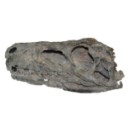
The origin and early evolutionary history of the dinosaurs is a topic that has recently gone through a period of renewed interest and academic debate. For 130 years, one way of classifying the various dinosaur subgroups persisted as the accepted model, with increasing levels of research in the past quarter-century also providing evidence for the hypothesis that dinosaur origination occurred in the Southern Hemisphere, particularly in South America. It is, after all, from within the Late Triassic strata of countries like Argentina and Brazil that we get some of the very best early dinosaur specimens; many of these specimens are the earliest known representatives of some of the major dinosaur subgroups, such as the theropods and sauropodomorphs. However, some recent analyses have brought about a shift in terms of what is currently accepted and what is now disputed regarding the origin of dinosaurs – the Southern Hemisphere origination hypothesis was questioned (although this was based upon observations and not with quantitative analysis techniques), as has the shape of the dinosaur tree. Responses to the new hypothesis were numerous; many further supported a Southern Hemisphere point of origin. Whilst the interrelationships between the major dinosaur clades remains to be resolved, the current data does seem to comprehensively answer the question of where the dinosaurs first originated. However, it is arguable whether the current data that is being used in such palaeobiogeographical analyses is sufficient to provide an answer to the question of where specifically the dinosaur clade first appeared. This short communication urges a degree of caution about the current consensus and what steps may need to be taken to ensure that more meaningful results are produced in the future.
PV article infos
Published in Vol 43-1 (2020)
|
PDF
|