
Current issue


2024-06
47-1
<< prev. next >>

Print ISSN: 0031-0247
Online ISSN:
2274-0333
Frequency: biannual

Article Management

You must log in to submit or manage articles.

You do not have an account yet ? Sign up.

Articles of Rajeev Patnaik

Page 1 of 1, showing 2 record(s) out of 2 total
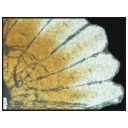
First report of Cylindracanthus (Osteichthyes) from the Eocene of India
Pankal Kumar, Rajeev Patnaik Logo, Deepak Choudhary Logo, Rohit Kumar Logo and Wasim Abass Wazir Logo
Published online: 3/25/24

Keywords: Cylindracanthus; Eocene; histology; rostrum; Umarsar mine.

https://doi.org/10.18563/pv.47.1.e2

  Abstract

    Fossils of the endangered sturgeons and peddlefishes are widely distributed. We here report for the first time the presence of one of the extinct osteichthyes genus Cylindracanthus (Liedy 1856a) from the Early Eocene lignite-bearing successions of the Kutch Basin, India. The present well preserved rostrum is characterised by numerous wedge-shaped components encircling the central canal that runs along its length, paired at the base and each wedge contributing to the formation of a ridge. The rostrum lacks teeth. The present find extends the palaeobiogeographical distribution of Cylindracanthus considerably and supports its Eocene age as dental remnants preserved in Cylindracanthus sp. shows a decrease in remanent dentition and tooth bases from the Cretaceous to the Eocene. Cylindracanthus is an useful palaeoenvironmental indicator as it has been found associated typically with deposits of nearshore marine environments. 


  PV article infos

Published in 47-1 (2024)

PDF
New murids and gerbillids (Rodentia, Mammalia) from Pliocene Siwalik sediments of India.
Rajeev Patnaik Logo
Published online: 12/15/97

Keywords: Dental morphology; evolution; new species of murids and gerbillids; phylogenetic relationships; Systematics

  Abstract

    Murids and gerbillids (Rodentia, Mammalia) recovered from four Upper Siwalik localities; Moginand (around 3.5-4.5 m.y.), Kanthro (around 2.5 m.y.), Ghaggar (around 2 m.y.) and Nadah (around 1.8-2 m.y.) are described herein. A comparison of Mus linnaeusi sp. nov. reveals its close relationship towards the house mouse Mus musculus. In contradiction to earlier proposals that Golunda migrated to the Indian subcontinent from Africa sometime during Late Pliocene, it is suggested here that Golunda (in the form of Golunda tatroticus sp. nov.) evolved from Parapelomys robertsí of Late Miocene deposits of Siwaliks. Golunda tatroticus sp. nov. exhibits a progressive relationship to the extant Indian Bush Rat Golunda ellioti through Golunda kelleri and Golunda sp. Tatera pinjoricus sp. nov. is considered here to be a link between the extinct Abudhabia kabulense and the extant Tatera indica.


  PV article infos

Published in Vol. 26, Fasc. 1-4 (1997)

PDF

Page 1 of 1, showing 2 record(s) out of 2 total