
Miocene Bovidae (Mammalia) of the Siwaliks: Hypsodontinae and Bovinae
Pterosaurs from Coahuila
Paléoenvironnement des mammifères des Gour Lazib
Les sélaciens du Miocène de la région de Montpellier
Contribution à l'étude des genres Gliravus et Microparamys.
Muridae du Pliocène supérieur d'Espagne et du midi de la France.
Eocene (57) , Quercy Phosphorites (38) , Systematics (32) , Rodents (29) , Mammalia (27) , Rodentia (25) , Miocene (25)
Page 18 of 19, showing 20 record(s) out of 369 total

|
Analyse d'ouvrage : Koobi Fora Research Project, volume 3. The fossil ungulates: geology, fossil artiodactyls, and palaeoenvironments, édité par John Michael HARRIS, 1991. Clarendon Press, Oxford, xvi + 384 p. ISBN 0-19-857399-5.Jean SudrePublished online: 11/02/1993Keywords: Artiodactyls; palaeovenvironments; Ungulates https://doi.org/10.18563/pv.22.2-3.138-139 Abstract Avec ce volume se clôture l'étude géologique et paléontologique des sites à hominidés de Koobi Fora. Il fait suite aux deux précédents ouvrages, parus respectivement en 1978 et 1983, consacrés également à l'étude des faunes recueillies sur ces gisements dans le cadre du Koobi Fora Research Project. PV article infos Published in Vol. 22, Fasc. 2-3 (1993) |
|
|
A classic in the making : VERTEBRATE PALAEONTOLOGY (4th edition). By Michael J. Benton.Eric Buffetaut
Published online: 27/01/2016 |
|

|
La poche à phosphate de Ste-Néboule (Lot) et sa faune de vertebres du Ludien superieur. 14 - Conclusions généralesJean-Louis HartenbergerPublished online: 25/09/1978Keywords: Eocene; Quercy Phosphorites https://doi.org/10.18563/pv.8.2-4.319-326 Abstract Le matériel provenant de nouvelles fouilles dans les phosphorites du Quercy, soumis aux divers spécialistes, a conduit à la soutenance de plusieurs thèses d'état: sur les rongeurs (Hartenberger, Vianey-Liaud), les Chiroptères et Insectivores (Sigé), les Artiodactyles (Sudre), les Squamates (Rage) et, en partie, les Chéloniens (De Broin). Chacun dans son domaine, à côté des conclusions d'ordre évolutif, paléogéographique ou paléoécologique, a pu établir des successions stratigraphiques des gisements du Quercy qui se sont révélées largement concordantes. Ainsi la succession des faunes du Quercy est actuellement l'une des mieux établies. Dans ce contexte, les différents spécialistes ont décidé de conjuguer leurs efforts dans l'étude monographique de plusieurs gisements repérés le long de cette échelle, afin de rassembler l'information paléontologique sur des faunes bien précises et de tenter d'obtenir des indications d'ordre taphonomique. PV article infos Published in Vol. 08, Fasc. 2-4 (1978) |
|

|
Description des restes d'Elasmobranches (Pisces) du Dévonien moyen de BoliviePhilippe Janvier
Published online: 01/02/1977 |
|
|
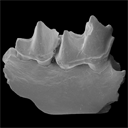
First Neogene Otonycteris (Chiroptera: Vespertilionidae) from Ukraine: its biostratigraphic and paleogeographic significance.Valentina V. RosinaPublished online: 19/03/2015Keywords: bats; East Europe; Gritsev; Late Miocene; Mammalia https://doi.org/10.18563/pv.39.1.e2 Abstract A new species, Otonycteris rummeli nov. sp., is described from the Late Miocene site Gritsev (MN 9) in the Ukraine. Otonycteris rummeli nov. sp. differs from those of most vespertilionids, except recent Otonycteris, Antrozous and Early Miocene Karstala silva, in having a well-developed entocingulid at the foot of the trigonid valley in the lower molars. The morphological resemblance of Otonycteris, Antrozous and Karstala is apparently a case of convergence in the evolution of the Old and New Worlds bat faunas. From at least the Middle Miocene the range of Otonycteris distribution spread to the whole of Central Europe and such a situation continued during the whole Late Miocene. This indicates a more arid climate in Europe during the Upper Miocene compared to the Quaternary. The reduction of the distribution range of Otonycteris and its extinction in most of the territory of Europe could have been caused by the global climatic cooling and increasing glacial cycle amplitude during the onset of the Quaternary. PV article infos Published in Vol.39-1 (2015) |
|
|
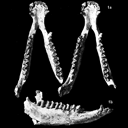
Les Palaeotheridae (Perissodactyla) de la faune de Mammifères de Fons 1 (Eocène supérieur).Jean-Albert RemyPublished online: 15/06/1967Keywords: Anchilophus; Eocene; Pachynolophus; Palaeotheriidae; Perissodactyla https://doi.org/10.18563/pv.1.1.1-46 Abstract The locality of Fons 1, one of the fossiliferous outcrops in the late Eocene limestones of Fons-outre-Gardon (Gard), has yielded varied remains of mammals. The specimens were prepared by dilute acetic acid attack on the rock and by impregnation with an acrylic resin. PV article infos Published in Vol. 01, Fasc. 1 (1967) |
|
|
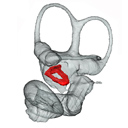
Fallen in a dead ear: intralabyrinthine preservation of stapes in fossil artiodactylsMaeva J. Orliac
Published online: 09/03/2016 |
S.I. Data |

|
Les rongeurs de l'Oligocène inférieur d'EscampsMonique Vianey-Liaud
Published online: 01/12/1974 |
|

|
Les mammifères Montiens de Hainin (Paléocène moyen de Belgique) Part II : Les CondylarthresJean Sudre and Donald E. RussellPublished online: 30/12/1982Keywords: Belgium; Condylarths; Louisininae; Oxyclaeninae; Paleocene https://doi.org/10.18563/pv.12.6.173-184 Abstract The Condylarths from Hainin (Hainault, Belgium) show no affinity at the generic level to those known in other Paleocene localities of Europe and North America ; they are described as new forms : Monshyus praevius n. gen., n. sp. and Prolatidens waudruae n. gen., n. sp. Monshyus praevius, discovered in only one of the levels in the excavation at Hainin, is similar to the genera Microhyus TEILHARD and Louisina RUSSELL ; with them it is included in the subfamily Louisininae (Hyopsodontidae). With respect to Microhyus and Louisina, Monshyus is distinguished by the precociously modern aspect of its upper molars, the only teeth that are referable. Prolatidens waudruae, known only by lower molars, was found in several levels in the pit at Hainin. It is an arctocyonid presenting possible relationships to the North American form Oxyprimus galadrielae ; it therefore has been provisionally attributed to the subfamily Oxyclaeninae. If this attribution is confirmed, this species will constitute the first and only representative of the group in Europe. PV article infos Published in Vol. 12, Fasc. 6 (1982) |
|

|
Nouvelle interprétation de l'évolution du genre Megacricetodon au cours du MiocèneJean-Pierre AguilarPublished online: 01/10/1980Keywords: Megacricetodon; Micromammals; Miocene https://doi.org/10.18563/pv.9.ext.355-364 Abstract La découverte de nouveaux gisements à micromammifères dans le Miocène du Sud de la France et d'Espagne montre que, s'il n'est plus possible d'accepter dans son intégralité le schéma phylétique de Fahlbusch du genre Megacricetodon, il existe toutefois des segments de lignées à l'intérieur de provinces géographiques différentes (Péninsule Ibérique, France, Europe Centrale), avec lesquels on peut établir une biochronologie locale, segments qu'il est aussi possible de placer les uns par rapport aux autres, en utilisant les corrélations que l'on peut reconnaître entre certains niveaux repères des mammalogistes et l'échelle stratigraphique marine. PV article infos Published in Vol. 9, Ext (1980) |
|

|
Die Referenzfauna des Geiseltalium, MP levels 11 bis 13 (Mitteleozan, Lutetium)Hartmut HauboldPublished online: 04/12/1989Keywords: Eocene; Geiseltal; Land mammal ages; Mammalian reference levels https://doi.org/10.18563/pv.19.3.81-93 Abstract The Middle Eocene Fossillägerstätte of the Geiseltal lignite beds near Halle/S. (German Democratic Republic) is the reference locality of the European land mammal age Geiseltalian and of the Mammalian Paleogene reference levels MP 11 - MP 13. Due to this importance a reinvestigation is given of the lithostratigraphical development of the Geiseltal beds and of their vertebrate sites. The last are genetically related to the southwest border of the Geiseltal depression and the influx of carbonate-rich waters. The geographical distribution and stratigraphical position of the fossiliferous sites depends on subrosive and tectonically controlled distribution of coal seams. The geological factors and the known stratigraphical guide of some mammalian species suggest corrections of the age of some sites. Four of the alltogether five coal bearing phases contain the 35 sites with mammalian remains. By the distribution of the around 69 mammal species are characterized, with 5 faunal steps ranging from MP 11 to MP 14 or over the Geiseltalian up to the Lower Robiacian. Well distant are the faunas of MP 11 and MP 12. Beginning with MP 12 up to MP 13/14, the fossil record is very frequent by 27 sites. This evidence coincides somewhat more with the concept of land mammal ages compared to that of the punctual mammalian reference levels. PV article infos Published in Vol. 19, Fasc. 3 (1989) |
|

|
Les Gliridés (Rodentia) de l'Oligocène supérieur de Saint-Victor-la-Coste (Gard).Marguerite HugueneyPublished online: 28/10/1968Keywords: Gliridae; Late Oligocene https://doi.org/10.18563/pv.2.1.1-16 Abstract The locality of St.-Victor-la-Coste (Gard) has yielded, rather abundantly, teeth of two glirids hitherto very poorly known: Glirudinus praemurinus (Freudenberg) and Glirudinus glirulus (DEHM). It has permitted, moreover, new views on the evolution of Peridyromys murinus (POMEL). Study of these forms confirms the late Oligocene age of the fauna, without allowing, however, further precision. PV article infos Published in Vol. 02, Fasc. 1 (1968) |
|

|
Un giraffidae dans le pliocène de Montpellier ?Claude GuérinPublished online: 31/10/1986Keywords: Artiodactyla; France; Giraffidae; Mammalia; Montpellier; Ruscinian https://doi.org/10.18563/pv.16.3.185-189 Abstract An upper giraffid premolar without any indication about its origin is preserved at the Montpellier University among numerous fossils from the ruscinian formation of Montpellier. It can be related to Samotherium, of the Upper Miocene in Eastern Europe, North Africa and Asia, or more probably to Bramatherium or Hydaspitherium of the Pliocene of South East Asia. The sedimentological study of the matrix shows a calcareous background, which may indicate that this tooth does not come from the Montpellier formation. PV article infos Published in Vol. 16, Fasc. 3 (1986) |
|

|
Contributions à l'étude du gisement Miocène supérieur de Montredon (Hérault). Les grands mammifères. 6 - Les périssodactyles RhinocerotidaeClaude GuérinPublished online: 15/11/1988Keywords: Aceratherium; anatomy; Biostratigraphy; Dicerorhinus; Miocene; Montredon; Paleoecology; Upper Vallesian https://doi.org/10.18563/pv.18.ext.3-7-134 Abstract The Montredon site has yielded about hundred rhinoceros remains: PV article infos Published in Vol. 18, Ext (1988) |
|

|
Owls, caves and fossils. Predation, preservation and accumulation of small mammal bones in caves, with an analysis of the Pleistocene cave faunas from Westbury-Sub-Mendip, Somerset, UK, par Peter Andrews, 1990. The University of Chicago Press, 232 p.Christiane Denys
Published online: 17/12/1992 |
|

|
Analyse d'ouvrage: Jean-Claude Rage, Handbuch der Paläeoherpetologie Teil 11: SerpentesJacques MichauxPublished online: 15/11/1984Keywords: Book review https://doi.org/10.18563/pv.14.3.199 Abstract Le volume 11 du «Handbuch der Paläeoherpetologie», consacré aux «Serpellles» et redigé par Jean-Claude Rage, apporte une remarquable information sur ce groupe particulier de reptiles dont on ne pouvait guere se faire une idée très précise à partir, par exemple, des seuls chapitres des traités classiques de Paléontologie et de Zoologie. PV article infos Published in Vol. 14, Fasc. 3 (1984) |
|

|
Osteology of Prolagus sardus, a Quaternary Ochotonid (Mammalia, Lagomorpha).Mary R. DawsonPublished online: 21/06/1969Keywords: Lagomorpha; Ochotonidae; Prolagus https://doi.org/10.18563/pv.2.4.157-190 Abstract Prolagus sardus is the last representative of the diverse lineages of European endemic ochotonids. It is also the most abundant in the collections. The previous studies made of this species have established rather well its dental morphology, its phylogenetic position, its geographic and temporal distribution, and its intraspecific individual variation. On the other hand, no osteologic study has fully utilized the superb material from Corsica and Sardinia collected by Forsyth Major. PV article infos Published in Vol. 02, Fasc. 4 (1969) |
|

|
Octodontid-like Echimyidae (Rodentia) : an upper Miocene episode in the radiation of the familyDiego H. Verzi
Published online: 20/05/1994 |
|

|
Crivadiatherium iliescui n. sp., nouvel Embrithopode (Mammalia) dans le Paléogène ancien de la dépression de Hateg (Roumanie).Constin Radulesco and Jean SudrePublished online: 30/12/1985Keywords: Embrithopods; Late Eocene; Paleobiogeography; Romania https://doi.org/10.18563/pv.15.3.139-157 Abstract The investigations undertaken at Crivadia (Hateg Depression, Hunedoara District, Romania), the type locality of Crivadiatherium mackennai RADULESCO el al. (Radulesco, Iliesco et lliesco, 1976), led to the discovery of remains of a new Embrithopod. Close to the above mentioned species, but larger in size, this animal is here described as a new species of Crivadiatherium, C. iliescui. ln addition, the comparison made between the forms indicated above and Palaeaamasía kansui OZANSOY from the Eocene deposits of Anatolia (Ozansoy, 1966; Sen et Heintz, 1979) showed that the latter species included a heterogeneous material; this permitted us to distinguish the form in the Anatolian locality Ciçekdag-Arabin Kôyü under the name Palaeoamasia sp. The geographical distribution and diversity of the Embrithopod species under discussion (Balkan, Anatolia) support the idea of an eurasiatic origin of this group and seem to suggest the existence during the Eocene of a particular faunal province in south-eastern Europe. PV article infos Published in Vol. 15, Fasc. 3 (1985) |
|

|
Analyse d'ouvrage : "Mammoths, mastodonts & elephants. biology, behavior and the fossil record. Gary HAYNES, 1992. Cambridge University Press, New York, xii + 413 p., ISBN 0-521-38435-4"Jean-Loup WelcommePublished online: 11/02/1993Keywords: Elephants; Mammoths; Mastodonts https://doi.org/10.18563/pv.22.2-3.137-139 Abstract L'ouvrage est divisé en trois grandes parties traitant successivement: I. l'anatomie ("Proboscidean flesh and bones"), en abordant la taxonomie, l'allure générale et l'éco-éthologie des proboscidiens actuels et fossiles; II. les causes de mortalité collective naturelle et provoquée chez les actuels; III. les documents fossiles et l'extinction des formes anciennes d'Amérique du Nord. PV article infos Published in Vol. 22, Fasc. 2-3 (1993) |
|
