|
The new Algerian locality of Bir el Ater 3: validity of Libycosaurus algeriensis (Mammalia, Hippopotamoidea) and the age of the Nementcha Formation
Published online: 10/06/2015
Keywords:
Dispersal event; Miocene; North Africa; Tetralophodon
https://doi.org/10.18563/pv.39.2.e1
Abstract
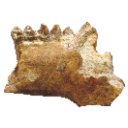
The description of original material of anthracothere and proboscidean in the new locality of Bir el Ater 3 from East Algeria, and a thorough review of early Libycosaurus remains of Bir el Ater 2 allows us validating L. algeriensis as the smallest and earliest species of Libycosaurus and probably the earliest migrant of the genus from Asia. The presence of a Tetralophodon in the Neogene Nementcha formation might represent the earliest occurrence of the genus in Africa. These original fossil remains allow us to discuss the age of the Neogene part of the Nementcha formation close to the Serravalian/Tortonian boundary.
PV article infos
Published in Vol.39-2 (2015)
|
PDF
|

|
Pronycticebus neglectus - an almost complete adapid primate specimen from the Geiseltal (GDR)
Published online: 04/12/1989
Keywords:
Adapiformes; Eocene; Paleoecology; PHYLOGENY; Pronycticebus neglectus
https://doi.org/10.18563/pv.19.3.115-130
Abstract
In the course of the current revision of adapid primates from the Eocene Geiseltal, an almost complete specimen was found in the Geiseltal Museum collections. The fossil, the most complete adapid specimen so far discovered in Europe, has been determined as Pronycticebus neglectus n. sp.
Ecology and locomotion as well as the likely phylogenetic position within the infraorder Adapiformes are discussed.
PV article infos
Published in Vol. 19, Fasc. 3 (1989)
|
PDF
|
|
New remains of the very small cuckoo, Chambicuculus pusillus (Aves, Cuculiformes, Cuculidae) from the late Early/early Middle Eocene of Djebel Chambi, Tunisia
Published online: 15/02/2016
Keywords:
Cuckoos; Eocene; Fossil bird
https://doi.org/10.18563/pv.40.1.e2
Abstract
Abstract: A very tiny cuckoo, Chambicuculus pusillus, was recently described after a few fragments of tarsometatarsi from the late Early/early Middle Eocene of Djebel Chambi, Tunisia. New remains, notably a coracoid, confirm the attribution of this genus to the recent family Cuculidae. This coracoid shows a very elongate and strap-like processus procoracoideus. This morphological feature is otherwise only known in the family Cuculidae. The characteristics of the coracoid and tarsometatarsi show that Chambicuculus is morphologically more advanced over the other stem cuculids described in Europe and North America. Chambicuculus is the oldest Cuculidae known so far.
PV article infos
Published in Vol.40-1 (2016)
|
PDF
|

|
Systematic revision of Ctenodactylidae (Mammalia, Rodentia) from theMiocene of Pakistan.
Published online: 18/03/1996
Keywords:
Ctenodactylidae; Miocene; Prosayimys; Rodents; Sayimys; Siwalik
https://doi.org/10.18563/pv.25.1.1-49
Abstract
Extensive sampling of the Siwalik deposits of the Potwar Plateau of northem Pakistan and from the Zinda Pir dome of central Pakistan has produced a fossil record of Miocene ctenodactylids that can be correlated with the paleomagnetic time scale. The early Miocene Prosayimys flynni (n. gen., n. sp.) is recognized as the first ctenodactylid in the Indian subcontinent. Prosayimys is ancestral to Sayimys. From the late early Miocene to the early late Miocene, there is an anagenetic succession of three species of Sayimys: S. cf. S. intermedius, S. sivalensis, and S. chinjiensis (n. sp.). Sayimys chinjiensis gave rise to the late late Miocene S. perplexus. A second lineage is represented by Sayimys minor, S. sp. A, and S. sp. B.
PV article infos
Published in Vol. 25, Fasc. 1 (1996)
|
PDF
|
|
Morphological description and identification of an extraordinary new elephant cranium from the early Pliocene of Ileret, Kenya
Published online: 21/10/2021
Keywords:
Elephantidae; Loxodonta adaurora; cranium; early Pliocene; Ileret; Kenya
https://doi.org/10.18563/pv.44.2.e3
Abstract
Abstract: Paleontological exploration in the Turkana Basin near Ileret, Kenya yielded the most complete adult elephant cranium (KNM-ER 63642) known from the late Miocene to mid-Pliocene. KNM-ER 63642 derives from the lower Lonyumun Mb. of the Koobi Fora Fm. and dates to the early Pliocene, >4.3 Ma. The cranium is immense in size and preserves most of its structures including left and right M2-3, permitting its comprehensive comparative study and secure taxonomic assignment to Loxodonta adaurora. Features distinctive of the species and exhibited by KNM-ER 63642 include very elongate, divergent tusk alveoli, a short, biconvex cranial roof, anterosuperior angulation of the occipital planum, non-inflated occipital planum and absence of supralateral parietal "bossing," broad, flat premaxillary nasal processes, broad, laterally downturned nasal aperture superior to the level of the orbits, and M3s with wide, subhypsodont plates that are parallel-faced and separated by U-shaped transverse valleys. The M3s also exhibit characteristic L. adaurora traits of greatest width at their bases, rounded cross-sectional shape, thick enamel, abundant cementum, and strong anterior and posterior accessory conules. Of extant taxa, KNM-ER 63642 most closely resembles crania of African elephants. Its inclusion in the Loxodonta clade is tenuous, however, because shared features are either symplesiomorphic or are difficult to test for synapomorphy due to the poor fossil record of crania of late Miocene-early Pliocene elephants. Overall, the cranial morphology of KNM-ER 63642 is unexpectedly advanced for an elephant of its antiquity. Its anteroposterior compression and height are concordant with efficient proal masticatory action, indicating that by the early Pliocene L. adaurora evolved craniodental adaptations in phase with feeding preference for C4 grasses. The advantage of synchrony of morphology and behavior is reflected by the dominance of the species in the greater Turkana Basin during that interval.
PV article infos
Published in 44-2 (2021)
|
PDF
|

|
Description des rongeurs Pliocènes de la faune du Mont-Hélène (Pyrénées-Orientales, France), nouveau jalon entre les faunes de Perpignan (Serrat-d'en-Vacquer) et de Sète.
Published online: 31/10/1986
Keywords:
Chronology; Climatology; France; Mont-Hélène; Pliocene; Rodents
https://doi.org/10.18563/pv.16.3.127-144
Abstract
The Mont-Hélène's fauna [Pyrénées-Orientales, France], includes 15 species of rodents with a new one, Occitanomys montheleni n. sp. among the 9 species of the Murids which are listed. The uncommon Cricetid, Blancomys neglectus, is well represented in the fauna. Peculiarities of the population referred to Slephanomys cf. donnezaniare discussed. The locality a fissure filling may be the oldest one of Tabianian age known in Southern France. The diversity of the Murids gives evidence of a subtropical climate and of a diversified environment which may be linked to the spreading of the coastal plain following the filling up of the Roussillon Neogene Basin.
PV article infos
Published in Vol. 16, Fasc. 3 (1986)
|
PDF
|

|
Les artiodactyles du gisement yprésien terminal de Premontre (Aisne, France)
Published online: 16/12/1996
Keywords:
Artiodactyls; France; Mammals; new species; Ypresian
https://doi.org/10.18563/pv.25.2-4.391-414
Abstract
The artiodactyls (Mammalia) from the latest Ypresian locality of Prémontré from the Paris Basin (niveau repère MP 10 in the lower Eocene of the Paris Basin) are described in this paper. Three species have been identified: 1) Diacodexis cf. varleti SUDRE et al., 1983; 2) a new species of Eurodexis ERFURT & SUDRE (E. russelli nov. sp.) defined after the revision of the species Messelobunodon? ceciliensis from the Lutetian beds of Geiseltal (Germany); and 3) Eurodexeinae indet., a probable ancestor of another form from the Geiseltal which was previously recorded as Homacodon? sp. (Erfurt 1993) and now named Parahexacodus germanicus. The two later forms are referred to the new subfamily Eurodexeinae (Erfurt & Sudre 1996). The analysis of these forms as weIl as comparative studies have led us to reconsider our previous conclusions regarding the content of the species Protodichobune oweni LEMOINE 1878 and some aspects of Ypresian diacodexid evolution. One can postulate that the divergence of E. russelli nov. sp. occurred during the first radiation of these primitive artiodactyls. Some other stem form with bunodont teeth such as Protodichobune and Aumelasia have also differentiated from Diacodexis. Like Eurodexis, these two genera persist during the middle Eocene. The absence of Protodichobune and Aumelasia at Prémontré is probably due to particular ecological conditions.
PV article infos
Published in Vol. 25, Fasc. 2-4 (1996)
|
PDF
|

|
First evidence of an early Miocene marine teleostean fish fauna (otoliths) from la Paillade.(Montpellier,France)
Published online: 15/06/1999
Keywords:
Aquitanian; Biostratigraphy; La Paillade; marine deposits; Miocene; otoliths; Palaeoecology; Palaeogeography; Southern France; Teleostei
https://doi.org/10.18563/pv.28.1.1-46
Abstract
A fossil fish fauna, based on 5533 otoliths, from the La Paillade locality at Montpellier is described and figured. The otolith-bearing marls correlate to mammal zone MN l (Aguilar, 1982), and thus represent the earliest Miocene. The fish fauna consists of 30 taxa belonging to 20 families. Two species are new: Dussumieria sittigi and Liza gaudanti. The predominant faunal element is the Lesueurigobius vicínalis-species complex, composing 73% of all investigated otoliths. The palaeoecological analysis reveals a marine to euryhaline fish fauna living under tropical to subtropical conditions in the transition zone littoral - sublittoral. Water depth probably was more than 10 m. The scarcity of pelagic físhes suggests that the habitat was either a sheltered bay and/or far away from the open sea. Furthermore, some genera represented in the La Paillade fish fauna presently live exclusively in the Indopacific realm. Their presence strongly supports a broad connection between the Indian Ocean, the Mediterranean, and the Paratethys Seas during the Early Miocene (Aquitanian). From a palaeobiogeographical point of view, faunal relationships were found between the La Paillade fish fauna and both the Paratethys fish fauna and the fish fauna from the deposits in the Upper Rhinegraben and the Mayence and Hanau Basins (Germany).
PV article infos
Published in Vol. 28, Fasc. 1 (1999)
|
PDF
|

|
The evolution of the molar pattern of the Erethizontidae (Rodentia,Hystricognathi) and the validity of Parasteiromys Ameghino, 1904.
Published online: 15/06/1999
Keywords:
Argentina; Erethizontidae; Hystricognathi; Miocene; Molar evolution; Porcupines; Rodentia; Systematics
https://doi.org/10.18563/pv.28.1.53-73
Abstract
The genus Parasteiromys AMEGHINO, 1904 is revalidated, and P. friantae sp. nov. (Hystricognathi, Erethizontidae) from Colhuehuapian (early Miocene) sediments of the southern cliff of Colhue-Huapi Lake (Province of Chubut, Argentina), is described. The molar morphology of these taxa and of living porcupines adds new elements to understand the dental evolution of the Erethizontidae, and to propose the hypothetical ancestral molar pattern for this family. This pattern does not correspond to any of the morphologies traditionally proposed as ancestral for South American hystricognathous rodents. The proposed pattern is characterized by a metaloph disconnected from the posteroloph and oriented towards the hypocone, and the third loph incompletely developed with the lingual portion homologous to the mesolophule of Baluchimyinae (Chapattimyidae) from the Miocene of Pakistan. The inferred steps of the molar evolution of erethizontids towards the pentalophodont condition, considered derived for the family, are illustrated. This study strengthens the hypothesis placing erethizontids in a basal position among rodents of the suborder Hystricognathi.
PV article infos
Published in Vol. 28, Fasc. 1 (1999)
|
PDF
|

|
The endocranial cast and encephalization quotient of Ptilodus (Multituberculata, Mammalia)
Published online: 11/02/1993
Keywords:
encephaIization quotient; endocranial cast; Montana; Multituberculata; olfactory bulbs; Paleocene; Ptilodus
https://doi.org/10.18563/pv.22.2-3.99-112
Abstract
Simpson (1937a) reconstructed the brain of the Paleocene multituberculate Ptilodus as having the olfactory bulbs widest anteriorly, an unusual condition among mammals. Slight preparation and reexamination of the endocast specimens of Ptilodus reveals that the olfactory bulbs in fact taper anteriorly, as in the recently-described endocranial casts of three multituberculate species from the Late Cretaceous of Asia, and as in those of other mammals. The brain of Ptilodus was therefore essentially of the same general pattem as in other multituberculates. Ptilodus differs, however, in having the vermis more deeply inserted between the cerebral hemispheres. Other details concerning the endocast morphology of Ptilodus are clarified.
The encephalization quotient (EQ) of Ptilodus is recalculated from revised estimates of both endocranial volume and body mass to fall somewhere within a broad range of values; from 0.41 to 0.62 if the olfactory bulbs are included and from 0.37 to 0.55 if they are not. In any case, the relative brain size of Ptilodus is roughly equivalent to that of Chulsanbaatar, the only other multituberculate for which EQ has been calculated, but considerably smaller than that of an average extant mammnal.
PV article infos
Published in Vol. 22, Fasc. 2-3 (1993)
|
PDF
|

|
Une faune du niveau d'Egerkinger (MP 14; Bartonien inférieur) dans les phosphorites du Quercy (Sud de la France)
Published online: 18/12/1990
Keywords:
Biochronology; Early Bartonian; Eocene; evolution; Mammals; New taxa; Quercy
https://doi.org/10.18563/pv.20.1.1-32
Abstract
The Laprade fauna is chronologically situated between those from Egerkingen and Lissieu and consequently, is close to the MP 14 reference-level of the European mammalian biochronological scale (Symposium of Mainz, 1987).
This new fauna is presently the oldest known in the Quercy phosphorites, formerly the Le Bretou fauna (MP 16) was considered as the oldest one. The Laprade fauna includes 21 species which belong in 7 mammalian orders (Marsupialia: Amphiperatherium bastbergense, Amphiperatherium goethei; Apatotheria: Heterohyus (Gervaisyus) pygmaeus nov. subgen., nov. sp.; Lipotyphla: Saturninia cf. mamertensis, Saturninia cf. intermedia; Chiroptera: Vespertiliavus lapradei nov. sp.; Rodentia: Protadelomys cf. lugdunensis, Elfomys nov. sp.; Primates: Nannopithex cf. filholi, cf. Pseudoloris or Pivetonia; Perissodactyla: ?Palaeotherium ?castrense, small-sized Palaeotherium sp., Plagiolophus sp., Anchilophus sp.; Artiodactyla: Dichobune cf. robertiana, Mouillacitherium cartieri, Tapirulus cf. depereti, Mixtotherium priscum, Pseudamphimeryx schlosseri, and Artiodactyla indet). Sixteen of these species are mentioned for the first time from the Quercy faunas.
The recognition of a new apatemyid, Heterohyus (Gervaisyus) pygmaeus nov. subgen., nov. sp., attests to an early origin of a lineage known in the Late Eocene. The emballonurid bat Vespertiliavus lapradei nov. sp. is presently the earliest record of this genus and family. This Auversian fauna leads to discuss the age of taxa showing archaic features. These taxa were defined on specimens collected in the Quercy during the last century and have never been found in the Quercy localities recently investigated. This fauna bears also evidence of a karstic filling episode older than those previously dated by fossils in the Quercy Jurassic.
PV article infos
Published in Vol. 20, Fasc. 1 (1990)
|
PDF
|

|
A primitive Emballonurid bat (Chiroptera, Mammalia) from the Earliest Eocene of England
Published online: 16/12/1996
Keywords:
bats; Early Eocene; Emballonuridae; Origins; PHYLOGENY
https://doi.org/10.18563/pv.25.2-4.287-300
Abstract
A new genus, Eppsillycteris, is erected for Adapisorex? allglicus COOPER, 1932, from the earliest Eocene Blackheath Beds of Abbey Wood, London, England. Various derived character states indicate that it belongs to the order Chiroptera (bats) rather than to the extinct "insectivore" family Adapisoricidae. Other derived character states are shared with fossil and modern members of the family Emballonuridae. Placement of the new genus in this family extends the record of the Emballonuridae back in time by about 10 million years. It is the earliest record of a modern bat family and one of the earliest bats. This implies that the differentiation of at least some modern bat families took place in the Palaeocene, where no authenticated records of bats yet exist. The primitive characters of the earliest bats make the family Nyctitheriidae an unlikely stem group for the order Chiroptera. A tentative plausible alternative exists in some unnamed upper molars from the Palaeocene of Walbeck, Germany. Wyollycteris chalix, described as a bat from the Late Palaeocene of Wyoming, U,S.A., fits better in the family Nyctitheriidae.
PV article infos
Published in Vol. 25, Fasc. 2-4 (1996)
|
PDF
|

|
Revision des faunes de vertébrés du site de Provenchères-sur-Meuse (Trias terminal, Nord-Est de la France)
Published online: 14/06/1995
Keywords:
amphibians; Fishes; Reptiles; Rhetian; Triassic
https://doi.org/10.18563/pv.24.1-2.101-134
Abstract
Revision of ancient collections and study of new material from Provenchères-sur-Meuse (Rhaetian) lead to signíficant changes in the faunal list of this site. This bring to us important information about the effect of the rhaetian transgression on the evolution of the faunas at this period of time. However, study of
vertebrate microremains is always difficult and some points remain obscure, like the origin of the prosauropods which yield some remains at Provenchères-sur-Meuse and the survival in Europe during the Rhaetian of temnospondyl arnphibians different from the Plagiosauridae.
PV article infos
Published in Vol. 24, Fasc. 1-2 (1995)
|
PDF
|

|
Muridae (Rodentia) du Pliocène supérieur d'Espagne et du midi de la France.
Published online: 20/09/1969
Keywords:
Anthracomys meini; Castillomys crusafonti; Pliocene; Rodents; Valerymys ellenbergeri
https://doi.org/10.18563/pv.3.1.1-25
Abstract
The murid fauna of the terminal Pliocene of southwest Europe is rich in at least eight genera and ten species. With the species belonging to the genera Apodemus, Rhagapodemus, and Stephanomys not being studied here, the study of the other murids resulted for one thing in the description of three new genera and three new species: Castillomys crusafonti n. g., n. sp., Occitanomys brailloni n. g., n. sp., Anthracomys meini n. sp., Valerymys ellenbergerí (THALER) n. g., and for another thing in the recognition of a form hitherto unknown in this region, Micromys praeminutus KRETZOI. Systematic study has shown that certain species of the terminal Pliocene fauna had their ancestors in the Turolian fauna presently known in Spain. The evolutionary lineages thereby recognized have been studied more in detail and a list of the evolutionary tendencies of the dendal characters has been given. A chart of the probable phyletic relationships between the different murids of the Pliocene faunas of southwest Europe (With the genus Rhagapodemus and Apodemus dominans being excluded) is given in conclusion of this work.
PV article infos
Published in Vol. 03, Fasc. 1 (1969)
|
PDF
|

|
First report of an Eocene reptile fauna from Florida, USA
Published online: 30/07/2001
Keywords:
Eocene; Fauna; Florida; Reptile; USA
https://doi.org/10.18563/pv.30.1-2.1-10
Abstract
Fossils of the Trionychidae, Bataguridae or Emydidae, Palaeophis and Crocodylia from Chattahoochee, NW Florida, USA, represent the first report of an Eocene reptile fauna from Florida.
PV article infos
Published in Vol. 30, Fasc. 1-2 (2001)
|
PDF
|
|
New datation of the Tafna Basin (Algeria): A combination between biochronological and magnetostratigraphical data
Published online: 11/03/2015
Keywords:
correlations; Late Miocene; North Africa; Rodentia
https://doi.org/10.18563/pv.39.1.e1
Abstract
The Tafna Basin corresponds to the lowlands, which are located in front of Tessala and Traras ranges, below the Tlemcen mountains, Algeria. This basin displays a complete sedimentary cycle dominated by lagoonal-fluvial and marine deposits. The continental formations located at the base of these deposits are mainly composed of alternating sandstones and clays. An early late Miocene age has been previously attributed to them, based on direct correlations with marine deposits. Search for micromammal fossils led to the discovery of three different rodent species from a single level of the Djebel Guetaf section, located at the bottom of these deposits. The rodent assemblage indicates a late Miocene age. Combined magnetostratigraphical and biostratigraphical investigations were carried out to provide a more accurate age control of these continental deposits. Sixty-four oriented rock samples were collected for a magnetostratigraphic study along a 92 meters thick section including the fossiliferous layer. Rock magnetic investigations indicate the presence of both high and low coercivity minerals. Specimens subjected to progressive thermal demagnetization procedures show that the samples exhibit a high temperature magnetization component and display a normal polarity. Based on biostratigraphic constraints, the Guetaf section is correlated with Chron C4An, indicating an age ranging from
9.1 to 8.7 Myr.
PV article infos
Published in Vol.39-1 (2015)
|
PDF
|

|
Origins of avian reproduction: answers and questionsfrom dinosaurs.
Published online: 15/12/2003
Keywords:
Avian reproduction; clutch; dinosaurs; egg size; nests; oviducts; parental care
https://doi.org/10.18563/pv.32.2-4.149-169
Abstract
The reproductive biology of living birds differs dramatically from that of other extant vertebrates. Distinctive features common to most birds include a single ovary and oviduct, production of one egg at daily or greater intervals, incubation by brooding and extensive parental care. The prevalence of male parental care is most exceptional among living amniotes. A variety of hypotheses exist to explain the origin of avian reproduction. Central to these models are proposed transitions from a condition of no care to maternal, paternal or biparental care systems. These evolutionary models incorporate a number of features potentially preservable or inferable from the fossil record (integument, skeletal adaptations for flight, egg and clutch size, nest form, hatchling developmental stage, the number and function of oviducts, and the mode of egg incubation). Increasing availability of data on dinosaur reproduction provides a means of assessing these hypotheses with fossil evidence. We compare dinosaur data to a selection of models that emphasize maternal, paternal or biparental care. Despite some congruence with dinosaur features, no single model on the evolution of avian reproduction conforms fully to the fossil record, and the ancestral parental care system of birds remains ambiguous. Further investigation into dinosaur parental care, nest structures, clutch geometry, egg-pairing, eggshell porosity, and embryo identification may eventually resolve these issues.
PV article infos
Published in Vol. 32, Fasc. 2-4 (2003)
|
PDF
|
|
The geologically youngest remains of an ornithocheirid pterosaur from the late Cenomanian (Late Cretaceous) of northeastern Mexico with implications on the paleogeography and extinction of Late Cretaceous ornithocheirids
Published online: 21/07/2020
Keywords:
Coahuila; Late Cenomanian; north-eastern Mexico; Ornithocheiridae; Pterosauria
https://doi.org/10.18563/pv.43.1.e4
Abstract
Ornithocheirid pterosaurs were the largest of the toothed pterodactyloids and had a worldwide distribution, although their fossil record is fragmentary, with the exception of the north-eastern Brazilian Crato and Santana Formations (Aptian, ?Albian, Early Cretaceous). With Istiodactylidae, they were also the only toothed pterosaurs that survived into the Cenomanian (Late Cretaceous), becoming extinct at the end of this period. Here we report on an ornithocheirid metacapus from the Late Cenomanian laminated limestone of north-eastern Mexico discovered about 120 km north-west of Ciudad Acuña, northern Coahuila at the south banks of Rio Bravo. The specimen comprises a fragmentary distal syncarpal, a crushed but complete metacarpal IV, two fragmentary preaxial metacarpals and a possible fragmentary terminal left wing finger phalanx. It represents the geologically youngest known ornithocheirid worldwide. We suggest that ornithocheirid pterosaurs may have become extinct because of massive sea level fluctuations during the mid to late Cretaceous that may have obliterated their breeding sites on coastal plains and low lying islands.
PV article infos
Published in Vol 43-1 (2020)
|
PDF
|
|
Révision systématique des Anchilophini (Palaeotheriidae, Perissodactyla, Mammalia).
Published online: 15/10/2012
Keywords:
Anchilophus; Eocene; new genus; new species; Palaeotheriidae; Paranchilophus; Perissodactyla; Systematics
https://doi.org/10.18563/pv.37.1-3.1-165
Abstract
The knowledge of the Anchilophini has been lately renewed by the discovery of a rather large amount of new material still largely unpublished. This new material offers the opportunity of a systematic revision of this tribe gathering those of European Eocene Equoidea which bear no mesostyle on upper check teeth and display a heavy trend to the molarization of premolars.
A cladistic analysis has made out two genera, Anchilophus (Paranchilophus included as a subgenus), characterized by a marked lophodonty and the transverse narrowness of the cheek teeth, a rather high hypsodonty, the frequent occurrence of "crochets" and "anticrochets" on the superior ones, and a rather weak molarization of the premolars, opposite to Metanchilophus n. gen. whose cheek teeth are more transversally elongated, less high, less lophodont, with cusps better distinct, enamel thicker and premolars more molarized on the whole.
Three species of Anchilophus are recognized, A. desmaresti, type species of the genus, A. (Paranchilophus) remyi and A. (Paranchilophus) jeanteli n. sp.
The genus Metanchilophus is more diversified with the species dumasi, radegondensis, gaudini (whose a new sub-species M. g. fontensis is defined), depereli, castrensis n. sp. and chaubeti n. sp.
The skull anatomy has been moreover described with several taxa; it brings to light (for all that one can generalize) that Anchilophini were light animals with a slender and elongated snout, a thin zygomatic arch, a rather developed encephalon with an advanced gyrencephaly.
The structure of the nasal opening together with the occurrence of epitympanic sinuses and the molarizing process of the premolars corroborate the attribution of this tribe to the family PalaeotheIiidae.
PV article infos
Published in Vol. 37, Fasc. 1-3 (2012)
|
PDF
|
|
Pterosaurs (Pterosauria) from the Cerro del Pueblo Formation (Late Campanian) of Coahuila, Mexico
Published online: 21/11/2025
Keywords:
Azhdarchoidea; Coahuila; Mexico; Pterodactyloidea; Pterosauria
https://doi.org/10.18563/pv.48.2.e1
Abstract
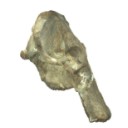
The Late Campanian Cerro del Pueblo Formation, located in southeastern Coahuila, Mexico, has produced a diverse array of vertebrate fossils. However, pterosaur remains from this unit are notably scarce. In this study, we describe new pterosaur material from the formation. The specimens include a fragmentary vertebra identified as belonging to an indeterminate, but derived pterodactyloid, along with the distal condyle of a left metacarpal, referable to an azhdarchoid pterosaur, and a left manus print. While these specimens provide additional evidence of pterosaur presence in the region during the Late Cretaceous, their fragmentary nature limits precise taxonomic and ichnotaxonomic identification. Nevertheless, they highlight the potential for future discoveries that could refine our understanding of the diversity and distribution of pterosaurs in Mexico.
PV article infos
Published in 48-2 (2025)
|
PDF
|