|
Article
Miocene Bovidae (Mammalia) of the Siwaliks, Part 1: Hypsodontinae and Bovinae.
Published online: 30/07/2026
Keywords:
Bovidae; horncores; Miocene; Siwaliks
https://doi.org/10.18563/pv.49.1.e1
References: 210
Cite this article:
Alan Gentry, Nikos Solounias, John C. Barry and S. M. Raza, 2026. Miocene Bovidae (Mammalia) of the Siwaliks, Part 1: Hypsodontinae and Bovinae. PalaeoVertebrata 49.1.e1. doi: 10.18563/pv.49.1.e1
Export citation
Abstract
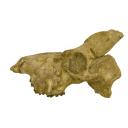
The fluvial sediments of the Siwaliks in northern Pakistan preserve an exceptional geologic and paleontological record encompassing parts of the Oligocene and all of the Miocene and Pliocene. The sediments, which can be thousands of meters thick, have abundant vertebrate and invertebrate fossils from hundreds of different levels. Fossils were first discovered in the Siwaliks in 1832 and there are important collections of them in the Museum of the Geological Survey of India as well as in various European, British, and American museums. Renewed collecting has now added over 10,000 bovid fossils to a new collection held by the Geological Survey of Pakistan. The fossils include rare skulls and many isolated horn cores, as well as teeth and postcranials. Here we discuss material belonging to the hypsodontinae, boselaphini, and bovini. We recognize four hypsodontine and twenty-two bovine species, plus one species of uncertain subfamilial placement. Nineteen of the twenty-seven have previously been named, while another five have cranial material suitable for defining a new species. Two species, referred to as ?Hypsodontinae sp. and Bovidae sp. 1, are distinctive but left unnamed. We are also uncertain about how distinctive what we refer to as Selenoportax aff. vexillarius is from Selenoportax vexillarius. Boselaphinines predominate in the fossil collections, both in terms of number of species and number of specimens. Most of the boselaphine genera are endemic to the Siwaliks, as are the hypsodontine Palaeohypsodontus and the possible bovini Pachyportax. The predominance of boselaphines together with the number of endemic taxa gives the Siwalik bovid fauna a distinctive aspect and collectively comprise the best-known Miocene record of the subfamily.
Article state: in_press
References
Abbas, S. G., Babar, M. A., Khan, M. A., Aftab, K., Riaz, A., Ghaffar, A., and Akhtar, M., 2018. Fossil Bovidae from Late Miocene Dhok Pathan Formation of Siwaliks, Northern Pakistan. Pakistan Journal of Zoology 50, 217–218. https://doi.org/10.17582/journal.pjz/2018.50.1.217.228
Abbas, S. G., Babar, M.A., Khan, M.A., Hussain, I., Akhtar, M., Yasin, A., and Khalid, M., 2021. Tragoportax and Miotragocerus from Nagri Formation type locality, Siwalik Group, Pakistan (early Late Miocene): Taxonomic problems and hypotheses regarding their resolution. Annales de Paléontologie 107, 1–9. https://doi.org/10.1016/j.annpal.2021.102490
Agusti, J., Cabrera, L., Garcés, M., Krijgsman, W., Oms, O., and Parés, J.M., 2001. A Calibrated Mammal Scale for the Neogene of Western Europe; State of the Art. Earth-Science Reviews 52, 247–260. https://doi.org/10.1016/S0012-8252(00)00025-8
Akhtar, M., 1995. Pachyportax giganteus, New Species (Mammalia: Artiodactyla: Bovidae) from the Dhok Pathan, District Chakwal, Punjab, Pakistan. Pakistan Journal of Zoology 27, 337–340. https://doi.org/10.1002/GJ.3971/v2/review1
Andree, J., 1926. Neue Cavicornier aus dem Pliocän von Samos. Palaeontographica 67, 135–175.
Antoine, P.-O., Métais, G., Orliac, M.J., Crochet, J.-Y., Flynn, L.J., Marivaux, L., Rajpar, A.R., Roohi, G., and Welcomme, J.-L., 2013. Mammalian Neogene biostratigraphy of the Sulaiman Province, Pakistan. In: Wang, X.-m., Flynn, L.J., and Fortelius, M. (Eds.), Fossil Mammals of Asia: Neogene Biostratigraphy and Chronology of Asia. Columbia University Press, New York, pp. 400–422. https://doi.org/10.7312/columbia/9780231150125.003.0016
Asim, M., Ahmad, Z., Khan, M.A., Babar, M.A., Abbas, S. G., Nawaz, M. K., Aftab, K., and Akhtar, M., 2020. Tragoportax cf. salmontanus (Bovidae, Mammalia) from the Middle Miocene of Pakistan. Pakistan Journal of Zoology 52, 1817–1823. https://doi.org/10.17582/journal.pjz/20190407090419
Asim, M., Mahmood, K., Babar, M.A., Khan, M. A., Ahmed, Q., and Ali, Q., 2024. Middle Miocene Elachistoceras (Bovidae: Mammalia) from Chinji Formation of Pakistan: New Remains. International Journal of Agriculture, Environment and Bioresearch 9, 135–144. https://doi.org/10.35410/IJAEB.2024.5897
Badgley, C., Barry, J.C., Morgan, M.E., Nelson, S.V., Behrensmeyer, A.K., Cerling, T.E., and Pilbeam, D., 2008. Ecological changes in Miocene mammalian record show impact of prolonged climatic forcing. Proceedings of the National Academy of Science 105, 12145–12149. https://doi.org/10.1073/pnas.0805592105
Badgley, C. E. and Tauxe, L., 1990. Paleomagnetic stratigraphy and time in sediments: studies in alluvial Siwalik rocks of Pakistan. Journal of Geology 98, 457–477. https://doi.org/10.1086/629419
Bärmann, E.V. and Rössner, G.E., 2011. Dental nomenclature in Ruminantia: Towards a standard terminological framework. Mammalian Biology 76, 762–768. https://doi.org/10.1016/j.mambio.2011.07.002
Barndt, J., 1977. The Magnetic Polarity Stratigraphy of the Type Locality of the Dhok Pathan Faunal Stage, Potwar Plateau, Pakistan. MA Thesis, Dartmouth College.
Barndt, J., Johnson, N.M., Johnson, G.D., Opdyke, N.D., Lindsay, E.H., Pilbeam, D., and Tahirkheli, R.A.K., 1978. The magnetic polarity stratigraphy and age of the Siwalik Group near Dhok Pathan village, Potwar Plateau, Pakistan. Earth and Planetary Science Letters 41, 355–364. https://doi.org/10.1016/0012-821X(78)90190-5
Barry, J.C. and Behrensmeyer, A. K., 2025. Documenting the Siwalik fossil record. In: Badgley, C., Morgan, M.E., and Pilbeam, D. (Eds.), At the Foot of the Himalayas: Paleontology and Ecosystem Dynamics of the Siwalik Record of Pakistan. Johns Hopkins University Press, Baltimore, pp. 34–53.
Barry, J.C., Morgan, M.E., Flynn, L.J., Pilbeam, D., Behrensmeyer, A.K., Raza, S.M., Khan, I.A., Badgley, C., Hicks, J., and Kelley, J., 2002. Faunal and environmental change in the late Miocene Siwaliks of northern Pakistan. Paleobiology Memoirs 3, 1–71. [Supplement to Paleobiology vol. 28, No. 2]https://doi.org/10.1666/0094-8373(2002)28[1:FAECIT]2.0.CO;2
Barry, J.C., Cote, S., MacLatchy, L., Lindsay, E.H., Kityo, R., and Rajpar, A.R., 2005. Oligocene and Early Miocene ruminants (Mammalia, Artiodactyla) from Pakistan and Uganda. Palaeontologia Electronica 8.1.22A, 1–29.
Barry, J. C., Badgley, C., Behrensmeyer, A. K., Flynn, L. J., Peltonen, H., Cheema, I. U., Pilbeam, D., Mahmood Raza, S., Rajpar, A. R., and Morgan, M. E., 2013. The Neogene Siwaliks of the Potwar Plateau and other regions of Pakistan. In: Wang, X.-M., Flynn, L. J., and Fortelius, M. (Eds.), Fossil Mammals of Asia: Neogene Biostratigraphy and Chronology. Columbia University Press, New York, pp. 373–399. https://doi.org/10.7312/columbia/9780231150125.003.0015
Behrensmeyer, A.K., Badgley, C.E., Barry, J.C., Morgan, M.E., and Raza, S.M., 2005. The paleoenvironmental context of Siwalik Miocene vertebrate localities. In: Lieberman, D.E., Smith, R.J., and Kelley, J. (Eds.), Interpreting the Past: Essays on Human, Primate, and Mammal Evolution in Honor of David Pilbeam. Brill, Boston, pp. 47–61. https://doi.org/10.1163/9789047416616_010
Behrensmeyer, A. K. and Barry, J. C., 2025. Rocks, Rivers, and Time. In: Badgley, C., Morgan, M.E., and Pilbeam, D. (Eds.), At the Foot of the Himalayas: Paleontology and Ecosystem Dynamics of the Siwalik Record of Pakistan. Johns Hopkins University Press, Baltimore, pp. 12–33.
Behrensmeyer, A. K. and Tauxe, L., 1982. Isochronous fluvial systems in Miocene deposits of northern Pakistan. Sedimentology 29, 331–352. https://doi.org/10.1111/j.1365-3091.1982.tb01799.x
Bibi, F., 2007a. Origin, paleoecology and paleobiogeography of early Bovini. Palaeobiogeography, Palaeoclimatology, Palaeoecology 248, 60–72. https://doi.org/10.1016/j.palaeo.2006.11.009
Bibi, F., 2007b. Dietary niche partitioning among fossil bovids in late Miocene C3 habitats: Consilience of functional morphology and stable isotope analysis. Palaeogeography, Palaeoclimatology, Palaeoecology 253, 529–538. https://doi.org/10.1016/j.palaeo.2007.06.014
Bibi, F., 2013. A multi-calibrated mitochondrial phylogeny of extant Bovidae (Artiodactyla, Ruminantia) and the importance of the fossil record to systematics. BMC Evolutionary Biology 13, 166–181. https://doi.org/10.1186/1471-2148-13-166
Bibi, F., 2014. Assembling the ruminant tree: combining morphology, molecules, extant taxa, and fossils. Zitteliana B 32, 197–211.
Bibi, F., Bukhsianidze, M., Gentry, A.W., Geraads, D., Kostopoulos, D.S., and Vrba, E.S., 2009. The fossil record and evolution of Bovidae: state of the field. Palaeontologia Electronica 12.3.10A, 1–11.
Biedermann, W.G.A., 1873. Petrefacten aus der Umgegend von Winterthur. 4. Reste aus Veltheim, Winterthur, 1–16.
Bohlin, B., 1935a. Kritische Bemerkungen über die Gattung Tragocerus. Novae Actae Regiae Societatis Scientiarum Upsaliensis IV, 9, 10, 1–19.
Bohlin, B., 1935b. Cavicornier der Hipparion-Fauna Nord Chinas. Palaeontologia Sinica C, 9, 4, 1–166.
Bohme, M., Spassov, N., Ebner, M., Geraads, D., Hristova, L., Kirscher, U., Kötter, S., Linnemann, U., Prieto, J., Roussiakis, S., Theodorou, G., Uhlig, G., and Winklhofer, M., 2017. Messinian Age and Savannah Environment of the Possible Hominin Graecopithecus from Europe. PLoS ONE 12(5). https://doi.org/10.1371/journal.pone.0177347
Bonis, L. de, Koufos, G.D., and Sen, S., 1998. Ruminants (Bovidae and Tragulidae) from the middle Miocene (MN 5) of the island of Chios, Aegean sea (Greece). Neues Jahrbuch für Geologie und Paläontologie Abhandlungen 210, 399–420. https://doi.org/10.1127/njgpa/210/1998/399
Borissiak, A., 1914. Mammifères fossiles de Sébastopol. Mémoires Comité Géologique St. Petersburg NS 87, 1–154.
Bouvrain, G., 1988. Les Tragoportax (Bovidae, Mammalia) des gisements du Miocène supérieur de Ditiko (Macédoine, Grèce). Annales de Paléontologie 74, 43–63.
Bouvrain, G., 1994. Un Bovidé du Turolien inférieur d'Europe orientale: Tragoportax rugosifrons. Annales de Paléontologie 80, 61–87.
Bouvrain, G., 2001. Les bovidés (Mammalia, Artiodactyla) des gisements du Miocène supérieur de Vathylakkos (Grèce du Nord). Neues Jahrbuch für Geologie und Paläontologie Abhandlungen 220, 225–244. https://doi.org/10.1127/njgpa/220/2001/225
Calamari, Z.T., 2021. Total Evidence Phylogenetic Analysis Supports New Morphological Synapomorphies for Bovidae (Mammalia, Artiodactyla). American Museum Novitates 3970, 1–38. https://doi.org/10.1206/3970.1
Cerling, T.E., Behrensmeyer, A.K., Barry, J., Nelson, S.V., Morgan, M., and Quade, J., 2025. Stable isotopes as record of ecological change in the Siwalik Group of Pakistan. In: Badgley, C., Morgan, M.E., and Pilbeam, D. (Eds.), At the Foot of the Himalayas: Paleontology and Ecosystem Dynamics of the Siwalik Record. Johns Hopkins University Press, Baltimore, pp. 86–96.
Chen, G., 1988. Remarks on the Oioceros species (Bovidae, Artiodactyla, Mammalia) from the Neogene of China. Vertebrata PalAsiatica 26, 157–172.
Christol, J. de., 1835. Comparaison de la population contemporaine des mammifères de deux bassins tertiaires du département de l’Hérault. Annales des Sciences Naturelles Paris série 2 4-Zoologie, 193–238.
Colbert, E.H., 1935a. Distributional and Phylogenetic Studies on Indian Fossil Mammals. I American Museum Collecting Localities in Northern India. American Museum Novitates 796, 1–20. https://doi.org/10.70249/9798893981964-007
Colbert, E.H., 1935b. Siwalik mammals in the American Museum of Natural History. Transactions American Philosophical Society NS 26, 1–401. https://doi.org/10.2307/1005467
Dames, W.B., 1883. Uber hornlose Antilopen von Pikermi in Attica. Sitzungsberichte der Gesellschaft Naturforschender Freunde zu Berlin no.3, 25–6.
Deino, A., Tauxe, L., Monaghan, M., and Drake, R., 1990. 40Ar/39Ar Age Calibration of the Litho- and Paleomagnetic Stratigraphies of the Ngorora Formation, Kenya. The Journal of Geology 98, 567–587. https://doi.org/10.1086/629425
Depéret, C., 1887. Recherches sur la succession des faunes de vertébrés Miocènes de la vallée du Rhône. Archives du Muséum d'Histoire naturelle de Lyon 4, 45–313. https://doi.org/10.3406/mhnly.1887.945
Dmitrieva, E.L., 2002. On the early evolution of bovids. Paleontological Journal 36, 204–206.
Downing, K.F. and Lindsay, E.H., 2005. Relationship of Chitarwata Formation Paleodrainage and Paleoenvironments to Himalayan Tectonics and Indus River Paleogeography. Palaeontologia Electronica 8.1.20A, 1–12.
Draz, O., Ni, X., Samiullah, K., Yasin, R., Fazal, R.M., Naz, S., Akhtar, S., Gillani, M., and Ejaz, M., 2020. New Fossil Remains of Artiodactyla from Dhok Pathan Formation, Middle Siwaliks of Punjab, Pakistan. Pakistan Journal of Zoology 52, 1–13. https://doi.org/10.17582/journal.pjz/20181028131031
Draz, O., Samiullah, K., Asrar, M., Rasul, A., Yasin, R., and Khan, L., 2021. Fossil remains of even-toed ungulates from the Middle Siwaliks, Punjab, Pakistan. Historical Biology 33, 1888–1897. https://doi.org/10.1080/08912963.2020.1751836
Eronen, J.T., Ataabadi, M.M., Micheels, A., Karme, A., Bernor, R.L., and Fortelius, M., 2009. Distribution history and climatic controls of the Late Miocene Pikermian chronofauna. Proceedings National Academy of Sciences Washington 106 (29), 11867–11871. https://doi.org/10.1073/pnas.0902598106
Farke, A.A., 2010. Evolution and functional morphology of the frontal sinuses in Bovidae (Mammalia, Artiodactyla), and implications for the evolution of cranial pneumaticity. Zoological Journal of the Linnean Society 159, 988–1014. https://doi.org/10.1111/j.1096-3642.2009.00586.x
Filhol, H., 1880. Etude des mammifères fossiles de Saint-Gérand le Puy (Allier), II. Annales des Sciences Géologiques Paris 11, 1–86.
Friedman, R., Gee, J., Tauxe, L., Downing, K.F., and Lindsay, E.H., 1992. The magnetostratigraphy of the Chitarwata and lower Vihowa formations of the Dera Ghazi Khan area, Pakistan. Sedimentary Geology 81, 253–268. https://doi.org/10.1016/0037-0738(92)90074-2
Fuss, J., Prieto, J. and Böhme, M., 2015. Revision of the boselaphin bovid Miotragocerus monacensis STROMER, 1928 (Mammalia, Bovidae) at the Middle to Late Miocene transition in Central Europe. Neues Jahrbuch für Geologie und Paläontologie Abhandlungen 276, 229–265. https://doi.org/10.1127/njgpa/2015/0481
Gabashvili, E.G., 1956. [Miocene antelopes stored in the collections of the Georgian State Museum.] Vestnik Gosudarstvennogo Museya Gruzii A 17, 15–26 and 2 pls. (In Georgian, Russian summary).
Gabunia, L.K., 1955. Ob ostatkach novogo predstavitelya Bovinae iz verchnemiotsenovich otlosenii vostochnoi Grusii. [On the remains of a new representative of Bovinae from the Upper Miocene Deposition of eastern Georgia] Soobshcheniya Akademii Nauk Grusinskoi SSR Tbilisi 16(6), 459–461. (In Russian).
Gabunia, L.K., 1973. The Fossil Vertebrate Fauna from Belometscheskaya. Metsniereba, Tbilisi. (In Russian).
Gadzhiev [=Hadjiev], D.V., 1961. La faune à Hipparion du Sarmatien supérieur de Eldar. Avtoreferat dok.diss. Baku (unpublished). [Cited by Thomas 1984, as Gadzhiev, D.V. 1961 and by Spassov and Geraads 2004, as Hadjiev, D. 1961]
Gaudry, A., 1861. Notes sur les Antilopes trouvées à Pikermi (Grèce). Bulletin de la Société Géologique de France 2 18, 388–400.
Gaudry, A., 1865. Animaux Fossiles et géologie de l'Attique. Libraire de la Société Géologique de France, Paris.
Gentry, A.W., 1970. The Bovidae (Mammalia) of the Fort Ternan fossil fauna. In: Leakey, L.S.B. and Savage, R.J.G. (Eds.), Fossil Vertebrates of Africa. Academic Press, London, pp. 243–324.
Gentry, A.W., 1971. The earliest goats and other antelopes from the Samos Hipparion fauna. Bulletin of the British Museum (Natural History) Geology 20, 229–296.
Gentry, A.W., 1974. A new genus and species of Pliocene boselaphine (Bovidae, Mammalia) from South Africa. Annals of the South African Museum 65, 145–188.
Gentry, A.W., 1980. Fossil Bovidae (Mammalia) from Langebaanweg, South Africa. Annals South African Museum Cape Town 79, 213–337.
Gentry, A.W., 1987. Ruminants from the Miocene of Saudi Arabia. Bulletin British Museum (Natural History), Geology 41, 433–439.
Gentry, A.W., 2010. Bovidae. In: Werdelin, L. and Sanders, W.J. (Eds.), Cenozoic Mammals of Africa. University of California Press, Berkeley, pp. 741–796. https://doi.org/10.1525/california/9780520257214.003.0038
Gentry, A.W., Rossner, G.E., and Heizmann, E.P.J., 1999. Suborder Ruminantia. In: Rossner, G.E. and Heissig, K. (Eds.), The Miocene Land Mammals of Europe. Verlag Friedrich Pfeil, Munich, pp. 225–258.
Gentry, A.W., Solounias, N., Barry, J.C., and Raza, S.M., 2025. Siwalik Bovidae. In: Badgley, C., Morgan, M.E., and Pilbeam, D. (Eds.), At the Foot of the Himalayas: Paleontology and Ecosystem Dynamics of the Siwalik Record of Pakistan. Johns Hopkins University Press, Baltimore, pp. 368–388.
Gentry, A.W., Solounias, N., and Barry, J.C., 2014. Stability in higher level taxonomy of Miocene bovid faunas of the Siwaliks. Annales Zoologici Fennici 51, 49–56. https://doi.org/10.5735/086.051.0206
Geraads, D., 1979. Un nouveau Bovidé (Artiodactyla, Mammalia) du Plio-Pléistocène de Java: Duboisia (?) sartonoi n. sp. Bulletin du Muséum National d'Histoire Naturelle Paris Section C, Sciences de la Terre, Paléontologie, Géologie, Minéralogie 4e sér. 4, 371–376.
Geraads, D., McCrossin, M. and Benefit, B., 2024. Bovidae (Mammalia) from the early Middle Miocene of Maboko, Kenya. Historical Biology 36(3), 619–630. https://doi.org/10.1080/08912963.2023.2179397
Gervais, F.L.P., 1848-52. Zoologie et Paléontologie Françaises, vol. I. Bertrand, Paris.
Ginsburg, L. and Heintz, E., 1968. La plus ancienne antilope d'Europe, Eotragus artenensis du Burdigalien d'Artenay. Bulletin du Muséum National d'Histoire Naturelle Paris 2, 40 No.4, 837–842.
Ginsburg, L., Morales, J., and Soria, D., 2001. Les Ruminantia (Artiodactyla, Mammalia) du Miocène des Bugti (Balouchistan, Pakistan). Estudios Geologicos 57, 155–170. https://doi.org/10.3989/egeol.01573-4133
Gradstein, F.M., Ogg, J.G., Schmitz, M.D., and Ogg, G.M., 2012. The Geological Time Scale 2012. Elsevier, Amsterdam and Oxford. https://doi.org/10.1016/B978-0-444-59425-9.05001-0
Gray, J.E., 1821. On the natural arrangement of vertebrose animals. London Medical Repository 15, 296–310.
Gromolard, C., 1980. Une nouvelle interprétation des grands Bovidae (Artiodactyla, Mammalia) du Pliocène d'Europe occidentale classés jusqu'à présent dans le genre Parabos: Parabos cordieri (de Christol) emend., ?Parabos boodon (Gervais) et Alephis lyrix n. gen., n. sp. Geobios 13, 767–775. https://doi.org/10.1016/S0016-6995(80)80055-6
Gromolard, C. and Guérin, C., 1980. Mise au point sur Parabos cordieri (de Christol), un bovidé (Mammalia, Artiodactyla) du Pliocène d'Europe occidentale. Geobios 13, 741–755. https://doi.org/10.1016/S0016-6995(80)80053-2
Haubold, H., 1989. Die Referenzfauna des Geiseltalium, MP levels 11 bis 13 (Mitteleozän, Lutetium). Palaeovertebrata 19 (3): 81-93. https://doi.org/10.18563/pv.19.3.81-93
Haubold, H. & Thomae, M., 1990. Stratigraphische Revision der Wirbeltierfundstellen des Geiseltaleozäns. Hall. Jb. f. Geowiss. 15: 3-20.
Hassanin, A., Delsuc, F., Ropiquet, A., Hammer, C., Jansen van Vuuren, B., Matthee, C., Ruiz-Garcia, M., Catzeflis, F., Areskoug, V., Nguyen, T.T., and Couloux, A., 2012. Pattern and timing of diversification of Cetartiodactyla (Mammalia, Laurasiatheria), as revealed by a comprehensive analysis of mitochondrial genomes. Comptes Rendus Biologies, Paris 335, 32-50. https://doi.org/10.1016/j.crvi.2011.11.002
Hooijer, D.A., 1958. Fossil Bovidae from the Malay Archipelago and the Punjab. Zoologische Verhandelingen Leiden 38, 1-112.
Hussain, S.T., van den Bergh, G.D., Steensma, K.J., de Visser, J.A., de Vos, J., Arif, M., van Dam, J., Sondaar, P.Y., and Malik, S.B., 1992. Biostratigraphy of the Plio-Pleistocene Continental Sediments (Upper Siwaliks) of the Mangla-Samwal Anticline, Azad Kashmir, Pakistan. Koninklijke Nederlandse Akademie van Wetenschappen (1) 95, 65-80.
Ikram, T., Mumtaz, R., Babar, M.A., Shahid, R., Abbas, S.G., Mahmood, K., Khan, M.A., and Akhtar, M., 2016. New Boselaphini (Mammalia) Remains from the Middle Siwaliks of Pakistan. Biologia (Pakistan) 62, 145-150. https://doi.org/10.17582/journal.pjz/20221013201049
Janis, C.M. and Manning, E., 1998. Antilocapridae. In: Janis, C.M., Scott, K.M., and Jacobs, L.L. (Eds.), Evolution of Tertiary Mammals of North America. Vol.1: Terrestrial Carnivores, Ungulates, and Ungulatelike Mammals. Cambridge University Press, Cambridge, pp. 491-507. https://doi.org/10.1017/CBO9780511529924.035
Jin, Y.Q., Jiangzuo, Q. and Wang, S.Q., 2025. The first discovery of Hypsodontus (Artiodactyla, Bovidae) from the Early Miocene of Linxia Basin, Gansu Province, China. Fossil Record 28(2), 231-239. https://doi.org/10.3897/fr.28.e156566
Johnson, N. M., Opdyke, N. D., Johnson, G. D., Lindsay, E. H., and Tahirkheli, R. A. K., 1982. Magnetic polarity stratigraphy and ages of Siwalik group rocks of the Potwar Plateau, Pakistan. Palaeogeography, Palaeoclimatology and Palaeoecology 37, 17-42. https://doi.org/10.1016/0031-0182(82)90056-6
Johnson, N. M., Stix, J., Tauxe, L., Cerveny, P. F., and Tahirkheli, R. A. K., 1985. Paleomagnetic chronology, fluvial processes and tectonic implications of the Siwalik deposits near Chinji Village, Pakistan. Journal of Geology 93, 27-40. https://doi.org/10.1086/628917
Johnson, N. M., Sheikh, K. A., Dawson Saunders, E., and McRae, L. E., 1988. The use of magnetic reversal time lines in stratigraphic analysis: a case study in measuring variability in sedimentation rates. In: Kleinspehn, K.L. and Paola, C. (Eds.), New Perspectives in Basin Analysis. Springer, New York, pp. 189-200. https://doi.org/10.1007/978-1-4612-3788-4_9
Jukar, A.M. and Brinkman, D.L., 2021. An Introduction to the G. Edward Lewis 1932 Fossil Vertebrate Collection from British India and a Discussion of Its Historical and Scientific Significance. Bulletin of the Peabody Museum of Natural History 62, 81-96. https://doi.org/10.3374/014.062.0201
Kappelman, J., 1986. The paleoecology and chronology of the Middle Miocene hominoids from the Chinji Formation of Pakistan. PhD, Harvard University.
Kappelman, J., Kelley, J., Pilbeam, D., Sheikh, K.A., Ward, S., Anwar, M., Barry, J., Brown, C., Hake, B.P., Johnson, N.M., Raza, S.M., and Shah, S.M.I., 1991. The earliest occurrence of Sivapithecus from the Middle Miocene Chinji Formation of Pakistan. Journal of Human Evolution 21, 61-73. https://doi.org/10.1016/0047-2484(91)90036-U
Khan, A.M., Waseem, M.T., Ahmad, R.M., Iqbal, A., Naz, H.I., Rafeh, A., and Ameen, M., 2021. First Record of Eotragus noyei from the Late Miocene Siwaliks of Pakistan. Pakistan Journal of Zoology 53, 423-430. https://doi.org/10.17582/journal.pjz/20200122180131
Khan, M.A., Abbas, S.G., Aftab, K., Babar, M.A., Ali, M., Malik, M.F., and Zaman, R., 2024. New fossils of Tragoportax and Gazella from Padhri, Pakistan, and comments on these genera in the Siwaliks. Historical Biology 36, 1180-1187. https://doi.org/10.1080/08912963.2022.2117041
Khan, M.A., Akhtar, M., Rohi, G., Iqbal, M., and Samiullah, K., 2011. Sivaceros gradiens Pilgrim 1937 (Mammalia, Bovidae, Boselaphini) from the Lower Siwaliks of Dhok Bun Amir Khatoon, Chakwal, Pakistan: systematics and biostratigraphy. Turkish Journal of Zoology 35, 281-286. https://doi.org/10.3906/zoo-0812-18
Khan, M.A., Akhtar, M., Babar, M.A., Abbas, S.G., Siddiq, M.K., Nawaz, M.K., Mubashar, M., Yaqoob, H., Nazir, S., Farheen, S., and Draz, O., 2013. Some new remains of Middle Miocene mammals from the Chinji Formation, northern Pakistan. Pakistan Journal of Zoology Supplementary Series 12, 1-55. https://doi.org/10.17582/journal.pjz/2019.51.4.1343.1353
Khan, M.A., Iqbal, J., Ali, S., and Akhtar, M., 2014. New Remains of Tragoportax (Boselaphini: Bovidae: Mammalia) from Middle Siwaliks of Dhok Pathan, Northern Pakistan. Pakistan Journal of Zoology 46, 463-470. https://doi.org/10.17582/pujz/2018.33.2.113.119
Khan, M. J., Hussain, S.T., Arif, M., and Shaheed, H., 1984. Preliminary paleomagnetic investigations of the Manchar Formation, Gaj River Section, Kirthar Range, Pakistan. Geological Bulletin University of Peshawar 17, 145-152.
Knottnerus-Meyer, T., 1907. Uber das Tränenbein der Huftiere. Archiv für Naturgeschichte 73, 1, 1-152.
Köhler, M., 1987. Boviden des turkischen Miozäns (Känozoikum und Braunkohlen der Türkei 28). Paleontologia i Evolucio 21, 133-246.
Korotkevich, E.L., 1975. РОД ПОЛОРОГИХ ИЗ СРЕДНЕГО ПЛИОЦЕНА ВОСТОЧНОЙ ЕВРОПЫ [New genus of hollow-horned ruminants from middle Pliocene of the Eastern Europe]. Vestnik Zoologii Kiev 1975 (5), 22-27. (In Ukrainian with English summary).
Korotkevich, E.L., 1981. Поздненеогеновые трагоцерины Северного Причерноморья [Late Neogene tragocerines of the northern Black Sea region]. Kiev: Naukova Dumka, 155 pp. (In Russian).
Korotkevich, E.L., 1982. Об изменении родового названия трагоцеруса из Новой Зметовки-Костов овраг, Одесской обл. [On the change of the generic name of the Tragocerus from Novaya Zmetovka-Kostev ravine, Odessa region]. Vestnik Zoologii 4, 10. (In Ukrainian).
Korotkevich, E.L., 1988. Istorija Formirovanija Gipparionovoj Fauny Vostochnoj Evropy [History of the Formation of the Hipparion-fauna of Eastern Europe]. Kiev: Naukova Dumka, 1-164. (In Russian).
Kostopoulos, D.S., 2005. The Bovidae (Mammalia, Artiodactyla) from the late Miocene of Akkaşdaği, Turkey. Geodiversitas 27, 747-791.
Kostopoulos, D.S., 2009. The Late Miocene mammal faunas of the Mytilinii Basin, Samos Island, Greece: New Collection. 14. Bovidae. Beiträge zür Paläontologie Wien 31, 345-389.
Kostopoulos, D.S., 2014. Taxonomic re-assessment and phylogenetic relationships of Miocene homonymously spiral-horned antelopes. Acta Palaeontologica Polonica 59, 9-29.
https://doi.org/10.4202/app.2011.0013
Kostopoulos, D.S., 2022. The fossil record of bovids (Mammalia: Artiodactyla: Ruminantia: Pecora: Bovidae) in Greece. In: Vlachos, E. (Ed.), Fossil vertebrates of Greece. Vol. 2: Laurasiatherians, artiodactyles, perissodactyles, carnivorans, and island endemics. Springer International Publishing, Cham, pp. 113-203. https://doi.org/10.1007/978-3-030-68442-6_5
Kostopoulos, D.S., and Bernor, R.L., 2011. The Maragheh bovids (Mammalia, Artiodactyla): systematic revision and biostratigraphic-zoogeographic interpretation. Geodiversitas 33, 649-708. https://doi.org/10.5252/g2011n4a6
Koufos, G.D., Kostopoulos, D.S., and Vlachou, T.D., 2009. The Late Miocene mammal faunas of the Mytilinii Basin, Samos Island, Greece: New Collection, 16 Biochronology. Beiträge zür Paläontologie Wien 31, 397-408. https://doi.org/10.1016/j.geobios.2010.08.004
Kretzoi, M., 1941. Neue Antilopen-Form aus dem Soproner Sarmat. Földtani Közlöny Budapest 71, 336-343.
Kretzoi, M., 1951. The Hipparion-fauna from Csákvár. Földtani Közlöny Budapest 81, 402-417.
Kretzoi, M., 1954. Rapport final des fouilles paléontologiques dans la grotte de Csákvár. Evi Jelentése a Magyar Állami Földtani Intézet [Annual Report of the Hungarian Geological Institute] (for 1952), 37-69.
Kretzoi, M., 1968. New generic names for homonyms. Vertebrata Hungarica 10, (1-2), 163-166.
Kretzoi, M., 1977. Wichtigere Streufunde aus der Wirbeltier paläontologischen Sammlung der ungarischen geologischen Anstalt. Evi Jelentése a Magyar Állami Földtani Intézet [Annual Report of the Hungarian Geological Institute] (for 1975), 401-415.
Lindsay, E.H. and Downs, W.R., 2000. Age assessment of the Chitarwata Formation. Himalayan Geology 21, 99-107.
Lindsay, E.H., Flynn, L.J., Cheema, I.U., Barry, J.C., Downing, K., Rajpar, A.R., and Raza, S.M., 2005. Will Downs and the Zinda Pir Dome. Palaeontologia Electronica 8.1.19A, 1-18.
Lindsay, E.H. and Flynn, L.J., 2016. Late Oligocene and Early Miocene Muroidea of the Zinda Pir Dome. Historical Biology 28, 1-2, 215-236. https://doi.org/10.1080/08912963.2015.1027888
Lydekker, R., 1876. Descriptions of the molar teeth and other remains of Mammalia. Memoirs of the Geological Survey of India, Palaeontologia Indica 10, 1, 2, 19-87.
Lydekker, R., 1878. Crania of ruminants from the Indian Tertiaries. Memoirs of the Geological Survey of India, Palaeontologia Indica (10), 1, 3, 88-171.
Lydekker, R., 1884. Rodents and new ruminants from the Siwaliks. Memoirs of the Geological Survey of India, Palaeontologia Indica (10), 3, 3, 105-134.
Lydekker, R., 1885a. A revision of the antelopes of the Siwaliks. Geological Magazine 3, 2, 169-171. https://doi.org/10.1017/S0016756800151787
Lydekker, R., 1885b. Catalogue of the remains of Siwalik Vertebrata contained in the Geological Department of the Indian Museum, Calcutta. Part I, Mammalia, 116 pp.
Lydekker, R., 1886. Siwalik Mammalia - supplement I. Memoirs of the Geological Survey of India, Palaeontologia Indica (10), 4, 1, 1-21.
McRae, L.E., 1990. Paleomagnetic isochrons, unsteadiness, and non uniformity of sedimentation in Miocene fluvial strata of the Siwalik Group, northern Pakistan. Journal of Geology 98, 433-456. https://doi.org/10.1086/629418
Made, J. van der., 1989. The bovid Pseudoeotragus seegrabensis nov. gen., nov. sp. from the Aragonian (Miocene) of Seegraben near Leoben (Austria). Proceedings of the Koninklijke Nederlandse Akademie van Wetenschappen Series B 92, 215-240.
Made, J. van der., 2012. Eotragus clavatus (Artiodactyla, Bovidae, Boselaphini) de Sansan. Mémoires du Muséum national d'histoire naturelle (1993) 203, 145-199.
Made, J. van der and Hussain, S.T., 1994. Horn cores of Sivoreas (Bovidae) from the Miocene of Pakistan and utility of their torsion as a taxonomic tool. Geobios 27, 103-111. https://doi.org/10.1016/S0016-6995(06)80218-4
Mecquenem, R., 1924-5. Contribution à l’étude des fossiles de Maragha. Annales de Paléontologie 13, 135-160; 14, 1-36.
Mein, P., 1999. European Miocene Mammal Biochronology. In: Rössner, G.E. and Heissig, K. (Eds.), Land Mammals of Europe. Verlag Friedrich Pfeil, Munich, pp. 25-38.
Meladze, G.K., 1967. Gipparionovaja fauna Arkneti i Bazaleti [Hipparion fauna of Arkneti and Bazaleti]. Izdatelystvo Mecniereba, Tbilisi. (In Russian).
Meladze, G.K., 1985. Obzor gipparionovyh faun Kavkaza. [Overview of the Hipparion faunas of the Caucasus]. Akademii nauk Gruzinskoi SSR, Tbilisi. (In Russian).
Métais, G., Antoine, P.-O., Marivaux, L., Welcomme, J.-L., and Ducrocq, S., 2003. New artiodactyl ruminant mammal from the late Oligocene of Pakistan. Acta Palaeontologia Polonica 48, 375-382.
Metais, G., Antoine, P.-O., Baqri, S.R.H., Crochet, J.-Y., De Franceschi, D., Marivaux, L., Welcomme, J.-L., 2009. Lithofacies, depositional environments, regional biostratigraphy and age of the Chitarwata Formation in the Bugti Hills, Balochistan, Pakistan. Journal of Asian Earth Sciences 34, 154-167. https://doi.org/10.1016/j.jseaes.2008.04.006
Michaux, J., Aguilar, J.-P., Calvet, M., Duvernois, M.-P., and Sudre, J., 1991. Alephis tigneresi nov.sp., un bovidé nouveau du Pliocène du Roussillon (France). Geobios 24, 735-745. https://doi.org/10.1016/S0016-6995(06)80301-3
Montoya, P., Ginsburg, L., Alberdi, M.T., Made, J. van der, Morales, J., and Soria, D., 2006. Fossil large mammals from the early Pliocene locality of Alcoy (Spain) and their importance in biostratigraphy. Geodiversitas 28, 137-173.
Morales, J., Soria, D., Pickford, M., and Nieto, M., 2003. A new genus and species of Bovidae (Artiodactyla, Mammalia) from the early Middle Miocene of Arrisdrift, Namibia, and the origins of the family Bovidae. Memoirs Geological Survey of Namibia 19, 371-384.
Morgan, M.E., 1994. Paleoecology of Siwalik Miocene Hominoid Communities: Stable Carbon Isotope, Dental Microwear, and Body Size Analyses. PhD, Harvard University.
Moyà Solà, S., 1983. Los Boselaphini (Bovidae Mammalia) del Neogeno de la península Ibérica. Publicaciones de Geologia, Universitat Autonoma de Barcelona 18, 1-236.
Nakaya, H., 1994. Faunal change of late Miocene Africa and Eurasia: mammalian fauna from the Namurungule Formation, Samburu Hills, northern Kenya. African Study Monographs Kyoto, Supplementary Issue 20, 1-112. https://doi.org/10.14989/68370
Nakaya, H., Pickford, M., Nakano, Y. and Ishida, H., 1984. The late Miocene large mammal fauna from the Namurungule Formation, Samburu Hills, northern Kenya. African Study Monographs Kyoto, Supplementary Issue 2, 87-131. https://doi.org/10.14989/68313
Naz, S., Sultana, T., Sultana, S., Yasin, R., and Samiullah, K., 2024. New fossil remains of Bovids from the Middle Siwaliks of Punjab, Pakistan. Historical Biology 37 (2), 1-18. https://doi.org/10.1080/08912963.2023.2300639
Nishioka, Y., Takai, M., Tsubamoto, T., Egi, N., Nishimura, T., Kono, R., Ogino, S. and Vidthayanon, C., 2019. Bovidae (Mammalia, artiodactyla) from the neogene Irrawaddy beds, Myanmar. Palaeontographica, Abteilung A: Palaozoologie-Stratigraphie 314(1-3), 11-68. https://doi.org/10.1127/pala/2019/0088
Nishioka, Y. and Vidthayanon, C., 2018. First occurrence of Duboisia (Bovidae, Artiodactyla, Mammalia) from Thailand. Fossil Record 21, 291-299. https://doi.org/10.5194/fr-21-291-2018
Nishioka, Y., Vidthayanon, C., Hanta, R., Duangkrayom, J. and Jintasakul, P., 2020. Neogene Bovidae from Tha Chang Sandpits, Nakhon Ratchasima, Northeastern Thailand. The Thailand Natural History Museum Journal 14(1), 59-71.
Opdyke, N. D., Lindsay, E. H., Johnson, G. D., Johnson, N. M., Tahirkheli, R. A. K., and Mirza, M.A., 1979. Magnetic polarity stratigraphy and vertebrate paleontology of the Upper Siwalik Subgroup of northern Pakistan. Palaeogeography, Palaeoclimatology, Palaeoecology 27, 1-34. https://doi.org/10.1016/0031-0182(79)90091-9
Orak, Z., Kostopoulos, D.S., and Ataabadi, M.M., 2023. Late Miocene large-sized Bovidae (Mammalia) from Dimeh, SW Iran: contribution to depositional diachrony and palaeobiogeography. Geobios 78, 33-48. https://doi.org/10.1016/j.geobios.2023.05.001
Orlov, Y.A. (chief editor), 1968. Fundamentals of Paleontology, 13 Mammals. V.I. Gromova, editor. Jerusalem: Israel Program for Scientific Translations, 585 pp.
Patnak, R., 2013. Indian Neogene Siwalik Mammalian Biostratigraphy, an Overview. In: Wang, X.-m., Flynn, L.J., and Fortelius, M. (Eds.), Fossil Mammals of Asia: Neogene Biostratigraphy and Chronology of Asia. Columbia University Press, New York, pp. 423-444.
https://doi.org/10.7312/wang15012-017
Pickford, M., Gabunia, L., Mein, P., Morales, J., and Azanza, B., 2000. The middle Miocene site of Belometchetskaya, north Caucasus: an important biostratigraphic link between Europe and China. Geobios 33, 257-267. https://doi.org/10.1016/S0016-6995(00)80023-6
Pickford, M. and Senut, B., 2003. Miocene palaeobiology of the Orange River Valley, Namibia. Memoirs Geological Survey of Namibia 19, 1-22.
Pilgrim, G.E., 1910. Notices of new mammalian genera and species from the Tertiaries of India. Records Geological Survey of India 40, 63-71.
Pilgrim, G.E., 1934. Two new species of sheep-like antelope from the Miocene of Mongolia. American Museum Novitates 716, 1-29.
Pilgrim, G.E., 1937. Siwalik antelopes and oxen in the American Museum of Natural History. Bulletin American Museum of Natural History 72, 729-874.
Pilgrim, G.E., 1939. The fossil Bovidae of India. Memoirs of the Geological Survey of India, Palaeontologia Indica NS 26, 1-356.
Pilgrim, G.E. and Hopwood, A.T., 1928. Catalogue of the Pontian Bovidae of Europe. British Museum (Natural History), London, 106 pp. https://doi.org/10.5962/bhl.title.118786
Raza, S.M., Barry, J.C., Meyer, G.E., and Martin, L., 1984. Preliminary report on the geology and vertebrate fauna of the Miocene Manchar Formation, Sind, Pakistan. Journal of Vertebrate Paleontology 4, 584-599. https://doi.org/10.1080/02724634.1984.10012034
Raza, S.M., Cheema, I.U., Downs, W.R., Rajpar, A.R., and Ward, S.C., 2002. Miocene stratigraphy and mammal fauna from the Sulaiman Range, Southwestern Himalayas, Pakistan. Palaeobiogeography, Palaeoclimatology, Palaeoecology 186, 185-197. https://doi.org/10.1016/S0031-0182(02)00443-1
Robinson, P., 1972. Pachytragus solignaci, a new species of caprine bovid from the late Miocene Beglia Formation of Tunisia. Notes du Service Géologique de Tunisie 37, 73-94.
Robinson, P., 1986. Very hypsodont antelopes from the Beglia Formation (central Tunisia), with a discussion of the Rupicaprini. Contributions to Geology, University of Wyoming, Special Papers Laramie 3, 305-315. https://doi.org/10.2113/gsrocky.24.special_paper_3.305
Rössner, G.E., 1995. Odontologische und schädelanatomische Untersuchungen an Procervulus (Cervidae, Mammalia). Münchner Geowissenschaftliche Abhandlungen A 29, 1-127.
Roth, J. and Wagner, A., 1854. Die fossilen Knochenüberreste von Pikermi in Griechenland. Abhandlungen der Mathematisch-Physikalischen Classe der Königlich-Bayerischen Akademie der Wissenschaften Munich 7, 371-464.
Rütimeyer, L., 1878. Die Rinder der Tertiär-Epoche nebst Vorstudien zu einer natürlichen Geschichte der Antilopen, part 2. Abhandlungen Schweizerishen Paläontologishen Gesellschaft 5, 73-208. https://doi.org/10.5962/bhl.title.102015
Samiullah, K., Yasin, R., Bano, N., Rasool, B., Mubarik, M.S., Fazal, R.M., Mahboob, S., Draz, O., Al-Ghanim, K.A., Raza, T., Javed, Z., Al-Misned, F., Nazish, M., and Sarfraz, H., 2020. New artiodactyla fossils from Middle Miocene deposits of Chakwal, Punjab, Pakistan. Geological Journal 56, 1109-1129. https://doi.org/10.1002/gj.3971
Schlosser, M., 1904. Die fossilen Cavicornier von Samos. Beiträge zur Paläontologie und Geologie Osterreich-Ungarns und des Orients 17, 28-118.
Schlosser, M., 1911. Mammalia. In: Zittel, K.A. (Ed.), Grundzüge der Paläontologie, II Abteilung, Vertebrata. Oldenbourg, München and Berlin, pp. 325-585.
Scott, R.S., 2004. The Comparative Paleoecology of Late Miocene Eurasian Hominoids. PhD, University of Texas at Austin.
Sen, S. and Ginsburg, L., 2000. La magnétostratigraphie du site de Sansan. In: Ginsburg, L. (Ed.), La Faune Miocène de Sansan et son Environnement. Mémoires du Muséum National d'Histoire Naturelle 183, Paris, pp. 69-81.
Sheikh, K.A., 1984. Use of Magnetic Reversal Time Lines to Reconstruct the Miocene Landscape Near Chinji Village, Pakistan. MS, Dartmouth College.
Shi, Q.Q. and Zhang, Z.Q., 2023. New material of Miotragocerus (Bovidae, Artiodactyla) from northern China and its systematic implications. Journal of Systematic Palaeontology 21(1), 2194891. https://doi.org/10.1080/14772019.2023.2194891
Sickenberg, O., 1929. Eine neue Antilope und andere Säugetierreste aus dem Obermiozän Niederösterreichs. Palaeobiologica 2, 62-86.
Sokolov, J.J., 1949. [On the remains of Cavicornia (Bovidae, Mammalia) from the middle Miocene of the north Caucasus.] Doklady Akademii Nauk SSSR Leningrad 67, 1101-1104.
Solounias, N., 1981. The Turolian fauna from the island of Samos, Greece. Contributions to Vertebrate Evolution 6, 1-232.
Solounias, N., 1990. A new hypothesis uniting Boselaphus and Tetracerus with Miocene Boselaphini (Mammalia, Bovidae) based on horn morphology. Annales Musei Goulandris 8, 425-439.
Solounias, N. and Moelleken, S.M.C., 1992. Cranial restoration of Eotragus sansaniensis (Mammalia: Ruminantia), one of the oldest known bovids. Journal of Vertebrate Paleontology 12, 250-255. https://doi.org/10.1080/02724634.1992.10011454
Solounias, N. and Moelleken, S.M.C., 1994. Differences in diet between two archaic ruminant species from Sansan, France. Historical Biology 7, 203-220. https://doi.org/10.1080/10292389409380454
Solounias, N., Barry, J.C., Bernor, R.L., Lindsay, E.H., and Raza, S.M., 1995a. The oldest bovid from the Siwaliks, Pakistan. Journal of Vertebrate Paleontology 15, 806-814. https://doi.org/10.1080/02724634.1995.10011263
Solounias, N., Moelleken, S.M.C., and Plavcan, J.M., 1995b. Predicting the diet of extinct bovids using masseteric morphology. Journal of Vertebrate Paleontology 15, 795-805. https://doi.org/10.1080/02724634.1995.10011262
Spassov, N. and Geraads, D., 2004. Tragoportax Pilgrim, 1937 and Miotragocerus Stromer, 1928 (Mammalia, Bovidae) from the Turolian of Hadjidimovo, Bulgaria, and a revision of the Late Miocene Mediterranean Boselaphini. Geodiversitas 26, 339-370.
Spassov, N., Geraads, D., and Kovachev, D., 2004. Tragoportax Pilgrim, 1937 and Miotragocerus (Pikermicerus) Kretzoi, 1941 (Mammalia, Bovidae) from the Turolian of Bulgaria. Geologica Balcanica 34, 3-4, 89-109. https://doi.org/10.52321/GeolBalc.34.3-4.89
Stanley, S., 1973. An explanation for Cope's Rule. Evolution 27, 1-26. https://doi.org/10.2307/2407115
Steininger, F.F., 1999. Chronostratigraphy, Geochronology and Biochronology of the Miocene "European Land Mammal Mega-Zones" (ELMMZ) and the Miocene "Mammal-Zones (MN-Zones)." In: Rössner, G.E. and Heissig, K. (Eds.), Land Mammals of Europe. F. Pfeil, Munich, pp. 9-24.
Stremme, H., 1911. Die Säugetiere mit Ausnahme der Proboscidier. In: Selenka, L. and Blanckenhorn, M. (Eds.), Die Pithecanthropus-Schichten auf Java. Geologische und Paläontologische Ergebnisse der Trinil-Expedition (1907 und 1908). Engelmann, Leipzig, pp. 82-150. https://doi.org/10.5962/bhl.title.60936
Stromer, E., 1928. Wirbeltiere in obermiocänen Flinz Münchens. Abhandlungen der Bayerischen Akademie der Wissenschaften 32, 1-71.
Suraprasit, K., Chaimanee, Y., Chavasseau, O., and Jaeger, J.-J., 2015. Middle Miocene bovids from Mae Moh Basin, Northern Thailand: the first record of the genus Eotragus from Southeast Asia. Acta Palaeontologica Polonica 60, 67-78. https://doi.org/10.4202/app.2012.0061
Tauxe, L. and Opdyke, N.D., 1982. A time framework based on magnetostratigraphy for the Siwalik sediments of the Khaur area, northern Pakistan. Palaeogeography, Palaeoclimatology, Palaeoecology 37, 43-61. https://doi.org/10.1016/0031-0182(82)90057-8
Thenius, E., 1948. Uber die Entwicklung des Hornzapfens von Miotragocerus. Sitzungsberichten der Oesterreichischen Akademie der Wissenschaften. Mathematisch-Naturwissenschaftliche Klasse I, Wien 157, 203-221.
Thenius, E., 1952. Die Säugetierfauna aus dem Torton von Neudorf an der March (ČSR). Neues Jahrbuch für Geologie und Paläontologie Abhandlungen 96, 27-136.
Thenius, E., 1956. Zur Entwicklung des Knochenzapfens von Protragocerus Depéret aus dem Miozän. Geologie Berlin 5, 308-318.
Thomas, H., 1977. Un nouveau bovidé du Nagri, plateau du Potwar, Pakistan. Bulletin de la Société Géologique de France 7, 19(2), 375-383. https://doi.org/10.2113/gssgfbull.S7-XIX.2.375
Thomas, H., 1979. Miotragocerus cyrenaicus sp.nov. (Bovidae, Artiodactyla, Mammalia) du Miocène supérieur de Sahabi (Libye) et ses rapports avec les autres Miotragocerus. Géobios 12, 267-281. https://doi.org/10.1016/S0016-6995(79)80082-0
Thomas, H., 1981. Les Bovidés miocènes de la formation de Ngorora du Bassin de Baringo (Kenya). Proceedings Koninklijke Nederlandse Akademie van Wetenschappen B 84, 335-409.
Thomas, H., 1984a. Les Bovidés anté-hipparions des Siwaliks inférieurs (plateau du Potwar, Pakistan). Mémoires de la Société Géologique de France Paris NS 145, 1-68.
Thomas, H., 1984b. Les Bovidae (Artiodactyla: Mammalia) du Miocène du sous-continent Indien, de la péninsule Arabique et de l'Afrique: Biostratigraphie, Biogéographie et Écologie. Palaeogeography, Palaeoclimatology, Palaeoecology 45, 251-299. https://doi.org/10.1016/0031-0182(84)90009-9
Thomas, H., 1984c. Les Giraffoidea et les Bovidae miocènes de la formation Nyakach (Rift Nyanza, Kenya). Palaeontographica A 183, 64-89.
Thomas, H., Sen, S., Khan, M., Battail, B., and Ligabue, G., 1982. The lower Miocene fauna of Al-Sarrar (Eastern province, Saudi Arabia). ATLAL, Journal Saudi Arabian Archaeology, Jeddah 5, 109-136.
Tobien, H., 1953. Miotragocerus STROMER (Bovidae, Mamm.) aus den unterpliocänen Dinotheriensanden Rheinhessens. Notizblatt des Hessischen Landesamtes für Bodenforschung zu Wiesbaden 81, 52-58. https://doi.org/10.1007/BF03041854
Trofimov, B.A., 1958. New Bovidae from the Oligocene of Central Asia. Vertebrata PalAsiatica 2, 243-247.
Tsujikawa, H., 2005. The updated Late Miocene large mammal fauna from Samburu Hills, northern Kenya. African Study Monographs Kyoto, Supplementary Issue 32, 1-50. https://doi.org/10.14989/68471
Van Couvering, J.A. and Delson, E., 2020. African Land Mammal Ages. Journal of Vertebrate Paleontology 40, 5. https://doi.org/10.1080/02724634.2020.1803340
Vignaud, P., Duringer, P., Mackaye, H.T., Likius, A., Blondel, C., Boisserie, J.-R., Bonis, L. de, Eisenmann, V., Etienne, M.-E., Geraads, D., Guy, F., Lehmann, T., Lihoreau, F., Lopez-Martinez, N., Mourer-Chauviré, C., Otero, O., Rage, J.-C., Schuster, M., Viriot, L., Zazzo, A., and Brunet, M., 2002. Geology and palaeontology of the Upper Miocene Toros-Menalla hominid locality, Chad. Nature 418, 152-155. https://doi.org/10.1038/nature00880
Wang, B., 1992. The Chinese Oligocene: A Preliminary Review of Mammalian Localities and Local Faunas. In: Prothero, D.R. and Berggren, W.A. (Eds.), Eocene-Oligocene Climatic and Biotic Evolution. Princeton University Press, Princeton, pp. 529-547. https://doi.org/10.1515/9781400862924.529
Waseem, M.T., Khan, A.M., Khalid, S., Ahmad, R.M., Iqbal, A., and Ameen, M., 2020. Systematic Study of Boselaphine Remains from the Late Miocene of Hasnot, Pakistan. Punjab University Journal of Zoology 35, 69-76. https://doi.org/10.17582/journal.pujz/2020.35.1.69.76
Webb, W.S., 1820. Extract of a letter (describing a journey to the Niti Pass). Quarterly Journal of Science Calcutta 9, 61-69.
Weithofer, K.A., 1888. Beiträge zur Kenntniss der Fauna von Pikermi bei Athen. Beiträge zur Paläontologie Österreich-Ungarns und des Orients 6, 225-292.
Werdelin, L., 2010. Chronology of Neogene Mammal Localities. In: Werdelin, L. and Sanders, W.J. (Eds.), Cenozoic Mammals of Africa. University of California Press, Berkeley, pp. 27-43. https://doi.org/10.1525/california/9780520257214.003.0003
Whybrow, P.J., Collinson, M.E., Daams, R., Gentry, A.W., and McClure, H.A., 1982. Geology, fauna (Bovidae, Rodentia) and flora from the early Miocene of eastern Saudi Arabia. Tertiary Research Leiden 4, 105-120.
Woodburne, M.O., Tedford, R.H., and Lindsay, E.H., 2013. North China Neogene Biochronology, A Chinese Standard. In: Wang, X.-m., Flynn, L.J., and Fortelius, M. (Eds.), Fossil Mammals of Asia: Neogene Biostratigraphy and Chronology of Asia. Columbia University Press, New York, pp. 91-123. https://doi.org/10.7312/wang15012-002
Ye, J., 1989. Middle Miocene artiodactyls from the northern Junggar Basin. Vertebrata PalAsiatica 27, 37-52.
Zhang, Z.-Q., 2005. Late Miocene Boselaphini (Bovidae, Artiodactyla) from Fugu, Shaanxi Province. Vertebrata PalAsiatica 43, 3, 208-218.
|
PDF
S.I. Data
|