
Abstract book of the 18th Conference of the EAVP
Miocene Bovidae (Mammalia) of the Siwaliks: Hypsodontinae and Bovinae
Pterosaurs from Coahuila
Les sélaciens du Miocène de la région de Montpellier
Contribution à l'étude des genres Gliravus et Microparamys.
Muridae du Pliocène supérieur d'Espagne et du midi de la France.
Eocene (57) , Quercy Phosphorites (38) , Systematics (32) , Rodents (29) , Mammalia (27) , Rodentia (25) , Miocene (25)
Page 12 of 19, showing 20 record(s) out of 368 total
|
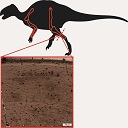
Comparative bone histology of rhabdodontid dinosaursEdina Prondvai
Published online: 17/11/2014 |
|
|
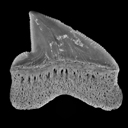
New Squalicorax species (Neoselachii: Lamniformes) from the Lower Maastrichtian of Ganntour phosphate deposit, MoroccoHenri Cappetta
Published online: 05/12/2014 |
|

|
Batoids (Rajiformes, Torpediniformes, Myliobatiformes) from the Sülstorf Beds (Chattian, Late Oligocene) of Mecklenburg, northeastern Germany: a revision and description of three new speciesThomas ReineckePublished online: 24/06/2015Keywords: Batoids; Chattian; Elasmobranchii; North Sea Basin; Oligocene https://doi.org/10.18563/pv.39.2.e2 Abstract Bulk-sampling of fossil-rich tempestites from the Chattian Sülstorf Beds of PV article infos Published in Vol.39-2 (2015) |
|

|
A new vertebrate locality in the eifelian of the khush-yeilagh formation, Eastern Alborz, IranAlain Blieck, Farrokh Golshani, Daniel Goujet, Amir Hamdi, Philippe Janvier
Published online: 01/02/1980 |
|

|
Recherches de mammifères paléogènes dans les départements de l'Aisne et de la Marne pendant la deuxième moitié du vingtième sièclePierre LouisPublished online: 16/12/1996Keywords: Biochronology; Eastern Paris Basin; Fossil localities; Mammals; paleoenvironments; Paléogène; Paleogeography https://doi.org/10.18563/pv.25.2-4.83-113 Abstract A brief historical account of fossil vertebrate discoveries in the Eastern part of the Paris Basin between the beginning of the nineteenth century and 1950 is given. Other localities discovered since then are presented. A reconstruction of past landscapes is briefly elaborated. A biozonation based on mammals is proposed, from the Late Thanetian to the Middle Bartonian. Paleogeographical considerations are added. Suggestions regarding the search for new marnmal localities are made. PV article infos Published in Vol. 25, Fasc. 2-4 (1996) |
|

|
New records of the pantodont Archaeolambda from the Paléocène of southern ChinaSuyin Ting, Judith A. Schiebout and Jianjian ZhengPublished online: 16/12/1996Keywords: Archaeolambda; China; Paleocene; Pantodont https://doi.org/10.18563/pv.25.2-4.125-132 Abstract Two new finds of pantodont materials from southern China, assigned to Archaeolambda, are described in this paper. One, a new species from the Nanxiong Basin, Guangdong Province, is similar to Alcidedorbignya inopinata from the early Paleocene of Tiupampa, Bolivia in size. It provides reliable evidence of the occurrence of Archaeolambda in the early-middle Paleocene of southern China. The second find includes specimens of Archaeolambda sp. cf. A. planicanina from the ?late Paleocene of Hengyang Basin, Hunan Province, which are the first record of a fossil mammal from the area near Hengyang city. The only vertebrate fossils previously found here were two genera of crocodiles discovered in 1938. This find sheds new light on the local biostratigraphy. PV article infos Published in Vol. 25, Fasc. 2-4 (1996) |
|

|
Les mammifères de Rians (Eocène inférieur, Provence)Marc Godinot
Published online: 01/02/1981 |
|

|
Etude des dents jugales inférieures des Equus (Mammalia, Perissodactyla) actuels et fossilesVéra EisenmannPublished online: 15/04/1981Keywords: Cheek teeth; Equus; Mammals https://doi.org/10.18563/pv.10.3-4.127-226 Abstract The comparative morphology and biometry of the lower cheek teeth of modern Equus are studied on approximately 300 mandibles belonging to the 10 usually recognised species : Equus grevyi, E. burchelli, E. quagga, E. zebra, E. africanus, E. asinus, E. hemionus, E. klang, E. przewalskii, E. caballus. The studied parameters comprise : occlusal length and width, postflexid length and index ; shape of the double knot (metaconid + metastylid + lingual groove) ; depth of the vestibular groove on the molars ; frequency of the pli caballinid, protostylid and other enamel plications or islets ; frequency of the dP/l. PV article infos Published in Vol. 10, Fasc. 3-4 (1981) |
|

|
Découverte d'un gisement de micromammifères d'âge Pliocène dans le bassin de Constantine (Algérie), présence d'un muridé nouveau : Paraethomys Athmeniae n.sp.Brigitte Coiffait and Philippe-Emmanuel CoiffaitPublished online: 16/05/1981Keywords: Algeria; Constantine; Micromammals; Muridae; Pliocene https://doi.org/10.18563/pv.11.1.1-15 Abstract The study of that locality allowed the description of a new Muridae : Paraethomys athmeniae n. sp. It reveals the existence of new rodent for Algeria : first, a Sciuridae, Atlantoxerus cf. rhodius, and second, a Gliridae, Eliomys truci. So, that work shows the presence of the genus Eliomys in North Africa before the middle of Pleistocene. Lastly, Paraethomys cf. anomalus gives an exact datation of that bed. PV article infos Published in Vol. 11, Fasc. 1 (1981) |
|

|
The terrestrial environnement and the origin of land vertebratesJean-Louis HartenbergerPublished online: 02/12/1980Keywords: environments; Land vertebrates; Terrestrial https://doi.org/10.18563/pv.11.1.17 Abstract L'ouvrage rassemble vingt contributions présentées lors d”un colloque organisé par l'éditeur en avril 1979, à Newcastle upon Tyne. Ce sont différents aspects du problème de la << sortie des eaux ›> qui ont été abordés lors de cette réunion. Par son volume, la qualité des communications, l”abondance des illustrations, nul doute que ce livre est appelé à devenir un ouvrage de référence pour les paléontologistes qui s'intéressent de près ou de loin à ce problème : enseignants et cher cheurs y trouveront leur compte. ll est un peu regrettable toutefois qu'aucun tenant de <<l”école suédoise» n'ait eu l`occasion d`y présenter ses thèses. PV article infos Published in Vol. 11, Fasc. 1 (1981) |
|

|
Premier signalement du Monachinae (Phocidae, Mammalia) dans le Sahélien (Miocène supérieur) d'Oran (Algérie)Christian de Muizon
Published online: 15/10/1981 |
|

|
Contributions à l'étude des micromammifères du gisement Miocène supérieur de Montredon (Hérault). 2- Les rongeursJean-Pierre AguilarPublished online: 30/06/1982Keywords: Hérault; Late Miocene; Micromammals; Montredon; Rodents https://doi.org/10.18563/pv.12.3.81-117 Abstract The recent excavation of the Upper Miocene locality of Montredon (Hérault) provides a rich material of Mammals. The present study deals with rodents. The new quarry is 10 meters above the classical Depéret's Quarry. No differences have been noticed between the rodent populations coming grom these two sites. The description of two new species : Hispanomys mediterraneus and Muscardinus heintzi is given and the dormouse Eliomys is recorded there for the first time. The new zonation of the Miocene given by Aguilar (1982) and the previously established correlations between marine and continental chronological scales give Tortonien age (estimated between 9 and 10 M.Y. old) to the site of Montredon, which belongs to the Mammal zone D 2. PV article infos Published in Vol. 12, Fasc. 3 (1982) |
|

|
Analyse d'ouvrage: Jean-Claude Rage, Handbuch der Paläeoherpetologie Teil 11: SerpentesJacques MichauxPublished online: 15/11/1984Keywords: Book review https://doi.org/10.18563/pv.14.3.199 Abstract Le volume 11 du «Handbuch der Paläeoherpetologie», consacré aux «Serpellles» et redigé par Jean-Claude Rage, apporte une remarquable information sur ce groupe particulier de reptiles dont on ne pouvait guere se faire une idée très précise à partir, par exemple, des seuls chapitres des traités classiques de Paléontologie et de Zoologie. PV article infos Published in Vol. 14, Fasc. 3 (1984) |
|

|
Evolution of the Rhizomyine zygomaLawrence J. Flynn
Published online: 30/12/1985 |
|

|
Crivadiatherium iliescui n. sp., nouvel Embrithopode (Mammalia) dans le Paléogène ancien de la dépression de Hateg (Roumanie).Constin Radulesco and Jean SudrePublished online: 30/12/1985Keywords: Embrithopods; Late Eocene; Paleobiogeography; Romania https://doi.org/10.18563/pv.15.3.139-157 Abstract The investigations undertaken at Crivadia (Hateg Depression, Hunedoara District, Romania), the type locality of Crivadiatherium mackennai RADULESCO el al. (Radulesco, Iliesco et lliesco, 1976), led to the discovery of remains of a new Embrithopod. Close to the above mentioned species, but larger in size, this animal is here described as a new species of Crivadiatherium, C. iliescui. ln addition, the comparison made between the forms indicated above and Palaeaamasía kansui OZANSOY from the Eocene deposits of Anatolia (Ozansoy, 1966; Sen et Heintz, 1979) showed that the latter species included a heterogeneous material; this permitted us to distinguish the form in the Anatolian locality Ciçekdag-Arabin Kôyü under the name Palaeoamasia sp. The geographical distribution and diversity of the Embrithopod species under discussion (Balkan, Anatolia) support the idea of an eurasiatic origin of this group and seem to suggest the existence during the Eocene of a particular faunal province in south-eastern Europe. PV article infos Published in Vol. 15, Fasc. 3 (1985) |
|

|
The evolution of the molar pattern of the Erethizontidae (Rodentia,Hystricognathi) and the validity of Parasteiromys Ameghino, 1904.Adriana M. Candela
Published online: 15/06/1999 |
|

|
Owls, caves and fossils. Predation, preservation and accumulation of small mammal bones in caves, with an analysis of the Pleistocene cave faunas from Westbury-Sub-Mendip, Somerset, UK, par Peter Andrews, 1990. The University of Chicago Press, 232 p.Christiane Denys
Published online: 17/12/1992 |
|

|
Les rongeurs de l'Eocène inférieur et moyen d'Europe Occidentale; Systématique, phylogénie, biochronologie et paléobiogéographie des niveaux-repères MP 7 à MP 14.Gilles Escarguel
Published online: 15/12/1999 |
|

|
Les pantolestidés (Mammalia, Pantolesta) de l'Eocène inférieur de Prémontré (Aisne, France).Richard SmithPublished online: 30/07/2001Keywords: France; Mammals; Pantolestids; Ypresian https://doi.org/10.18563/pv.30.1-2.11-35 Abstract Study of pantolestid mammals from the late Ypresian locality of Prémontré (reference level MP 10) allows the recognition of three genera: Palaeosinopa. Pantolestes and Premontrelestes n. gen. Pantolestes, up to now only recorded from North America, is represented by P. sabatieri n. sp. Premontrelestes n. gen., represented by the type species P. duchaussoisi n. sp., is compared with Pantolestes and Buxolestes. The latter, known from middle Eocene sites in Europe, has not been recognized at Prémontré. Two other taxa, the first of which is close to Pantolestes and the second of Premontrelestes n. gen. are left in open nomenclature. PV article infos Published in Vol. 30, Fasc. 1-2 (2001) |
|

|
Rongeurs du Miocène supérieur de Chorora, Ethiopie: Murinae, Dendromurinae et conclusions.Denis Geraads
Published online: 30/07/2001 |
|
