
Abstract book of the 18th Conference of the EAVP
Pterosaurs from Coahuila
Pliocene-Pleistocene large mammals from Le Riège and Saint-Palais
Les sélaciens du Miocène de la région de Montpellier
Muridae du Pliocène supérieur d'Espagne et du midi de la France.
Contribution à l'étude des genres Gliravus et Microparamys.
Eocene (57) , Quercy Phosphorites (38) , Systematics (32) , Rodents (29) , Mammalia (27) , Rodentia (25) , Miocene (24)
Page 12 of 19, showing 20 record(s) out of 365 total

|
Sur la présence de dents de mammifères (Creodonta, Perissodactyla) près de la limite Paléocène-Eocène à Hoegaarden, BelgiqueRichard Smith and Jerry J. HookerPublished online: 16/12/1996Keywords: Belgium; Creodonta; Landenian; Mammals; Perissodactyla Abstract Amongst a collection of selachian teeth made at Hoegaarden in a marine level of Bruxellian (Lutetian) age, containing a reworked Landenian (Sparnacian) fauna mixed with a contemporaneous one, a few teeth of terrestrial mammals have been discovered. They comprise two rare European taxa: ? Hallensia sp. and Palaeonictis gigantea, both known from the Landenian. Even though the ?Hallensia has not been definitely identified, il differs from the only perissodactyl of this age previously recorded from Belgium (Cymbalophus cuniculus). PV article infos Published in Vol. 25, Fasc. 2-4 (1996) |
|
|
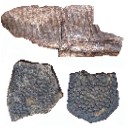
Terrestrial vertebrate paleocommunities from the Cerro del Pueblo Formation (Late Cretaceous; Late Campanian) at Las Aguilas, Coahuila, MexicoHéctor E. Rivera-Sylva
Published online: 16/07/2019 |
|

|
Book of Abstracts of the XXII Annual Meeting of the European Association of Vertebrate Palaeontologists, 30 June–5 July 2025, Kraków, PolandGeorgios L. Georgalis
Published online: 20/06/2025 |
|

|
Mammals of the Eocene locality Toru Ajgyr (Kyrgyzstan)Jorg Erfurt and Alexander Averianov
Published online: 15/12/2006 |
|

|
La poche à phosphate de Ste-Néboule (Lot) et sa faune de vertebres du Ludien supérieur. 9- Primates et ArtiodactylesJean SudrePublished online: 25/09/1978Keywords: Eocene; Quercy Phosphorites https://doi.org/10.18563/pv.8.2-4.269-290 Abstract La faune d'artiodactyles de Ste-Néboule, qui comprend neuf espèces, présente de nombreux PV article infos Published in Vol. 08, Fasc. 2-4 (1978) |
|

|
Une faunule de vertébrés sous la base de grès de Celas (Eocène supérieur) à ST Dresery (Gard)Jean-Albert RemyPublished online: 20/05/1994Keywords: Artiodactyla; Biostratigraphy; Eocene; Mammals https://doi.org/10.18563/pv.23.1-4.211-216 Abstract The St-Dézéry local fauna (3 reptile-, 4 mammal species) is approximately of the same age as the La Débruge or the Ste-Néboule faunas. It conduces to a better dating of the limestones underlying the Célas sandstones. A large part of a mandible of Amphimeryx was found there, which documents the record of this family of small artiodactyls PV article infos Published in Vol. 23, Fasc. 1-4 (1994) |
|

|
Eurodexeinae, eine neue unterfamilie der Artiodactyla (Mammalia) aus dem unter- und mitteleozän europasJorg Erfurt and Jean SudrePublished online: 16/12/1996Keywords: Artiodactyls; Eocene; evolution; Germany; Lutetian; new genus; New subfamily Abstract Dichobunoid artiodactyls are described in this paper from the middle Eocene Geiseltal lignite deposits near Halle (Sachsen-Anhalt, Germany). The genera Eurodexis and Parahexacodus are established based on odontologica1 studies. The type-species are E. ceciliensis (FRANZEN & KRUMBIEGEL, 1981) and P. germanicus n. sp. from the "obere Mittelkohle" (see text), MP 13. The genera are referred to the new subfamily Eurodexeinae (Dichobunidae, Artiodactyla, Mammalia), which also contains the monospecific genus Eygalayodon SUDRE & MARANDAT, 1993. These new genera show many features similar to North American homacodontids and antiacodontids. They exemplify a high degree of diversity in European dichobunids. Moreover, the family Dichobunidae includes the Dichobuninae and the Hyperdichobuninae. The connection of the posthypocristid with the postentocristid, the shift of a medial to a lingual position of the hypoconulid on the lower molars and the development of a large, caniniform P1 are regarded as the principal tendencies of the eurodexeines. The entoconid is larger and more mesially situated compared to that of Diacodexis. The hypoconulid has a lingual position on a broad postcingulid. The elongation of the premolars and the presence of diastemata are considered associated with extension of the muzzle. This and the acute tubercles of the molars could indicate a limited degree of insectivory. Protodichobune cf. oweni and Diacodexis cf. varleli, first reported here from the "untere Unterkohle" (MP 11) of the Geiseltal, demonstrate the existence of forms in the basal part of the middle Eocene, that are direct descendants of lower Eocene ones. Eurodexis russelli n. sp. from MP 10 of Premontre is the most primitive representative of Eurodexis. A further part of this lineage could be Messelobunodon sp. from MP 11 of Messel (Germany). Another form from Premontre, referred to Eurodexeinae indet., represents the origin of the lineage to Parahexacodus germanicus n. sp. from the Geiseltal (MP 13). The identification of several lineages in MP 10 is evidence of an adaptive radiation during this time. Unfortunately the history of the earlier species of Diacodexis is not known well enough to exclude earlier diversifications. Our study shows the independent development of artiodactyls at the end of the lower Eocene in Europe, North America (and maybe in Asia) with much convergence. The question of the geographic origin of the genus Diacodexis is still open. PV article infos Published in Vol. 25, Fasc. 2-4 (1996) |
|

|
Contribution à la classification des pistes de vertébrés du Trias: Les types du Stormberg d'Afrique du Sud (1).Paul EllenbergerPublished online: 16/10/1972Keywords: Footprints; South Africa; Stormberg; Trias https://doi.org/10.18563/pv.5.ext Abstract Cet article explore les pistes fossiles de vertébrés du Stormberg (Trias, Afrique du Sud), révélant une diversité ichnologique inédite avec 64 ichnotypes classés en tridactyles, tétradactyles et pentadactyles. Les découvertes incluent des reptiles bipèdes comme Qemetrisauropus et Prototrisauropus, dont les empreintes suggèrent des adaptations évolutives vers la bipédie, ainsi que des pentadactyles géants comme Pentasauropus, annonçant les futurs sauropodes. L’étude combine ichnologie et restes osseux pour reconstituer des écosystèmes triasiques riches, où flore (fougères, conifères) et faune témoignent d’une transition écologique majeure avant l’essor des dinosaures. PV article infos Published in Vol. 5, Ext (1972) |
|

|
La poche à Phosphate de Ste-Néboule (Lot) et sa faune de vertébres du Ludien supérieur. 5-SquamatesJean-Claude Rage
Published online: 25/09/1978 |
|

|
Présence de Palaeobatrachidae (Anura) dans des gisements tertiaires Français caractérisation, distribution et affinités de la familleColette Vergnaud-Grazzini and Robert HoffstetterPublished online: 15/05/1972Keywords: Anura; Palaeogeography; Systematics https://doi.org/10.18563/pv.5.4.157-177 Abstract The Palaeobatrachidae until now have not been reported from France. The present note makes known the discovery of very significant remains in three Tertiary localities of France: Cernay (late Paleocene), Laugnac (late Aquitanian) and Sansan (middle Helvetian). The osteologic characters, as well as the geographic and stratigraphic distribution of the family are re-stated with added details. The Palaeobatrachidae are a European family known from the late Jurassic of Catalonia (publication in course by J. Seiffert) to the Plio-Pleistocene (pre-Mindel) of Poland and Rumania. By their way of life and certain osteologic characters they are similar to the Pipidae, but they are distinguished by profound differences. It would be rash to include them in the Pipoidea or even in the Aglossa. They are apparently an independant group, essentially holarctic, which held in Europe a role equivalent to that played by the Pipidae south of Tethys. PV article infos Published in Vol. 05, Fasc. 4 (1972) |
|

|
Les gisements de Robiac (Eocène supérieur) et leurs faunes de Mammifères.Jean SudrePublished online: 05/04/1969Keywords: Fauna; Late Eocene; Mammalia; Robiac https://doi.org/10.18563/pv.2.3.95-156 Abstract Designated the type-locality of a late Eocene paleomammal zone, Robiac has recently been the object of important excavations. The first results of the new collecting, as well as a revision of the material in old collections, are given in this work. PV article infos Published in Vol. 02, Fasc. 3 (1969) |
|

|
Contributions à l'étude du gisement Miocène supérieur de Montredon (Hérault). Les grands mammifères. 6 - Les périssodactyles RhinocerotidaeClaude GuérinPublished online: 15/11/1988Keywords: Aceratherium; anatomy; Biostratigraphy; Dicerorhinus; Miocene; Montredon; Paleoecology; Upper Vallesian https://doi.org/10.18563/pv.18.ext.3-7-134 Abstract The Montredon site has yielded about hundred rhinoceros remains: PV article infos Published in Vol. 18, Ext (1988) |
|

|
Observations sur des remaniements structuraux post-mortem dans des dents de mammifères fossiles provenant des phosphorites du QuercyJean-Albert RemyPublished online: 01/12/1974Keywords: Quercy Phosphorites; rearrangements; Teeth https://doi.org/10.18563/pv.6.3-4.163-176 Abstract Deux types de remaniements post mortem me paraissent caractéristiques de l'état de conservation des dents de mammifères fossiles dans les Phosphorites du Quercy : PV article infos Published in Vol. 06, Fasc. 3-4 (1975) |
|

|
Die Referenzfauna des Geiseltalium, MP levels 11 bis 13 (Mitteleozan, Lutetium)Hartmut HauboldPublished online: 04/12/1989Keywords: Eocene; Geiseltal; Land mammal ages; Mammalian reference levels https://doi.org/10.18563/pv.19.3.81-93 Abstract The Middle Eocene Fossillägerstätte of the Geiseltal lignite beds near Halle/S. (German Democratic Republic) is the reference locality of the European land mammal age Geiseltalian and of the Mammalian Paleogene reference levels MP 11 - MP 13. Due to this importance a reinvestigation is given of the lithostratigraphical development of the Geiseltal beds and of their vertebrate sites. The last are genetically related to the southwest border of the Geiseltal depression and the influx of carbonate-rich waters. The geographical distribution and stratigraphical position of the fossiliferous sites depends on subrosive and tectonically controlled distribution of coal seams. The geological factors and the known stratigraphical guide of some mammalian species suggest corrections of the age of some sites. Four of the alltogether five coal bearing phases contain the 35 sites with mammalian remains. By the distribution of the around 69 mammal species are characterized, with 5 faunal steps ranging from MP 11 to MP 14 or over the Geiseltalian up to the Lower Robiacian. Well distant are the faunas of MP 11 and MP 12. Beginning with MP 12 up to MP 13/14, the fossil record is very frequent by 27 sites. This evidence coincides somewhat more with the concept of land mammal ages compared to that of the punctual mammalian reference levels. PV article infos Published in Vol. 19, Fasc. 3 (1989) |
|

|
Second international symposium on Dinosaur, Eggs and Babies (Montpellier-Aix-en-Provence, 25-29 Août 2003).Monique Vianey-Liaud
Published online: 15/12/2003 |
|

|
La poche à phosphate de Ste-Néboule (Lot) et sa faune de vertebres du Ludien supérieur. 8- Insectivores et Chiroptères.Bernard SigéPublished online: 25/09/1978Keywords: Eocene; Quercy Phosphorites https://doi.org/10.18563/pv.8.2-4.243-268 Abstract The small insectivorous placental mammals from Ste-Néboule are poorly varied. Two orders of insectivores are documented : the Proteutheria by Pseudorhyncocyon cayluxi (leptictids), the Lipotyphla by Saturninia gracilis and S. beata (nyctitheriids). The bats are only rhinolophoids and mostly hipposiderids. Sufficient populations allow us to restrict the original definitions of three previous species (Hipposideros schlosseri, Palaeophyllophora quercyi, P. oltina). From now, these species can be regarded as monophyletíc. PV article infos Published in Vol. 08, Fasc. 2-4 (1978) |
|

|
Les mammifères Montiens de Hainin (Paléocène moyen de Belgique) Part1: Multituberculés.Monique Vianey-Liaud
Published online: 01/11/1979 |
|

|
The stratigraphic sequence of North American rodent faunasRobert W. WilsonPublished online: 01/10/1980Keywords: North America; Rodents; Stratigraphic sequence https://doi.org/10.18563/pv.9.ext.273-283 Abstract Rodents first appear in the latest Paleocene or earliest Eocene as very fragmentary specimens (Family Paramyidae) known largely from a single locality. After this sparse beginning, rodents are usually abundant in the North American record if proper recovery methods are used. Utilization of rodents for biostratigraphic purposes depends on 1/ extinction, and 2/ replacement by evolution of endemic groups and/or incursions of Old World rodents, and rarely and late by South American kinds. These incursions are separated by relatively long periods of isolation in the Paleogene, but more episodic in the Neogene. At least 10 rodent zones can be characterized by major distinctions, and these zones can be amplified into as many as 16 with little trouble. In general, rodent genera permit as refined a zonation as do genera of large mammals. Distinction at a specific level has not been attempted herein except in the Blancan and Post-Blancan. PV article infos Published in Vol. 9, Ext (1980) |
|

|
La poche à phosphate de Ste-Néboule (Lot) et sa faune de vertebres du Ludien supérieur. 12- Fissipèdes (Carnivores)Louis de Bonis
Published online: 25/09/1978 |
|

|
Compléments sur les Chiroptères de l'Eocène moyen d'Europe. Les genres Palaeochiropteryx et Cecilionycteris.Bernard Sigé and Donald E. RussellPublished online: 01/10/1980Keywords: Chiroptera; Geiseltal; Messel; Middle Eocene https://doi.org/10.18563/pv.9.ext.91-126 Abstract New dental and skeletal material referable to Palaeochiropteryx tupaiodon from the Middle Eocene locality of PV article infos Published in Vol. 9, Ext (1980) |
|
