|
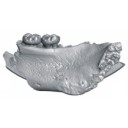
Enigmatic rodents from Lavergne, a late middle Eocene (MP 16) fissure-filling of the Quercy Phosphorites (Southwest France)
Published online: 08/04/2024
Keywords:
diversity; late Bartonian; Rodentia; taxonomy; Theridomyidae
https://doi.org/10.18563/pv.47.2.e1
Abstract
Two somewhat “odd” taxa of theridomyid rodents, one formerly known (Bernardia marandati Vianey-Liaud, 1991) and the other new (Idicia vidalenci gen. et sp. nov.) are discussed from a taxonomical and taphonomical perspectives. These two rodents were found at Lavergne, a late middle Eocene (MP16) “phosphatière” from the Quercy (Southwest France). The genus Bernardia, being preoccupied by a scale insect (Bernardia Ashmead, 1881), is here renamed Burgia. We benefit from this nomenclatural change to describe additional new dental specimens of this patriotheridomyine species, including a previously undescribed locus (P4). The other theridomyid from Lavergne, Idicia vidalenci gen. et sp. nov., so far documented by a mandible preserving two teeth (m2-m3) is a new taxon of peculiar occlusal morphology, and whose subfamilial affinities remain unknown. These two peculiar theridomyids recorded at Lavergne are found nowhere else, whether in coeval localities in Quercy or elsewhere in Western Europe. We discuss the possible causes of their unique presence at Lavergne.
PV article infos
|
PDF
|
|
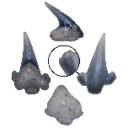
Preliminary report on the fishes (Chondrichthyes & Teleostei) from the lower Oligocene (Rupelian) Red Bluff Clay at site AMo-9, Monroe County, Alabama, USA
Published online: 26/06/2024
Keywords:
Batomorphii; Elasmobranchii; Galeomorphi; Gulf Coastal Plain; Vicksburg Group
https://doi.org/10.18563/pv.47.2.e2
Abstract
Herein we describe a small but relatively diverse assemblage of fossil fishes derived from the lower Oligocene (Rupelian) Red Bluff Clay at site AMo-9 in Monroe County, Alabama, USA. Identified amongst the remains are 15 unequivocal taxa representing 11 families within five orders, and one additional taxon represents an unknown order and family. Taxa identified include Eostegostoma sp., Otodus (Carcharocles) sp., Mitsukurinidae/Carchariidae indet., Macrorhizodus praecursor, Galeorhinus sp., Negaprion gilmorei, Physogaleus sp., “Sphyrna” sp., Galeocerdo sp., cf. “Aetobatus” sp., Sphyraena sp., Xiphiorhynchus kimblalocki, Xiphiorhynchus sp., Cylindracanthus ornatus, and C. rectus. Several additional fossils could not be identified beyond Lamniformes, Carcharhiniformes, and Teleostei, but they likely belong to one of the identified taxa within this paleofauna. All of the fishes previously reported from the Red Bluff Clay within the entirety of the Gulf Coastal Plain of the USA are otolith-based, and each of the 15 unequivocal taxa reported herein are important new records for this lithostratigraphic unit. In particular, the Eostegostoma sp. and Xiphiorhynchus spp. specimens represent the first occurrences of these taxa in Alabama. The specimens of C. ornatus, Eostegostoma sp., and X. kimblalocki are stratigraphic and temporal range extensions from the middle and late Eocene into the Rupelian Stage of the Oligocene. Other described taxa may represent transitional forms between those described from the late Eocene and late Oligocene within the region. This study provides a tantalizing preliminary view into faunal transitions that occurred amongst marine fishes across the Eocene/Oligocene boundary within the Gulf Coastal Plain of the USA.
PV article infos
|
PDF
|