|
Rates of evolution in divergent species lineages as a test of character displacement in the fossil record : tooth size in Paleocene Plesiadapis (Mammalia, Proprimates)
Published online: 16/12/1996
Keywords:
character displacement; character divergence; fractal time series; Plesiadapis; Rates of evolution
https://doi.org/10.18563/pv.25.2-4.193-204
Abstract
Two species lineages of North American late Paleocene Plesiadapis exhibit a pattern of size divergence from a common ancestral lineage. Time series of fossils in each of these lineages are analyzed to test the idea that size divergence represents competitive character displacement. The critical factor in a test of character divergence is showing that divergent lineages evolved directionally rather than randomly (multifactorially). Analysis of evolutionary rates and their temporal scaling in Plesiadapis shows that both divergent species lineages have the scaling slope expected for lineages evolving randomly rather than directionally, and size divergence in Plesíadapis does not represent character displacement. Rates of evolution commonly observed on a per-generation time scale are high enough to produce character displacement within a few generations. Thus character displacement is not likely to be visible on scales of time that can be studied in the fossil record.
PV article infos
Published in Vol. 25, Fasc. 2-4 (1996)
|
PDF
|

|
Dating dinosaur oodiversity: chronostratigraphic control of LateCretaceous oospecies succession.
Published online: 15/12/2003
Keywords:
Biostratigraphy; Chronology; dinosaur eggshells; Late Cretaceous
https://doi.org/10.18563/pv.32.2-4.121-148
Abstract
An increasing fossil record of dinosaur eggs and eggshells allows putting ootaxa within a chronostratigraphic framework, in order to study their distribution pattern leading eventually to their use as biochronological markers. For these purposes, high-quality data exists in four major regions; North America, South America, Europe and Asia (Central Asia and India). Most of the highly diverse dinosaur egg record has been dated as Latest Cretaceous in age (Campanian-Maastrichtian), reaching the Cretaceous-Tertiary boundary closer than the dinosaur bone record. However, dating continental sections is problematic and need to be carefully verified, as it appears when comparing the European dinosaur eggshell record from two well-studied areas. Ootaxa distribution in both sides of the Pyrenees (Tremp and Aix basins) shows comparable oospecies successions, but different chronology. This disagreement probably indicates that one or both successions have a wrong chronostratigraphic calibration.
PV article infos
Published in Vol. 32, Fasc. 2-4 (2003)
|
PDF
|

|
La région des phosphorites du Quercy
Published online: 15/11/1974
Keywords:
Quercy Phosphorites
https://doi.org/10.18563/pv.6.1-2.5-19
Abstract
L'exploitation des phosphates s'est produite surtout de 1890 à 1914 de Saint-Antonin à Cajarc, sur le Causse de Limogne, dont l'histoire géologique et morphologique peut expliquer les conditions de gisement du minerai, et aussi la découverte des nombreux, variés et beaux fossiles qu'on a extrait des poches en même temps que la phosphorite. Le Causse de Limogne est le nom donné par les géographes au plateau calcaire, faisant partie des Causses du Quercy, et compris entre la vallée du Lot au Nord et celle de "Aveyron au Sud". En fait, le nom de "causse" désigne localement un terroir, un paysage, à sous-sol de calcaire, à sol peu épais, qui s'oppose aux sols argileux des « terreforts » et aux sols légers et profonds des "boulbènes". Chaque communauté agricole distinguait ainsi son causse, par exemple le causse de Caylus, le causse de Limogne ou le causse de Cajarc. C'est par extension que l'appellation Causse de Limogne désigne tout un petit pays. La présence des poches à phosphate déborde un peu vers le Nord la vallée du Lot, et vers l'Est le Causse de Limogne proprement dit (Causse de Villeneuve).
PV article infos
Published in Vol. 06, Fasc. 1-2 (1974)
|
PDF
|

|
Les rongeurs de l'Eocène inférieur et moyen d'Europe Occidentale; Systématique, phylogénie, biochronologie et paléobiogéographie des niveaux-repères MP 7 à MP 14.
Published online: 15/12/1999
Keywords:
Biochronology; Early and Middle Eocene; Gliridae; Ischyromyidae; Mammalia; MP Scale; New Genus and Species; Palaeogeography; PHYLOGENY; Rodents; Theridomyidae; Western Europe
https://doi.org/10.18563/pv.28.2-4.89-351
Abstract
Fourteen distinct phyletical lineages which belong at least in three families: Ischyromyidae ALSTON, 1876, Gliridae THOMAS, 1896 and Theridomyidae ALSTON, 1876, have been identified after the study of more than 3600 rodent dental remains from about twenty Early and Middle Eocene european localities. A systematical and phylogenetical revision of these rodents has been achieved. Nearly all the specific and generic diagnosis are emended. Several new combinations and synonymies are proposed. Four new species and two new genera, Euromys nov. (Ailuravinae) and Hartenbergeromys nov. (Microparamyini), are named and described. Euromys nov. gen. is known by three distinctive ypresian (MP 7 to MP 10 european reference levels) chronospecies. This new lineage is thought to be the direct ancestor of Meldimys MICHAUX, 1968 and Ailuravus RUTIMEYER, 1891. A new species of the genus Plesiarctomys BRAVARD, 1850, Pl. lapicidinarum from Condé-en-Brie (MP 8-9 reference level), allows to relate the Plesiarctomys lineage to the Pseudoparamys MICHAUX, 1964 one. The taxa Sparnacomys HARTENBERGER, 1971, Pantrogna HARTENBERGER, 1971, and Corbarimys MARANDAT, 1989 are erected to genus rank; the last one is not thought to be an Ischyromyidae. A new chronospecies of Pantrogna, P. marandati nov. sp. from the locality of Prémontré (MP 10 reference level), is described. This lineage is at the origin of two others, namely Masillamys TOBIEN, 1954, including M. mattaueri (HARTENBERGER, 1975) nov. comb. (MP 10 reference level), and Hartenbergeromys nov. gen., known from MP 10 (H. hautefeuillei nov. sp.) and MP 11 (H. parvus TOBIEN, 1954) reference levels. The phylogenetical position of Hartenbergeromys nov. gen., at the origin of the european family Theridomyidae, is discussed. The systematical and phylogenetical status of two probable Paramyinae, "Paramys" woodi MICHAUX, 1964 and an unnamed genus and species, are discussed. New populations of the primitive Gliridae Eogliravus HARTENBERGER, 1971 and of the primitive Theridomyidae Protadelomys HARTENBERGER, 1968, are described and assigned to previously known species.
PV article infos
Published in Vol. 28, Fasc. 2-4 (1999)
|
PDF
|

|
Contributions à l'étude des micromammifères du gisement Miocène supérieur de Montredon (Hérault). 2- Les rongeurs
Published online: 30/06/1982
Keywords:
Hérault; Late Miocene; Micromammals; Montredon; Rodents
https://doi.org/10.18563/pv.12.3.81-117
Abstract
The recent excavation of the Upper Miocene locality of Montredon (Hérault) provides a rich material of Mammals. The present study deals with rodents. The new quarry is 10 meters above the classical Depéret's Quarry. No differences have been noticed between the rodent populations coming grom these two sites. The description of two new species : Hispanomys mediterraneus and Muscardinus heintzi is given and the dormouse Eliomys is recorded there for the first time. The new zonation of the Miocene given by Aguilar (1982) and the previously established correlations between marine and continental chronological scales give Tortonien age (estimated between 9 and 10 M.Y. old) to the site of Montredon, which belongs to the Mammal zone D 2.
PV article infos
Published in Vol. 12, Fasc. 3 (1982)
|
PDF
|
|
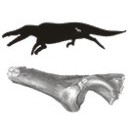
First record of the family Protocetidae in the Lutetian of Senegal (West Africa)
Published online: 05/12/2014
Keywords:
innominate; Lutetian; Protocetid; Senegal
https://doi.org/10.18563/pv.38.2.e2
Abstract
The earliest cetaceans are found in the early Eocene of Indo-Pakistan. By the late middle to late Eocene, the group colonized most oceans of the planet. This late Eocene worldwide distribution clearly indicates that their dispersal took place during the middle Eocene (Lutetian). We report here the first discovery of a protocetid fossil from middle Eocene deposits of Senegal (West Africa). The Lutetian cetacean specimen from Senegal is a partial left innominate. Its overall form and proportions, particularly the well-formed lunate surface with a deep and narrow acetabular notch, and the complete absence of pachyostosis and osteosclerosis, mark it as a probable middle Eocene protocetid cetacean. Its size corresponds to the newly described Togocetus traversei from the Lutetian deposits of Togo. However, no innominate is known for the Togolese protocetid, which precludes any direct comparison between the two West African sites. The Senegalese innominate documents a new early occurrence of this marine group in West Africa and supports an early dispersal of these aquatic mammals by the middle Eocene.
PV article infos
Published in Vol.38-2 (2014)
|
PDF
|
|
New datation of the Tafna Basin (Algeria): A combination between biochronological and magnetostratigraphical data
Published online: 11/03/2015
Keywords:
correlations; Late Miocene; North Africa; Rodentia
https://doi.org/10.18563/pv.39.1.e1
Abstract
The Tafna Basin corresponds to the lowlands, which are located in front of Tessala and Traras ranges, below the Tlemcen mountains, Algeria. This basin displays a complete sedimentary cycle dominated by lagoonal-fluvial and marine deposits. The continental formations located at the base of these deposits are mainly composed of alternating sandstones and clays. An early late Miocene age has been previously attributed to them, based on direct correlations with marine deposits. Search for micromammal fossils led to the discovery of three different rodent species from a single level of the Djebel Guetaf section, located at the bottom of these deposits. The rodent assemblage indicates a late Miocene age. Combined magnetostratigraphical and biostratigraphical investigations were carried out to provide a more accurate age control of these continental deposits. Sixty-four oriented rock samples were collected for a magnetostratigraphic study along a 92 meters thick section including the fossiliferous layer. Rock magnetic investigations indicate the presence of both high and low coercivity minerals. Specimens subjected to progressive thermal demagnetization procedures show that the samples exhibit a high temperature magnetization component and display a normal polarity. Based on biostratigraphic constraints, the Guetaf section is correlated with Chron C4An, indicating an age ranging from
9.1 to 8.7 Myr.
PV article infos
Published in Vol.39-1 (2015)
|
PDF
|
|
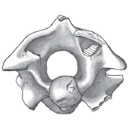
Fossil snakes from the Palaeocene of São José de Itaboraí, Brazil Part III. Ungaliophiinae, Booids incertae sedis, and Caenophidia. Summary, update and discussion of the snake fauna from the locality
Published online: 16/12/2008
Keywords:
booid-grade incertae sedis; Brazil; Caenophidia; New taxa; Palaeocene; Russellophiidae; Snakes; tropidophiids; Ungaliophiinae
https://doi.org/10.18563/pv.36.1-4.37-73
Abstract
Aside from Madtsoiidae, anilioids, and Boidae that were studied previously, the middle Palaeocene of ltaborai (BraziI) has produced Ungaliophiinae ("tropidophiids"), booid-grade snakes incertae sedis, and a possible Russellophiidae (Caenophidia) that are described in the present article. This article is the third and final report on the snakes from the locality. The Ungaliophiinae (Paraungaliophis pricei gen. et sp. nov.) are rare whereas the booid-grade snakes incertae sedis (ltaboraiophis depressus gen. et sp. nov., Paulacoutophis perplexus gen. et sp. nov.) are more frequent. A single vertebra is referred to the Russellophiidae (Caenophidia) with reservation. An update of the whole fauna of snakes from ltaborai is provided. Hechtophis austrinus that was tentatively referred to the erycine Boidae is now regarded as a Boidae incertae sedis. Most snakes from Itaborai are known only from the locality. Astonishingly, only the ailioids Coniophis cf. C. precedens gives possible evidence of interchanges between South and North America. The fauna of snakes from Itaborai, as well as the other Palaeocene faunas of snakes from South America are distinct from those of the Cretaceous and the Eocene of South America; they appear to be more different from the Cretaceous faunas than from those of the Eocene. The fauna from Itaborai is the richest and most diverse assemblage of snakes from the Palaeocene worldwide; it shares only a few taxa with other Palaeocene localities.
PV article infos
Published in Vol. 36, Fasc. 1-4 (2008)
|
PDF
|
|
New material of “Eurysternidae” (Thalassochelydia, Pan-Cryptodira) from the Kimmeridgian of the Swiss Jura Mountains
Published online: 25/06/2020
Keywords:
Eurysternidae; Late Jurassic; morphology; Switzerland; Testudines; Thalassochelydia
https://doi.org/10.18563/pv.43.1.e2
Abstract
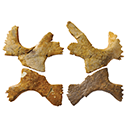
The region of Porrentruy (Swiss Jura Mountains) is known for its rich and diverse assemblage of Late Jurassic coastal marine turtles (Thalassochelydia). Dominated by the “Plesiochelyidae”, this assemblage also includes representatives of the two other thalassochelydian groups, the “Thalassemydidae” and “Eurysternidae.” In this study, we present new shell-based material from Porrentruy referable to eurysternids. One specimen represents a juvenile individual or a relatively small taxon, and is notably characterized by a well fenestrated plastron exhibiting a wider than long central plastral fontanelle. Two other specimens are much larger and possibly represent the largest eurysternids known to date. The fourth specimen is characterized by a unique plastral morphology otherwise only known in very small juveniles. This is the first time this unique plastral morphology is known to persist in an adult or subadult. The new material described herein represents at least three distinct taxa, all of them probably new. However, we refrain from naming new species based on this incomplete material in order to avoid adding confusion to an already complex taxonomical situation. This study provides new insights into the great diversity of eurysternids during the Late Jurassic.
PV article infos
Published in Vol 43-1 (2020)
|
PDF
|

|
The lower Miocene artiodactyls of Tagai bay, Olhon island, lake Baikal (Russia)
Published online: 20/05/1994
Keywords:
Artiodactyls; Mammals; Miocene; Siberia
https://doi.org/10.18563/pv.23.1-4.177-197
Abstract
The mammalian fauna of the Tagai locality of Olhon Island in Lake Baikal contains six artiodactyls:
Amphitragulus boulangeri, Lagomeryx parvulus, Stephanocemas sp., Palaeomeryx kaupi, Orygotherium aff. escheri, and Brachyodus intermedius. They are reported from Eastern Siberia for the first time. A description of teeth and limb-bones are given. An analysis of the systematic composition of the Tagai fauna allows it to be correlated with European faunas of the second part of the Early Miocene (Orleanian, MN 3-4) and permit suggestion of the existance of a united European-Siberian zoogeographical sub-area in the middle latitudes of Eurasia at that time.
PV article infos
Published in Vol. 23, Fasc. 1-4 (1994)
|
PDF
|

|
Les rongeurs de l'Eocène d'Afrique Nord-Occidentale [Glib Zegdou ( Algérie) et Chambi (Tunisie)] et l'origine des anomaluridae.
Published online: 20/05/1994
Keywords:
Africa; Eocene; New taxa; Paleobiogeography; PHYLOGENY; Rodents
https://doi.org/10.18563/pv.23.1-4.93-118
Abstract
This paper is about the oldest African rodents faunas, from the late Early Eocene, or early Middle Eocene, Glib Zegdou (Algeria) and Chambi (Tunisia) localities. Five species are described and figured, belonging to a new family here created, the Zegdoumyidae.
This family is compared to the Early and Middle Eocene rodents families from Asia, Europe and North America (Chapattimyidae, Yuomyidae, Gliridae, Theridomyidae, lschyromyidae and Sciuravidae), as well as to those known from the Late Eocene African locality Bir El Ater (Anomaluridae and Phiomyidae).
On the one hand, it seems clear that the African endemic Anomaluridae arise from the Zegdoumyidae. On the other hand, the lschyromyidae, or primitive Sciuravidae, may be the most reliable ancestral groups for the Zegdoumyidae. Thus, this new family can be considered as the sister group for the American Sciuravidae on the one hand, and for the European Gliridae on the other hand.
The biogeographical consequences of these phylogenetic hypotheses are discussed. A new phase of communication between Europe and North Africa is inferred, during the Early Eocene. It has been followed by a short period of endemism, allowing the adaptive radiation for the Zegdoumyidae, preceding the immigration of the Phiomyidae, during the Late Eocene, probably from Asian relatives.
PV article infos
Published in Vol. 23, Fasc. 1-4 (1994)
|
PDF
|

|
Les Amphibiens et les reptiles du Pliocène supérieur de Balaruc II (Herault, France)
Published online: 15/09/1989
Keywords:
amphibians; Europe; France; Pliocene; Reptiles
https://doi.org/10.18563/pv.19.1.7-28
Abstract
The late Pliocene site (MN 16) of Balaruc II (Hérault, France) has provided remains of the following amphibians and reptiles: Chelotriton pliocenicus nov. sp. and Triturus marmoratus (Salamandridae), cf. Rana (Ranidae), cf. Blanus (Amphisbaenidae), cf. Agama (Agamidae), Gekkonidae indet., Lacerta s.l. (Lacertidae), "Ophisaurus" sp. (Anguidae), Michauxophis occitanus (Aniliidae), Erycinae indet. (Boidae), Elaphe cf. E. longissima and Malpolon sp. (Colubridae), cf. Naja (Elapidae) and Vipera sp. (Viperidae). The salamandrid Chelotriton pliocenicus and the aniliid Michauxophis occitanus constitute, up to now, the only records of these groups in the European Pliocene. The fauna is indicative of a warm, dry
subtropical climate.
PV article infos
Published in Vol. 19, Fasc. 1 (1989)
|
PDF
|

|
First record of the genus Megaderma Geoffroy (Microchiroptera: Megadermatidae) from Australia.
Published online: 14/06/1995
Keywords:
Australia; Chiroptera; Megaderma; Megadermatidae; Pliocene; Rackham's Roost Site; Riversleigh
https://doi.org/10.18563/pv.24.1-2.47-66
Abstract
A new Tertiary megadermatid is described from Rackham's Roost Site, a Pliocene limestone cave deposit on Riversleigh Station, northwestern Queensland, Australia. It appears to represent the first Australian record of Megaderma GEOFFROY, 1810, a genus otherwise known from Tertiary African and European taxa and the living Asian species M. spasma (LINNAEUS, 1758) and M. (Lyroderma) lyra PETERS, 1872. Megademza richardsi n. sp. is one of the smallest megademiatids known. It exhibits a mixture of plesiomorphic and autapomorphic features, the latter appearing to exclude it from being ancestral to any living megadermatid. The new species is one of eight megadermatids identified from the Australian fossil record, most of which are referable to Macroderma MILLER, 1906.
PV article infos
Published in Vol. 24, Fasc. 1-2 (1995)
|
PDF
|

|
Premières données sur les carnivores fissipèdes provenant des fouilles récentes dans le Quercy
Published online: 15/11/1974
Keywords:
Carnivores; Quercy Phosphorites
https://doi.org/10.18563/pv.6.1-2.27-32
Abstract
Cet article présente les premières données sur les Carnivores fissipèdes des Phosphorites du Quercy, issues de fouilles récentes (1971-1972). Les fossiles se répartissent de l'Oligocène inférieur à supérieur.
PV article infos
Published in Vol. 06, Fasc. 1-2 (1974)
|
PDF
|

|
Agriotherium intermedium (Stach 1957) from a Pliocene fissure filling of Xiaoxian County (Anhuei Province, China) and the phylogenetic position of the genus.
Published online: 30/09/1983
Keywords:
Carnivora; China; PHYLOGENY; Pliocene; skull anatomy; Ursidae
https://doi.org/10.18563/pv.13.3.65-81
Abstract
A fragmentary mandible and maxilla of a small sized Agriotherium of a young individual discovered from a Pliocene fissure filling in Xiaoxian county (Anhuei Province, China) are described. Judging from the morphology of the dentition and its dimensions the new material can be identified as Agriotherium inlermedium (STACH l957). Hendey's proposition (1980) that the Agriotherium species are derived from Indarctos is reconsídered on the basis of the new documents. As a result of a more general phylogenetic discussion it can be stated, that: 1. the supposed size increase as well as other trends, leading from Indarctos to Agriotherium are untenable ; 2. there are no positive indications to assume a phylogenetic transition of these two genera. 3. there are no real arguments in favor of an adaptational reversal in the evolution of Agriotherium. Hence, many features of that genus supposed by Hendey to be derived are plesiomorphic ; 4. regardless of the previous points it is methodologícally impossible to establish direct ancestor - descendant relationships between Indarctos and Agriotherium species, as Hendey did. Based on the data available and especially on the characters of the new material from China it is more likely that Agriotherium and Indarctos are two genera which developed independently. While advanced Agriotherium species, e.g. A. africanum, resemble in some respects Indarctos by adaptational analogies, more primitive species, e.g. Agriotherium intermedium, are quite dissimilar to lndarctos. While Indarctos might be derived from an Ursavus like forerunner, Agriotherium has its roots more likely somewhere in between Ursavus and the Hemicyon-group.
PV article infos
Published in Vol. 13, Fasc. 3 (1983)
|
PDF
|

|
Pantolestidae nouveaux (Mammalia, Insectivora) de l'Eocène moyen de Bouxwiller (Alsace).
Published online: 31/03/1970
Keywords:
Bouxwiller; Insectivora; Mammalia; Middle Eocene; Pantolestidae
https://doi.org/10.18563/pv.3.3.63-82
Abstract
The Pantolestidae from the middle eocene of Bouxwiller are the subject of a detailed study. Buxolestes hammeli (n. g., n. sp.) is not closely related to any other European or North American form described until now; it presents, however, some characters in common with Pantolestes, a form of the same age from North America. A parallel evolution from a common ancestral form could explain this ressemblance.
Another form (gen. and sp. indet.) accompanies Buxolertes hammeli in the Bouxwiller fauna.
PV article infos
Published in Vol. 03, Fasc. 3 (1970)
|
PDF
|
|
Enamel hypoplasia on rhinocerotoid teeth: Does CT-scan imaging detect the defects better than the naked eye?
Published online: 03/01/2022
Keywords:
fossil teeth; method; micro-CT imaging; Rhinocerotoidea
https://doi.org/10.18563/pv.45.1.e2
Abstract
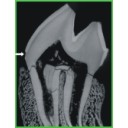
Micro-CT imaging is an increasingly popular method in paleontology giving access to internal structures with a high resolution and without destroying precious specimens. However, its potential for the study of hypoplasia defects has only recently been investigated. Here, we propose a preliminary study to test whether hypoplastic defects can be detected with micro-CT (μCT) scan and we assess the costs and benefits of using this method instead of naked eye. To do so, we studied 13 fossil rhinocerotid teeth bearing hypoplasia from Béon 1 (late early Miocene, Southwestern France) as positive control and 11 teeth of the amynodontid Cadurcotherium (Oligocene, Phosphorites du Quercy, Southwestern France), for which enamel was partly or totally obscured by cement. We showed that all macroscopically-spotted defects were retrieved on 3D reconstructions and selected virtual slices. We also detected additional defects using μCT scan compared to naked eye identification. The number of defects detected using μCT was greater in the Cadurcotherium dataset (paired-sample Wilcoxon test, p-value = 0.02724) but not for our control sample (paired-sample Wilcoxon test, p-value = 0.1171). Moreover, it allowed for measuring width and depth of the defects on virtual slices (sometimes linked to stress duration and severity, respectively), which we could not do macroscopically. As μCT imaging is both expensive and time consuming while not drastically improving the results, we recommend a moderate and thoughtful use of this method for hypoplasia investigations, restricted for instance to teeth for which enamel surface is obscured (presence of cement, uncomplete preparation, or unerupted germs).
PV article infos
Published in 45-1 (2022)
|
PDF
S.I. Data
|
|
Difficulties with the origin of dinosaurs: a comment on the current debate
Published online: 01/07/2020
Keywords:
dinosaur anatomy; dinosaur evolution; Ornithoscelida; palaeobiogeography; Triassic Period
https://doi.org/10.18563/pv.43.1.e3
Abstract
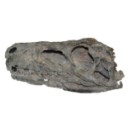
The origin and early evolutionary history of the dinosaurs is a topic that has recently gone through a period of renewed interest and academic debate. For 130 years, one way of classifying the various dinosaur subgroups persisted as the accepted model, with increasing levels of research in the past quarter-century also providing evidence for the hypothesis that dinosaur origination occurred in the Southern Hemisphere, particularly in South America. It is, after all, from within the Late Triassic strata of countries like Argentina and Brazil that we get some of the very best early dinosaur specimens; many of these specimens are the earliest known representatives of some of the major dinosaur subgroups, such as the theropods and sauropodomorphs. However, some recent analyses have brought about a shift in terms of what is currently accepted and what is now disputed regarding the origin of dinosaurs – the Southern Hemisphere origination hypothesis was questioned (although this was based upon observations and not with quantitative analysis techniques), as has the shape of the dinosaur tree. Responses to the new hypothesis were numerous; many further supported a Southern Hemisphere point of origin. Whilst the interrelationships between the major dinosaur clades remains to be resolved, the current data does seem to comprehensively answer the question of where the dinosaurs first originated. However, it is arguable whether the current data that is being used in such palaeobiogeographical analyses is sufficient to provide an answer to the question of where specifically the dinosaur clade first appeared. This short communication urges a degree of caution about the current consensus and what steps may need to be taken to ensure that more meaningful results are produced in the future.
PV article infos
Published in Vol 43-1 (2020)
|
PDF
|
|
New Late Miocene plecotine bats (Chiroptera, Vespertilionidae: Plecotini) from Gritsev, Ukraine
Published online: 07/03/2019
Keywords:
Barbastella; bats; late Neogene; Mammalia; Plecotus
https://doi.org/10.18563/pv.42.1.e2
Abstract
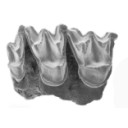
The Late Miocene site of Gritsev (MN 9, Ukraine) has yielded a very rich bat fauna, the remains of which are well preserved. Compared to other Neogene bat assemblages of Europe, the Gritsev bat community is unique in preserving plecotine bats, which are rare from Neogene sites. Some peculiar and new bat species, including a large plecotin Otonycteris, already were described from the Gritsev mammal site. Here we report new records of small plecotin bats from Gritsev, including a new taxon, Barbastella maxima nov. sp. This is the earliest reliable fossil record of this genus and it differs from more recent species of Barbastella in being considerably larger. The evolutionary patterns in the odontology within the tribe Plecotini, supported by biostratigraphical distribution of fossil records of Plecotus are discussed. The morphological peculiarities of the new fossils of plecotine bats from Gritsev are discussed in connection with its possible taxonomical affinity.
PV article infos
Published in Vol 42-1 (2019)
|
PDF
|
|
New remains of the giant bird Gargantuavis philoinos from the Late Cretaceous of Provence (south-eastern France)
Published online: 27/08/2015
Keywords:
Aves; Gargantuavis; Late Cretaceous; Pelvis; South-eastern France
https://doi.org/10.18563/pv.39.2.e3
Abstract
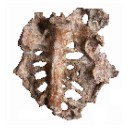
Two incomplete pelves of the giant bird Gargantuavis philoinos are described from Late Cretaceous deposits at Fox-Amphoux (Var, south-eastern France). They consist of synsacra with attached parts of the ilia. One of them has undergone considerable dorsoventral compression, which makes it very similar in appearance to the holotype pelvis of Gargantuavis philoinos from Campagne-sur-Aude (Aude, southern France). The second specimen has suffered some lateral distortion but is uncrushed dorsoventrally. Because of this, its avians characters (including an arched synsacrum and widespread pneumatisation) are especially clear. These new specimens confirm the avian nature of Gargantuavis and reveal new details about its pelvic anatomy, but provide little new evidence about its systematic position within Aves. The geographical distribution and general rarity of Gargantuavis are discussed.
PV article infos
Published in Vol.39-2 (2015)
|
PDF
|