Print ISSN: 0031-0247
Online ISSN: 2274-0333
Frequency: biannual
Notidanodon tooth (Neoselachii: Hexanchiformes) in the Late Jurassic of New Zealand
Additions to the elasmobranch fauna from the upper Cretaceous of New Jersey (middle Maastrichtian, Navesink Formation)
stratigraphy and biochronology of Oligo-Miocene of Kazakhstan
Fossil snakes, Palaeocene, Itaborai, Brazil, Part I
Abstract book of the 18th Conference of the EAVP
Eocene (57) , Quercy Phosphorites (38) , Systematics (32) , Rodents (29) , Mammalia (27)

|
Rongeurs nouveaux de l'Oligocène Moyen d'Espagne.Louis ThalerKeywords: Cricetidae; Oligocene; Pseudocricetodon; Rodents; Theridomysdoi: 10.18563/pv.2.5.191-207 Abstract Description of four new rodents from a recently discovered locality at Montalban. Theridomys crusafonti nov. sp. is considered as the ancestry of T. Iembronicus. Theridomys varian: nov. sp. includes «Theridomys» morphotypes and «Blainvilllimys» morphotypes; it could be ancestral to B. blainvillei. Pseudoltinomys nanus nov. sp. represents a new lineage paralleling in evolution that of P. gaillardi (which is equally found at Montalban). Pseudocricetodon montalbanensis nov. gen., nov. sp. designates a lineage of very small Cricetidae accompanying Eucricetodon. With these well defined new species and six others present in the locality, Montalban appears as the best faunal reference point within the biochronologic zone of La Sauvetat. Article infos Published in Vol. 02, Fasc. 5 (1969) |
|
|

|
Hyracodontids and rhinocerotids (Mammalia, Perissodactyla, Rhinocerotoidea) from the Paleogene of MongoliaDemberelyin DashzevegKeywords: Hyracodontidae; Mongolia; Paléogène; Perissodactyla; RhinocerotidaeAbstract Two families are reviewed (Hyracodontidae and Rhinocerotidae) from the Paleogene of Mongolia. The following taxa are described from the former family: Triplopus? mergenensis sp. nov., Prohyracodon meridionale CHOW, Prohyracodon? parvus sp. nov., Forstercooperia ergiliinensis GABUNIA & DASHZEVEG, Ardynia praecox MATTHEW & GRANGER, A. mongoliensis (BELIAYEVA), Ardynia sp., Urtinotheríum sp. (or Indricotherium) and Armania asiana GABUNIA & DASHZEVEG. All of them are from the Paleogene of the eastem Gobi Desert The hyracodontid Pataecops parvus RADINSKY is described from a new locality, Menkhen-Teg (Middle Eocene), in the Valley of Lakes. Article infos Published in Vol. 21, Fasc. 1-2 (1991) |
|
|

|
Equus caballus antunesi, nouvelle sous-espèce Quaternaire du PortugalJoao L. Cardoso and Véra EisenmannKeywords: Equidae; Equus caballus; new subspecies; Perissodactyla; Portugal; WürmAbstract Equus caballus antunesi, nova subspecies, was a hypsodont, slender, and rather small horse (around 141cm at the withers), with narrow hooves and protocones longer on P3/-P4/ than on M1/-M2/. It does not fit in any of the different "types" of Pleistocene caballine horses previously recognized but may be related to the horse from the Acheulean of Solana del Zamborino. Article infos Published in Vol. 19, Fasc. 2 (1989) |
|
|

|
Etude des dents jugales inférieures des Equus (Mammalia, Perissodactyla) actuels et fossilesVéra EisenmannKeywords: Cheek teeth; Equus; MammalsAbstract The comparative morphology and biometry of the lower cheek teeth of modern Equus are studied on approximately 300 mandibles belonging to the 10 usually recognised species : Equus grevyi, E. burchelli, E. quagga, E. zebra, E. africanus, E. asinus, E. hemionus, E. klang, E. przewalskii, E. caballus. The studied parameters comprise : occlusal length and width, postflexid length and index ; shape of the double knot (metaconid + metastylid + lingual groove) ; depth of the vestibular groove on the molars ; frequency of the pli caballinid, protostylid and other enamel plications or islets ; frequency of the dP/l. Article infos Published in Vol. 10, Fasc. 3-4 (1981) |
|
|

|
Les pantolestidés (Mammalia, Pantolesta) de l'Eocène inférieur de Prémontré (Aisne, France).Richard SmithKeywords: France; Mammals; Pantolestids; YpresianAbstract Study of pantolestid mammals from the late Ypresian locality of Prémontré (reference level MP 10) allows the recognition of three genera: Palaeosinopa. Pantolestes and Premontrelestes n. gen. Pantolestes, up to now only recorded from North America, is represented by P. sabatieri n. sp. Premontrelestes n. gen., represented by the type species P. duchaussoisi n. sp., is compared with Pantolestes and Buxolestes. The latter, known from middle Eocene sites in Europe, has not been recognized at Prémontré. Two other taxa, the first of which is close to Pantolestes and the second of Premontrelestes n. gen. are left in open nomenclature. Article infos Published in Vol. 30, Fasc. 1-2 (2001) |
|
|

|
Contributions à l'étude du gisement Miocène supérieur de Montredon (Hérault). Les grands mammifères. 4 - Les artiodactyles Suidae.Léonard GinsburgKeywords: Artiodactyla; France; Mammalia; Montredon; Upper MioceneAbstract There is only one suid known in the Upper Miocene of Montredon (Hérault): Microstonyx (Limnostonyx nov. subgen.) antiquus (KAUP). It is differenciated from Microstonyx major by the presence of upper and lower canines which are considerably longer and biger. Its presence at Montredon corroborates the palustrine habitat for the species. Article infos Published in Vol. 18, Ext (1988) |
|
|

|
Table ronde sur les phosphorites du Quercy Montauban 15-16 Décembre 1972Louis Thaler and Jean-Louis HartenbergerKeywords: Quercy PhosphoritesAbstract Voici une centaine d'années débutait sur les Causses du Quercy l'exploitation des phosphorites qui devait permettre d'amasser des collections de Vertébrés fossiles uniques au monde. Ces fossiles firent l'objet de nombreuses publications et les noms de Filhol, Gaudry, Schlosser, Stehlin, Teilhard de Chardin sont attachés à ces premières études. Article infos Published in Vol. 06, Fasc. 1-2 (1974) |
|
|

|
Introduction à l'oeuvre scientifique de Donald E. Russell, "gentleman paleontologist"Marc Godinot and Phillip D. GingerichKeywords: D.E.Russell; Eocene; Mammals; Paleocene; Paleontology; synthesisAbstract The scientific career of D.E. Russell began with a Pliocene fauna from Oregon, and then turned in the direction of European Paleogene mammals. Field work followed by study of the mammals that were collected, firstly in the Paleocene and later in the early Eocene, greatly rejuvenated learning in this field. Syntheses on the Northwest European Tertiary basin and on European marnmals and stratigraphy came next. Research on the Eocene of Asia was carried out jointly with Gingerich on Pakistan and with Dashzeveg on the faunas of Mongolia. An important synthesis on the entire Paleogene of Asia, joint with Zhai, followed. Field work in Africa with Sigogneau-Russell led to the discovery of Mesozoic mammals there. A synthesis of mammalian paleofaunas of the world was written with Savage, and a similar synthesis of Cenozoic vertebrate faunas is currently being prepared. These achievements reflect the perennial importance of field work, numerous collaborations with both amateurs and professionals, and the human qualities of this author. Article infos Published in Vol. 25, Fasc. 2-4 (1996) |
|
|

|
Découverte d'un gisement de micromammifères d'âge Pliocène dans le bassin de Constantine (Algérie), présence d'un muridé nouveau : Paraethomys Athmeniae n.sp.Brigitte Coiffait and Philippe-Emmanuel CoiffaitKeywords: Algeria; Constantine; Micromammals; Muridae; PlioceneAbstract The study of that locality allowed the description of a new Muridae : Paraethomys athmeniae n. sp. It reveals the existence of new rodent for Algeria : first, a Sciuridae, Atlantoxerus cf. rhodius, and second, a Gliridae, Eliomys truci. So, that work shows the presence of the genus Eliomys in North Africa before the middle of Pleistocene. Lastly, Paraethomys cf. anomalus gives an exact datation of that bed. Article infos Published in Vol. 11, Fasc. 1 (1981) |
|
|
|
A classic in the making : VERTEBRATE PALAEONTOLOGY (4th edition). By Michael J. Benton.Eric BuffetautKeywords: Book review; Vertebrate Palaeontologydoi: 10.18563/pv.40.1.e1 Abstract When the first edition of Mike Benton’s Vertebrate Palaeontology came out in 1990, sauropods still dragged their tails on the ground, the closest relatives of whales were mesonychids, and Mesozoic birds consisted essentially of Archaeopteryx, Ichthyornis and Hesperornis. Twenty-five years later, the book, now in its fourth edition, is a third longer, in a larger format and sports fine colour plates – in addition to a companion website. Article infos Published in Vol.40-1 (2016) |
|
|
|
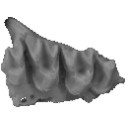
A new species of bat (Chiroptera: Vespertilionidae) from the early Oligocene global cooling period, Brule Formation, North Dakota, USANicholas Czaplewski, Jeff Person, Clint Boyd and Robert EmryKeywords: Eocene-Oligocene global cooling; Mammalia; Oligocene; Plecotini; Quinetiadoi: 10.18563/pv.42.2.e2 Abstract We report the first confirmed fossil bats from North Dakota, including a new species referable to the Vespertilionidae represented by a maxilla with P4-M3 from the Brule Formation, Fitterer Ranch local fauna, early Oligocene, Whitneyan North American Land Mammal Age. Unassociated postcranial fragments of the humerus and femur also represent a vespertilionoid, but appear to reflect a different, unidentified species. The new taxon, Quinetia frigidaria sp. nov., is referred to the genus Quinetia, previously known only from approximately contemporaneous deposits in Europe. The new species is larger than Quinetia misonnei from the early Oligocene of Belgium. It is similar in some morphological characters to Chadronycteris rabenae (Chiroptera incertae sedis) of the late Eocene (Chadronian) of northwestern Nebraska and to Stehlinia species (?Palaeochiropterygidae) from the Eocene and Oligocene of Europe, but differs from each in morphological details of the dentition and maxilla. An unassociated talonid of a lower molar from Fitterer Ranch shows myotodont morphology, unlike the nyctalodont lower molars in Q. misonnei, and thus represents a second chiropteran taxon in the fauna. Quinetia frigidaria is a member of a Paleogene radiation of bats near the low point of the Eocene-early Oligocene decline in global temperatures, increased seasonal aridity, and loss of tropical floras from mid-latitude North America. Article infos Published in Vol 42-2 (2019) |
|
|

|
Les vertébrés fossiles de Colombie et les problèmes posés par l'isolement du Continent sud-Américain.Jaime de PortaKeywords: Columbia; Cretaceous; Fauna; Quaternary; South Americadoi: 10.18563/pv.2.2.77-94 Abstract A general view is given of the vertebrate faunas, Cretaceous to Quaternary of age, found in Columbia and of their principal characteristics. This view leads to the discussion of the isolation of the South American continent and of the role played by the Bolivar syncline with respect to North American immigrants during the Oligocene. The absence of marine deposits of Oligocene age in the north and northwest of Columbia suggests the possibility of a communication with Central America. This communication would have permitted the passage of hystricomorph rodents, of platyrrhine monkeys, and of colubrids. The non-occupation, until then, of the ecologie niches of these groups would have favored their installation beside the indigenous fauna. In this hypothesis it would no longer be necessary to admit that these vertebrates arrived as «island hoppers ››. The eco-biologic conditions would explain the absence of large-sized forms of North American origin. Article infos Published in Vol. 02, Fasc. 2 (1969) |
|
|
|
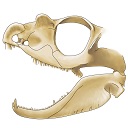
The skull of Tetraceratops insignis (Synapsida, Sphenacodontia)Frederik SpindlerKeywords: cranium; pelycosaur; Permian; therapsid originsdoi: 10.18563/pv.43.1.e1 Abstract Tetraceratops insignis is known from a single, crushed skull from the Lower Permian of Texas. Its unique proportions and osteological details gained central meaning in the question of the origins of Therapsida since this early synapsid has been determined as the oldest and less derived therapsid. Apart from Tetraceratops, the ‘mammal-like’ Therapsida and their sister, the pelycosaur-grade Sphenacodontidae, are separated by one of the longest ghost lineages in tetrapod fossil record. However, the minor, though well justified critique faced insistent publication regarding the therapsid hypothesis. A carefull re-evaluation of the holotypic skull reveals that therapsid traits cannot be supported, including a rejection of the formerly supposed adductor shelf in the temporal fenestra. Increased understanding of ‘pelycosaur’ character variation underlines a haptodontine-grade or, less likely, sphenacodontid position for Tetraceratops. Article infos Published in Vol 43-1 (2020) |
|
|

|
Problems of classification as applied to the RodentiaAlbert E. WoodKeywords:Abstract A classification should be both usable and useful,not too complex either in the amount of splitting or in the number of hierarchies involved, and not so simple as to give a false assurance of knowledge of relationships. Classifications are only possible because we do not have complete knowledge of the evolution of the organisms concerned because gaps in the record are necessary to allow the separation of the various taxa. Rodent classification is complicated by the large number of organisms involved and by the geat amount of parallelism that has taken place in the evolution of any and all features. If several independent features are characteristic of a certain taxon, should an effort be made to define the group on the basis of all the features, or should only one be selected as the determinant ? Unless the evolution of the several features was closely linked, the former solution will sooner or later lead to insurmountable problems. Article infos Published in Vol. 9, Ext (1980) |
|
|

|
Premières données sur les rongeurs de la formation de Ch'orora (Ethiopie) d'âge Miocène supérieur. I: ThryonomyidésJean-Jacques Jaeger, Jacques Michaux and Maurice SabatierKeywords: Ethiopia; Paraulacodus; Rodents; Upper MioceneAbstract The genus Paraulacodus has been collected in the Ch'orora formation of Upper Miocene age, in Ethiopia. The new species, P. johanesi n. sp.. is more evolved than the previously described indian species P. indicus HINTON of the Siwalik Hills area. The morphological gap between P. johanesi and the present Thryonomys is still important. Article infos Published in Vol. 9, Ext (1980) |
|
|

|
Les mammifères de Rians (Eocène inférieur, Provence)Marc GodinotKeywords: Eocene; Mammals; Provence; RiansAbstract The fossil mammals discovered in the quarry of Rians (Sparnacian, Provence) are described. Among these forms, Hyracotherium is interesting because of the little molarization of the lower premolars and its small size, and Diacodexis by its small size and very primitive astragalus ; they may be the most primitive representatives of their respective orders. Also, Proviverra eisenmanni n. sp. is the smallest and most primitive hyaenodontid yet described. Hyopsodus itinerans is the first species of this genus described France. Among other rare fossils is a new species of bat, a small palaeoryctid, and other forms not yet identified. Marsupials are varied. Several new species are present among the rodents. The fauna is well-balanced and rich in small hyopsodontid condylarths. It is stratigraphically situated at the Article infos Published in Vol. 10, Fasc. 2 (1981) |
|
|

|
EditorialHenri CappettaKeywords: EditorialAbstract Editorial for celebrating the publication of the volume 20. View editorial Published in Vol. 20, Fasc. 4 (1991) |
|
|

|
On the genus Dikkomys (Geomyoidea, Mammalia)Morton Green and Philip R. BjorkKeywords: Dikkomys; Geomyoidae; North AmericaAbstract The geomyoid genus Dikkomys is well represented in a sample from the Black Bear Quarry Il local fauna of Early Hemingfordian age in Bennett County, South Dakota. Isolated unworn P/4's of Dikkomys matthewi WOOD have a prominent median cristid (sagicristid) with a connection to the metaconid and the hypolophid. With wear, P/4 does not become as molariform as P/4 because of this cristid. Article infos Published in Vol. 9, Ext (1980) |
|
|

|
Contributions à l'étude du gisement Miocène supérieur de Montredon (Hérault). Les grands mammifères. 2 - les carnivoresGérard de BeaumontKeywords: anatomy; Carnivora; France; Montredon; Systematics; Upper MioceneAbstract The locality of Montredon has provided 8 species of camivores, often little documented, that are discribed and depicted. All the remains are fragmentary and generally badly preserved which lowers very much the possible precision of the taxonomic study; this one has however allowed the creation of a new subspecies. The most richlypdocumented forms are an ursid (Indarctos) and a felid (Machairodus). Issuing often from a westem Europe evolution, the carnivores are well inserted between those of the better known faunas of the "Classical Pontian" and of the lower Vallesian and this situation fits also well with their stratigraphic level, that cannot however be more accurately defined with them alone. Article infos Published in Vol. 18, Ext (1988) |
|
|

|
Repartition et dynamisme des faunes de Lacertilia et d'Amphisbaenia dans l'Eocène EuropeMarc AugéKeywords: Amphisbaenia; climate; Endemism; Eocene; Europe; Lacertilia; MetabolismAbstract The composition of assemblages of lizards and Amphisbaenian from the European Eocene are described. At least ten lizard families are identified from the lower European Eocene levels. Eight are still recorded in the last level (Escamps) of the late Eocene. Agamid lizards (genus Tinosaurus) died out by the end of the lower Eocene and Varanid lizards (genus Saniwa) disappeared by the beginning of the late Eocene. Amphisbaenians are recorded throughout the Eocene in Europe. The lacertilian fossil record of Europe and North America show a high degree of faunal resemblance in the early Eocene, followed by a decrease during the later part of the epoch. The lacertilian and amphisbaenian faunas from the European Eocene are not subject to great variations during the period; this is in contrast with the mammal record at the same time. It is argued that the low metabolic rates and the ectothermy of lizards could explain those differences, along with the increasing insularity of the West European area during the late Eocene time. Article infos Published in Vol. 22, Fasc. 2-3 (1993) |
|